
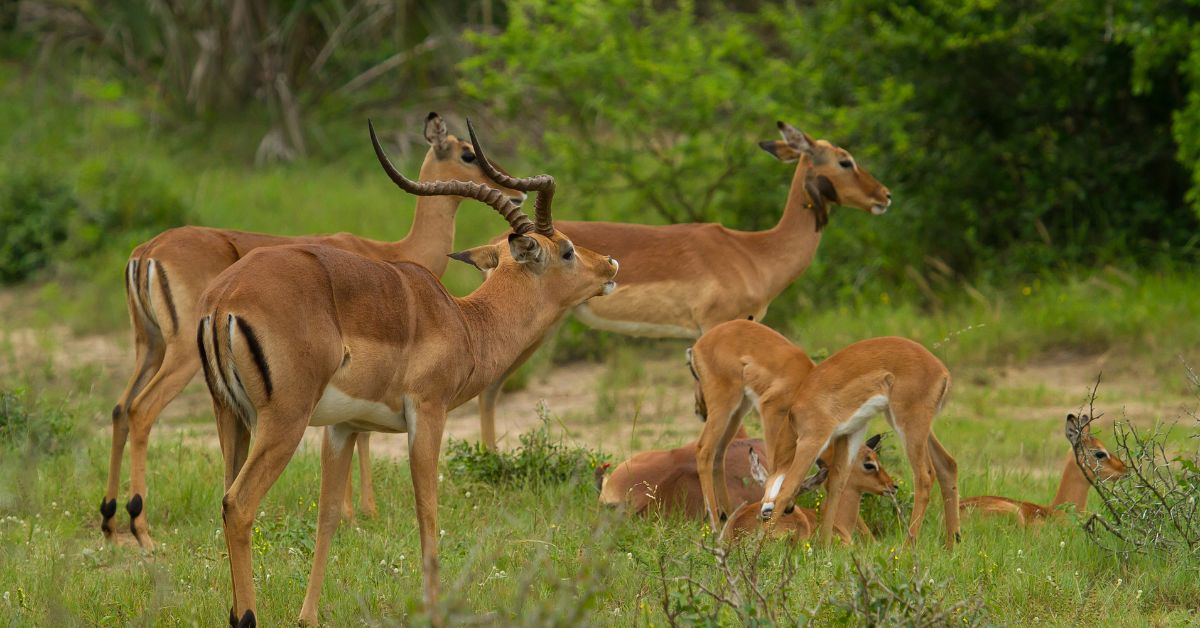
Impala: The sweeping grasslands of the African continent support a massive array of wild ungulates, but few match the sheer kinetic architecture of the bushveld’s primary mixed-feeder. While frequently seen on safari drives, the mechanics behind the impala leaping distance adaptation prove that this medium-sized antelope is an evolutionary masterpiece designed to survive under intense predatory pressure. Far from being a simple, defenseless prey animal, the impala uses specialized biomechanical shock absorbers, synchronized predator deception, and an incredibly flexible diet to dominate the sub-Saharan ecosystem.
When watching these agile antelopes maneuver through dense acacia thickets, their movement looks effortless, yet it relies on a highly complex physical framework.
| The Impala Defense Matrix | |
|---|---|
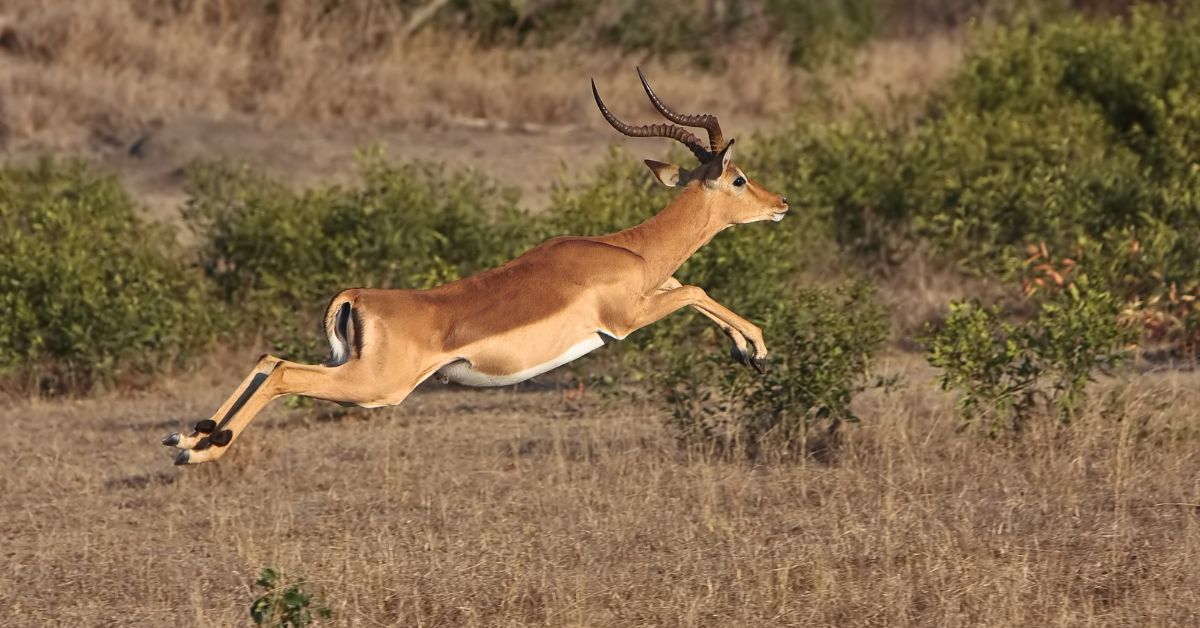
| Horizontal Bound | Clears up to 10 meters in a single stride, allowing the antelope to easily bypass dense brush obstacles. |
| Vertical Elevation | Reaches heights of up to 3 meters, clearing the physical leap-line of attacking leopards and wild dogs. |
| Metatarsal Release | Scent glands on the hind legs release chemical trails mid-air, allowing scattered herds to realign. |
The Mechanics of the Impala Leaping Distance Adaptation
To successfully avoid ambush hunters in dense riverine environments, these antelopes rely on explosive escape behaviors. The survival value of the impala leaping distance adaptation becomes clear when a herd is suddenly ambushed by a leopard or a pride of lions. Instead of simply running in a straight line, individuals launch themselves up to 3 meters into the air, crossing horizontal gaps of up to 10 meters in a single fluid bound.
This extreme leaping style serves a double purpose. Biomechanically, their long, slender legs are packed with specialized tendons that store and release elastic energy, working alongside a flexible spine to act as high-efficiency shock absorbers upon impact. Behaviorally, this jumping display, often called stotting or pronking, signals directly to predators that the individual is in peak physical condition and is not worth a high-energy chase. The sudden, multi-directional explosions of jumping bodies also create visual confusion, making it incredibly difficult for a big cat to isolate a single target amid the chaos.
Social Landscapes: The Mechanics of the Autumn Rut
The social structures of these herds shift dramatically depending on seasonal changes. Throughout most of the year, populations are cleanly split into large nursery herds of females and calves, and separate bachelor herds containing younger, maturing males. However, as the autumn breeding cycle begins, the entire social landscape enters a phase known as the rut.
During the rut, dominant rams become highly territorial, using a combination of deep, guttural roars and aggressive posturing to secure control over breeding territories. These males expend massive amounts of energy herding receptive females and fighting off rival bachelors in fierce horn-clashing battles. This intense physical strain leaves territorial rams highly vulnerable to predation, as their hyper-focus on maintaining their harem lowers their usual vigilance against approaching big cats.
Landscape Management: The Value of the Mixed-Feeder
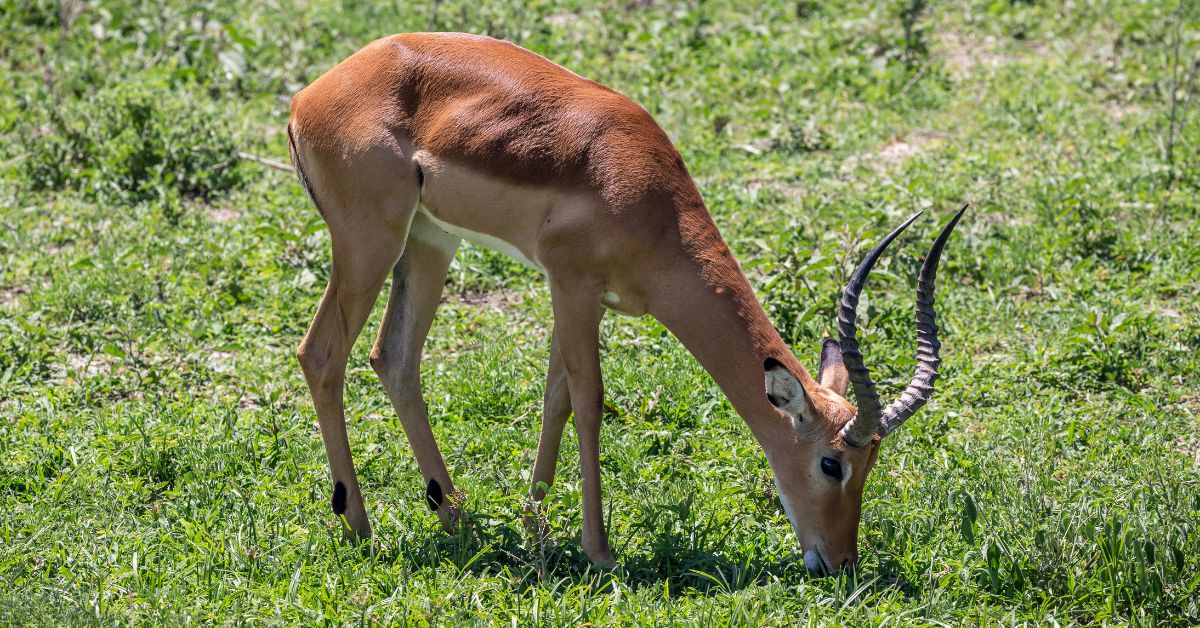
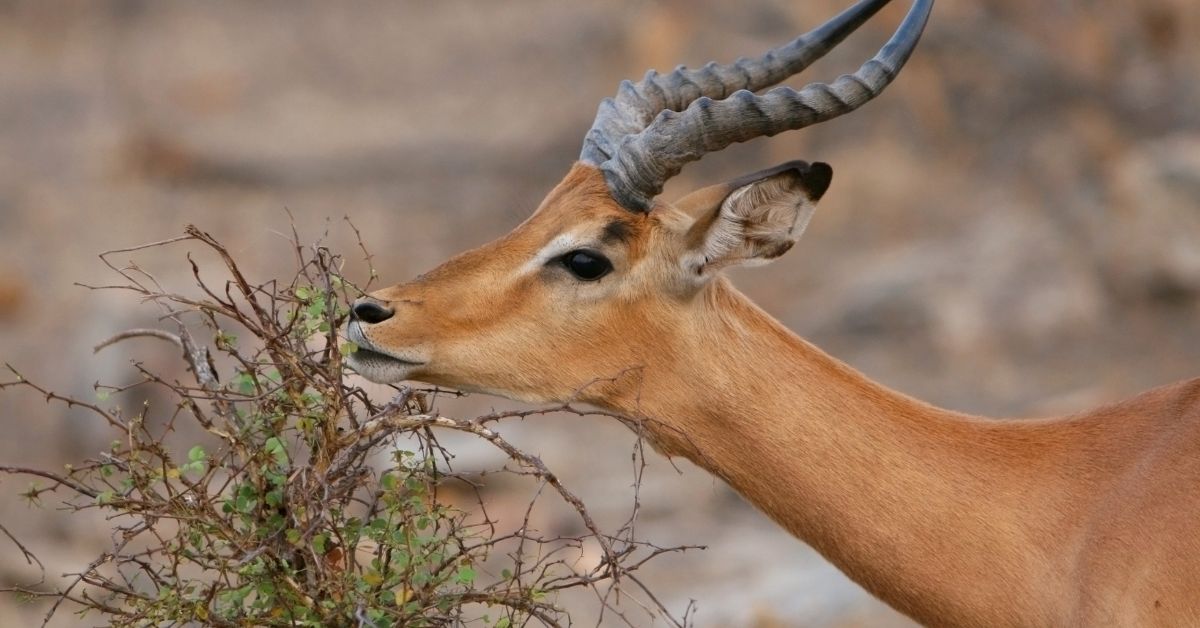
Beyond their role as a primary food source for large predators, these animals play a major role in shaping the physical structure of African savannas. While many plains herbivores are strict specialists, either grazing exclusively on short grasses or browsing solely on woody tree leaves, the impala is an exceptionally versatile mixed-feeder.
During the wet summer months, they focus their feeding on the highly nutritious green shoots of emerging grasses. As the dry winter season takes hold and the grass canopy loses its nutritional value, they switch seamlessly to browsing on the resilient leaves, pods, and shoots of woody shrubs like acacia trees. This dietary flexibility allows them to maintain stable populations during severe droughts, while their intensive foraging patterns prevent woody brush from overtaking open, sunny grasslands.
Navigating Modern Threats on the Plains
While their high adaptability keeps their overall populations stable across southern Africa, these herds still face distinct environmental pressures outside protected game reserves. Habitat loss driven by expanding agricultural fencing, road development, and urban sprawl directly cuts off their historical seasonal movements toward permanent water lines.
Additionally, illegal bushmeat poaching using wire snares remains a constant threat along park boundaries, targeting their well-traveled game paths. Managing these pressures requires dedicated community-focused conservation projects that establish secure wildlife corridors and support anti-poaching field teams. Protecting these agile mixed-feeders ensures that the complex food webs of major reserves like Kruger continue to function naturally, keeping the wild spirit of the savannah alive for future generations.
The Last Word from the Bushveld
Let’s be entirely honest: it is easy to drive right past a herd of impalas on safari while hunting for the “Big Five.” But next time you see one, give some serious credit to the absolute kinetic geniuses of the plains. Any creature that can look a cheetah dead in the eye, launch itself three meters into the air like a literal superhero, and casually release a “catch me if you can” perfume from its heels mid-flight deserves its crown. They aren’t just predator food; they are the high-flying, aerodynamic masters of savannah survival.
Bushveld Acrobat: Impala Survival Simulator
Master the split-second reflexes and herd dynamics of the high-leaping masters of the Kruger.
The Life of the Lowveld
Impala are the unsung evolutionary marvels of Africa. As a mixed feeder (both grazing grass and browsing leaves), you must navigate changing seasons, spot hidden predators, and use your legendary 10-meter boundary leaps to out-maneuver the fastest cats on earth.