
Fascinating Facts About the Southern Carmine Bee-eater
Colourful Appearance and Names
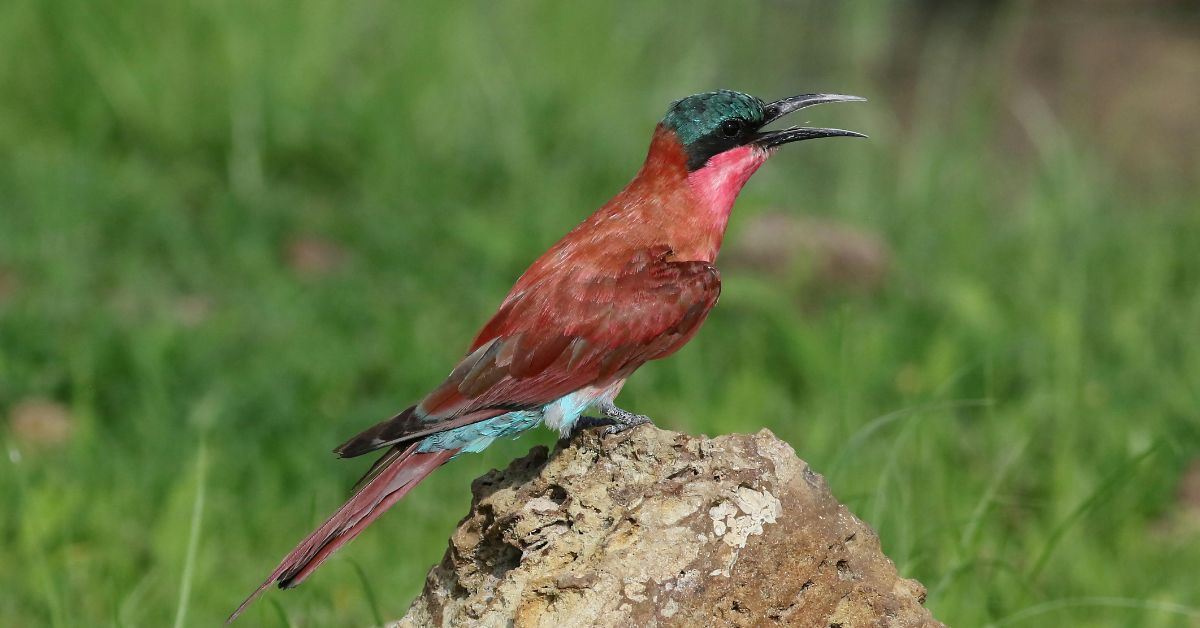
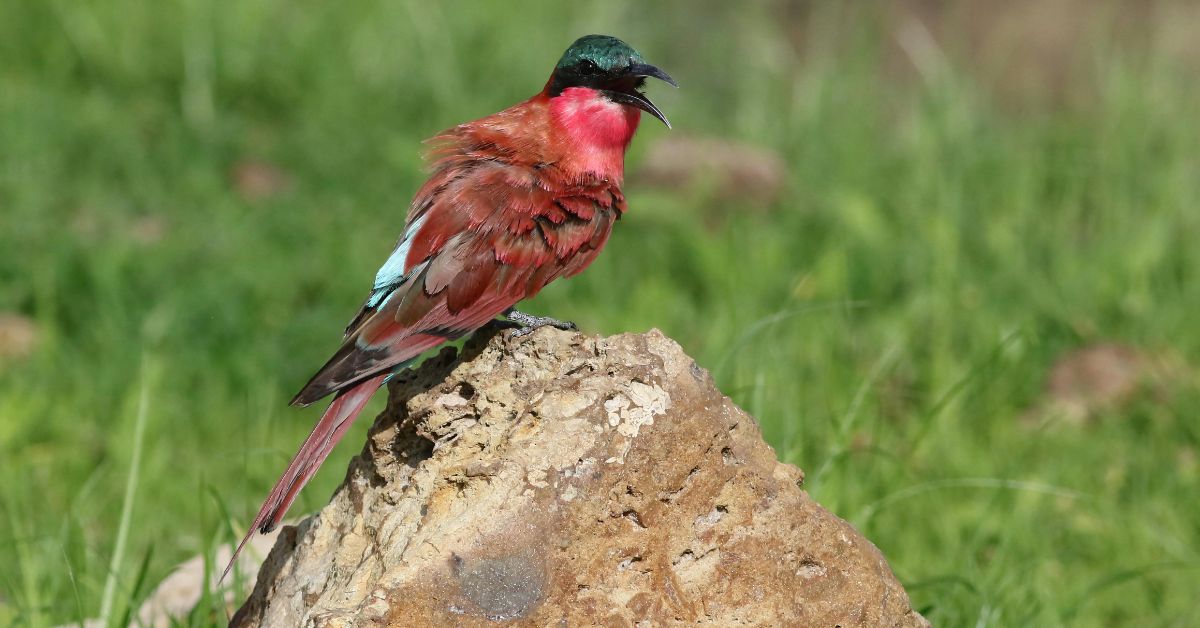
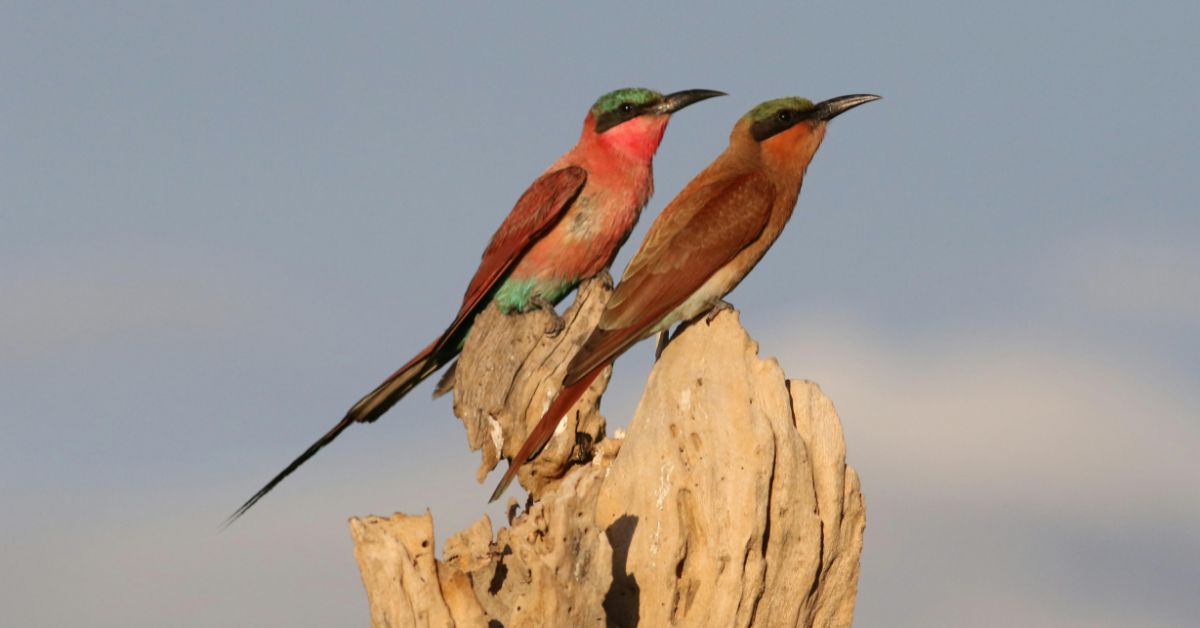
The Southern Carmine Bee-eater (Merops nubicoides) is a spectacle of color. Its plumage is predominantly a vivid carmine red, with a striking blue crown and undertail. Measuring about 25 cm in length, with an additional 12 cm from its elegant tail streamers, it is the largest of the African bee-eater species in the region.
Its slender, curved bill is perfectly adapted for catching insects mid-flight. Interestingly, the Mandinka people of West Africa call it “Cousin to the fire” due to its habit of hunting insects fleeing grass fires.
Complex Summer Migration Patterns
This species is a long-distance migrant, following a complex seasonal journey across the continent. Their summer migration in South Africa usually begins in December and lasts through February.
During the breeding season (August–November), they congregate in large colonies along riverbanks in Zimbabwe and Zambia. In the non-breeding season, they move north toward Equatorial Africa, following rain and food availability.
Unique Diet and Hunting Habits
These birds are skilled aerial foragers. While they primarily feed on dragonflies, termites, and bees, they have a unique “hitchhiking” behavior. They often perch on large animals like buffalo or even larger birds like the Kori Bustard, using them as mobile lookout posts.
Once they catch their prey, they return to a perch to remove stings by rubbing the insect against a branch. You can learn more about these fascinating bird behaviors via the BirdLife South Africa resources.
Social and Behavioral Traits
Highly social and striking to watch, these birds are usually spotted in massive, synchronized flocks that move like a single shimmering cloud. Their teamwork is best seen in their nesting colonies, where they work together to dig deep, complex tunnels into vertical sandy riverbanks.
These bustling underground neighborhoods are more than just a safe place to raise their chicks; they act as a natural fortress against predators. By nesting so close together, the birds ensure there are always hundreds of eyes scanning the sky for danger. This constant activity also helps the local environment, as their digging naturally reshapes the riverbanks and cycles nutrients back into the water, keeping the entire ecosystem healthy.
Why Living Together Works:
Natural Air Conditioning: The deep burrows stay cool and stable, protecting the young from the harsh midday heat.
Safety in Numbers: With so many birds in one spot, it’s much harder for a predator to pick out a single target.
The “Watercooler” Effect: These colonies act as information hubs; if one bird finds a great fishing spot, the others quickly learn where to go.
Conservation and Habitat
The Southern Carmine Bee-eater prefers open savannas and riverine habitats. While not currently endangered, they face threats from habitat loss and human disturbance near breeding sites.
Conservation efforts are crucial to ensure their populations remain stable. Protecting sandy riverbanks and managing deforestation are key to keeping this vibrant summer visitor returning to our skies every year.
Fun Facts
- Aerial Acrobats: Their agile flight allows them to catch insects with precision, often performing spectacular twists and dives.
- Size: The Carmine Bee-eater is the largest local bee-eater
- Cultural Significance: In some African cultures, their vibrant colors are associated with vitality and renewal, often featured in local folklore.
- Family Helpers: Non-breeding adults often assist in raising chicks, bringing food to nestlings in a display of cooperative breeding.
Where to Spot Them
In South Africa, the best place to find them is undoubtedly Kruger National Park, specifically along river systems and open savannas. They are also common in the Mkhuze Game Reserve and the Okavango Delta in Botswana. Bring your binoculars and high-speed camera, their acrobatic flights are a treat to observe.
Bring binoculars and patience, as their vibrant colors and acrobatic flights are a treat to observe.
The Southern Carmine Bee-eater is more than just a beautiful bird, it’s a symbol of nature’s interconnectedness, from its fire-chasing habits to its cooperative social structure. As summer approaches, keep an eye out for this dazzling visitor and add it to your birding list!
The Feedspot blog, “25 Best African Safari Blogs and Websites in 2025,” is a curated list highlighting top online resources for safari enthusiasts, offering expert insights, travel tips, and stunning photography. This guide is an invaluable tool for planning unforgettable African adventures.