
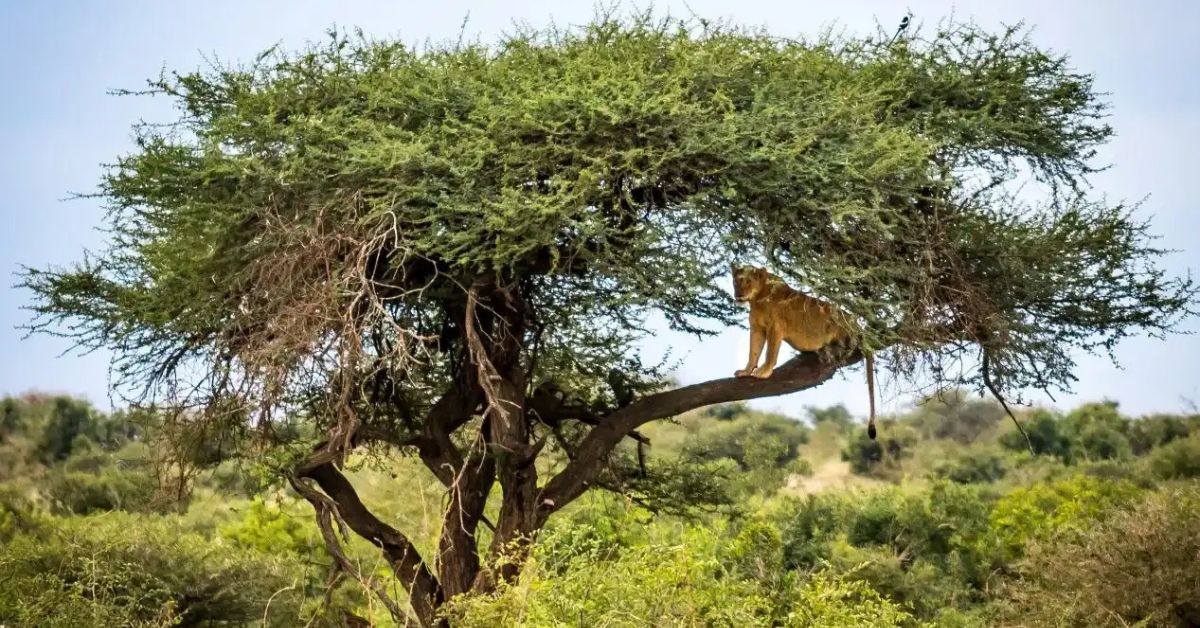
Can Lions Climb Trees? The Bizarre Truth Behind Lowveld Sightings
Quick answer: Yes, lions can climb trees, but most rarely do. In Kruger National Park it’s an uncommon sight, with reports coming mostly from the far south of the park.
Leopards get all the credit for treetop drama. Lions, by reputation, stay firmly on the ground. Yet every so often a lion goes up a tree, and when it happens in Kruger, guides and guests remember it for years.
Why Lions Don't Usually Climb Trees
Lions are the largest cats in Africa, and adult males can weigh well over 150 kg. They’re built for power on the ground rather than agility in the branches. That’s why a lion in a tree often looks cautious and a little awkward next to a leopard, which moves through branches with ease. Even lions that climb tend to do it carefully.
Why Do Some Lions Climb Trees?
There’s no single agreed answer, and the reasons probably differ from place to place. The explanations most often given are:
- Escaping biting insects. This is one of the most widely accepted reasons, since there are fewer flies and a better breeze off the ground.
- Beating the heat. Shade and cooler air can make a branch a comfortable daytime resting spot.
- Getting above floodwater. One pride in southern Kruger has been reported climbing trees to escape both heat and floodwaters.
- Play. Cubs sometimes climb for no obvious reason other than the fun of it.
- Habit. In places like Lake Manyara, climbing appears to be a learned behaviour that spreads within a pride.
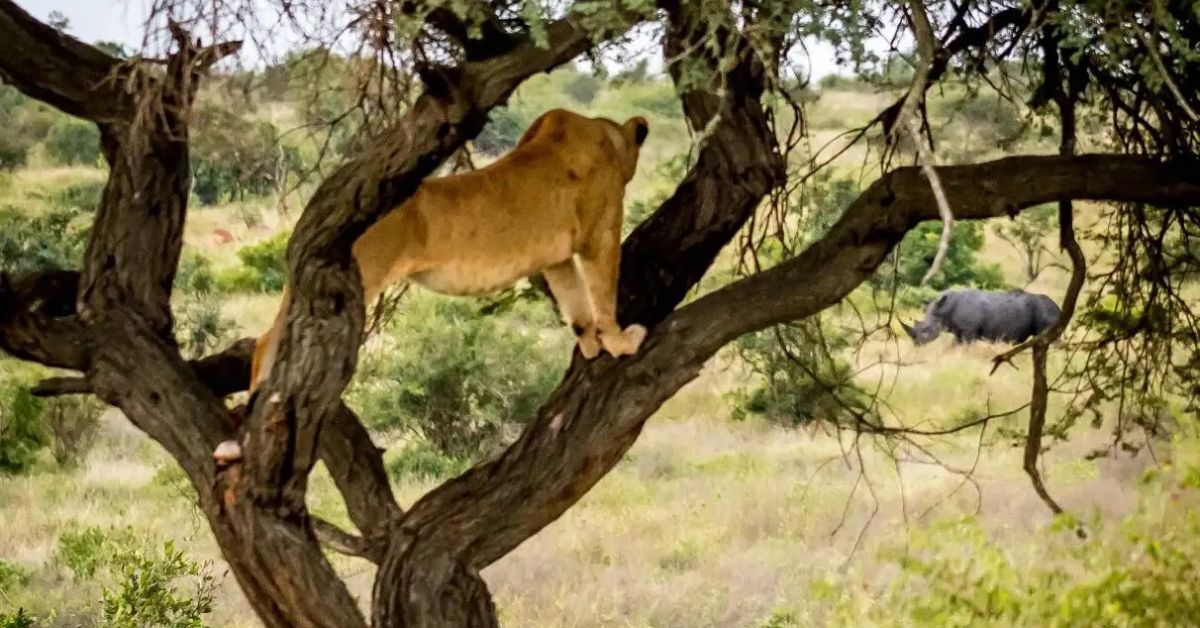
Tree-Climbing Lions in Kruger
In Kruger, lions in trees are genuinely uncommon, and guides consider it an unusual event. Safari operators’ accounts point most often to the far south of the park, around Crocodile Bridge. Tree-climbing lions have also been seen in the private Sabi Sands Game Reserve next door. If you want to see it more regularly, the best-known places are further afield, in the Ishasha sector of Uganda’s Queen Elizabeth National Park and Tanzania’s Lake Manyara.
Nobody can promise you a lion in a tree, and any operator who does is guessing.
How to Improve Your Chances
- Go with an experienced guide. Guides know where prides rest during the day and read the signs of where they might head next.
- Focus on the south. Heat and rising water are two reported triggers, so hot afternoons and the days after heavy rain give you the best odds.
- Scan the big trees near resting lions. A lioness stretched along a branch is easy to miss if you only watch the ground.
- Be patient. The best sightings usually come after the guide switches off the engine and waits.
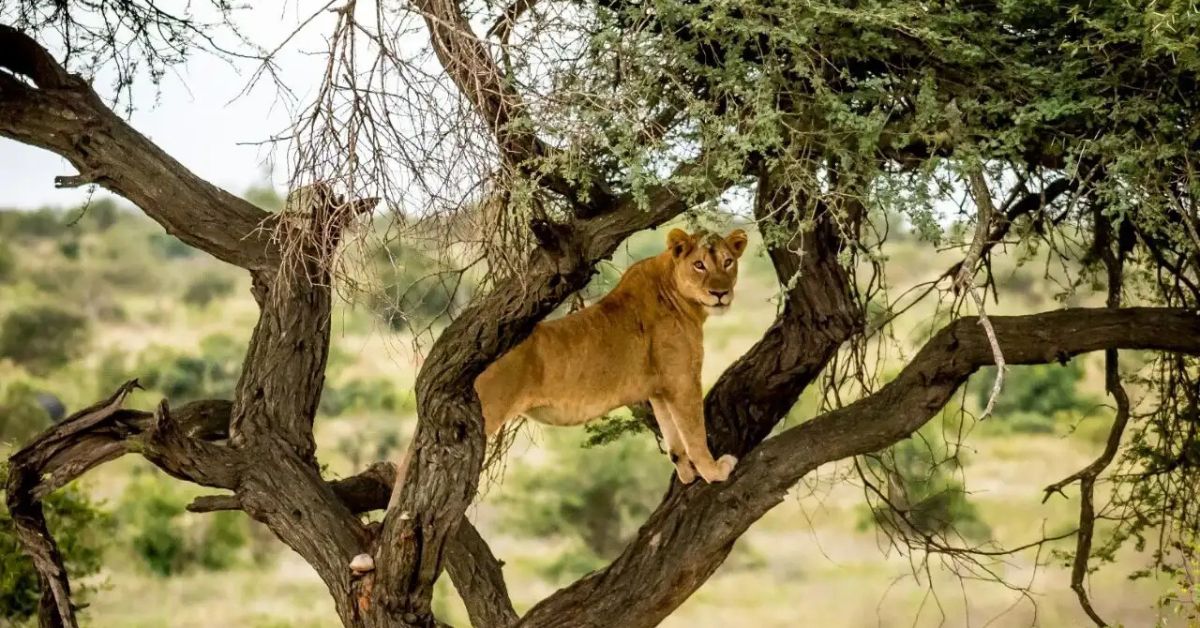
Photographing a Lion in a Tree
- Bring a telephoto lens. A lion in a canopy is usually well above you, and a long lens lets you keep your distance.
- Shoot in the early morning or late afternoon. The light is softer and lions are more active in the cooler hours.
- Frame the tree as well as the cat. The branches and surroundings tell the story.
- Stay inside the vehicle and keep noise down. A lion overhead can be closer than it looks, and it’s still a wild animal.
Lions vs Leopards: Who Does It Better?
Leopards. They’re natural climbers, and they regularly haul kills up into trees to keep them from hyenas and lions. Lions can climb, but it’s the exception. For more on Africa’s biggest cat, read our guide to lions in Kruger.
Frequently Asked Questions
The Last Word from the Bushveld
A lion in a tree is the safari equivalent of a cat on the curtains: technically possible, occasionally spectacular, and always followed by a moment of quiet reflection on how to get down. Don’t plan your whole trip around it. Plan it around the fact that Kruger will show you something you didn’t expect, and if that happens to be a lioness draped along a branch, you’ll have a story nobody at the braai believes. To give yourself the best chance, explore our guided Kruger safari packages.