
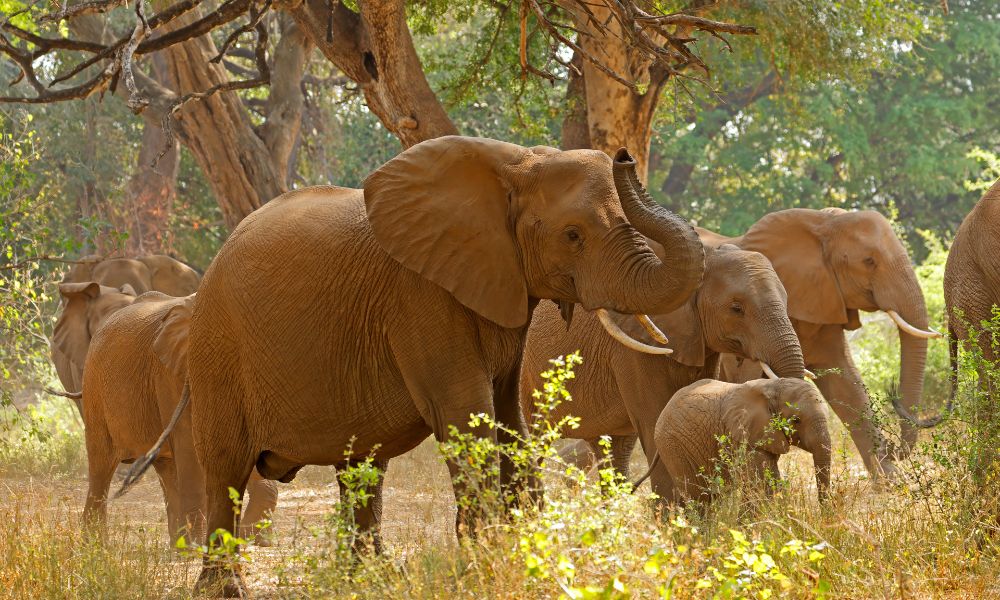
African Elephant
Scientific name: Loxodonta africana
Where to spot it in Kruger
Look for herds on the Letaba and Olifants rivers and at waterholes, especially in the dry winter months. Listen for snapping branches beside the road.
African Elephant at a glance
- Height: 3–3.5 m at the shoulder (bulls)
- Weight: 4,000–6,000 kg (bulls), 2,500–3,500 kg (cows)
- Lifespan: 60–70 years in the wild
- Diet: Grass, leaves, bark, roots and fruit
- Daily intake: About 150 kg of food and up to 200 litres of water
- Social life: Family herds led by an older matriarch
- Gestation: About 22 months, a single calf
- Conservation status: Endangered (IUCN Red List)
Lesser-known facts
Elephant herds are led by an old matriarch who remembers where water can be found in a drought. The whole family follows her lead, and her memory has saved generations of calves.
Elephants talk to each other with very low rumbles that travel for kilometres. They also pick up vibrations through their feet, so a herd can sense others long before they come into sight.
Those huge ears do more than hear. They are packed with blood vessels, and flapping them cools the blood on a hot Lowveld day.
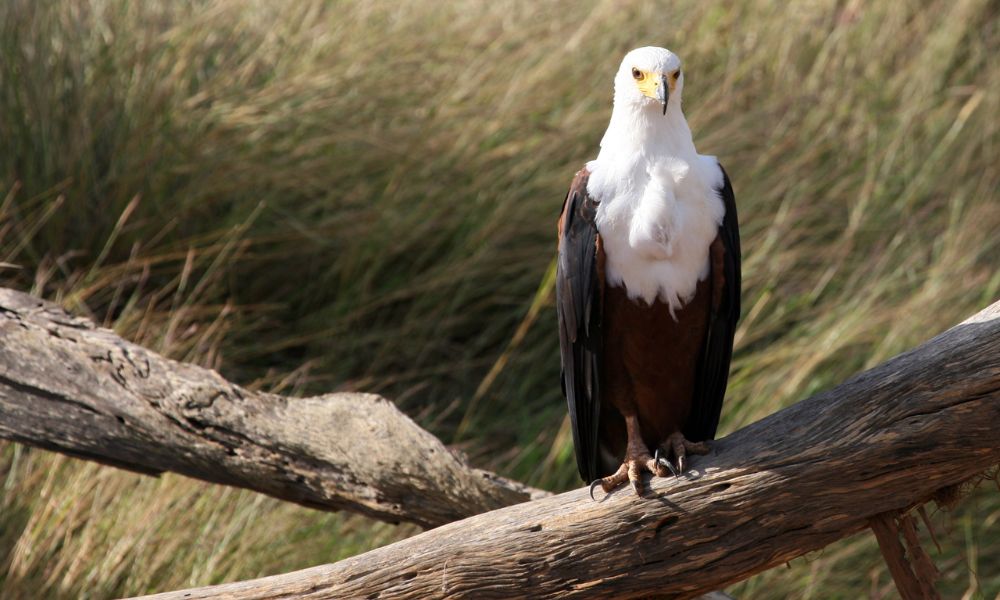
African Fish Eagle
Scientific name: Haliaeetus vocifer
Where to spot it in Kruger
Scan tall trees overlooking rivers and dams, such as the Sabie, Letaba and Olifants rivers. Listen for the call, which carries a long way over water.
African Fish Eagle at a glance
- Length: 63–75 cm
- Wingspan: 1.8–2.4 m
- Weight: 2–3.6 kg (females are larger than males)
- Lifespan: 12–24 years in the wild
- Diet: Mainly fish, plus waterbirds and carrion
- Nesting: Large stick nests in tall trees, usually 1–3 eggs
- Mating: Pairs stay together for life
- Conservation status: Least Concern (IUCN Red List)
Lesser-known facts
The fish eagle's loud, ringing call is often called the sound of Africa. A pair often calls together, with the head thrown back, and the call carries far across the water.
It snatches fish from the surface in a low swoop. The soles of its feet are covered in tiny spikes that grip slippery fish, and if a fish is too heavy to lift, the eagle can drag it to shore, using its wings like oars.
Fish eagles pair for life and return to the same nest year after year, adding to it each season until it is enormous. Pairs defend a stretch of river or dam as their own.
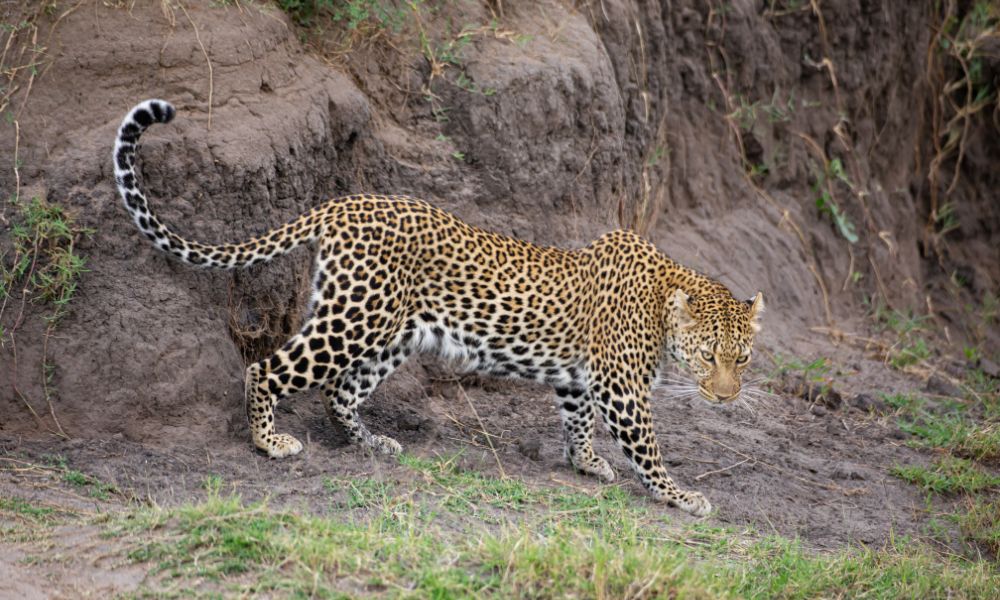
African Leopard
Scientific name: Panthera pardus
Where to spot it in Kruger
Scan large trees along riverbeds such as the Sabie and Sand rivers, and rocky outcrops. Dawn, dusk and night drives give the best chances.
African Leopard at a glance
- Height: 60–70 cm at the shoulder
- Weight: 60–90 kg (males), 30–60 kg (females)
- Length: 1.6–2.3 m including the tail
- Lifespan: 12–15 years in the wild
- Diet: Impala, bushbuck, duiker, warthog and birds
- Active: Mostly at night, dawn and dusk
- Gestation: About 100 days, usually 2–3 cubs
- Conservation status: Vulnerable (IUCN Red List)
Lesser-known facts
Leopards are astonishingly strong climbers and often drag kills weighing more than themselves high into tree branches to keep them away from hyenas.
No two leopards have the same spots. Guides identify individual cats by the pattern of spots on the whiskers' base, and many Kruger leopards are known by name.
A leopard's call sounds like someone sawing wood, and it carries a long way at night.
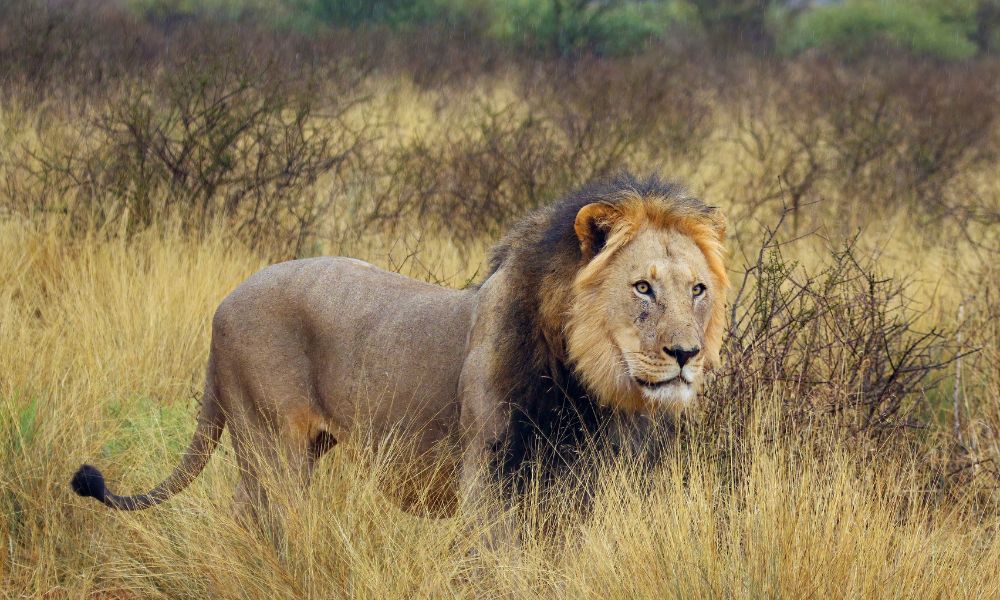
African Lion
Scientific name: Panthera leo
Where to spot it in Kruger
Scan open plains such as those around Satara, and shady spots near waterholes in the midday heat. Dawn and dusk are the best times, and you may hear them roar first.
African Lion at a glance
- Height: 1.1–1.2 m at the shoulder
- Weight: 150–250 kg (males), 110–180 kg (females)
- Length: 2.4–3.3 m including the tail
- Lifespan: 10–14 years in the wild
- Diet: Zebra, wildebeest, impala, buffalo and giraffe
- Pride size: Usually 5–15 lions, built around related females
- Active: Mostly at night, and resting up to 20 hours a day
- Gestation: About 110 days, usually 2–4 cubs
- Conservation status: Vulnerable (IUCN Red List)
Lesser-known facts
A lion's roar can be heard from as far as 8 km away. Lions roar to mark their territory and to call the pride back together, most often at night and around dawn.
The lionesses do most of the hunting, working together to surround their prey. The males defend the pride's territory and often eat first once the kill is made.
Lions sleep for up to 20 hours a day to save energy. Cubs are born with faint spots on their coats, and the spots fade as they grow.
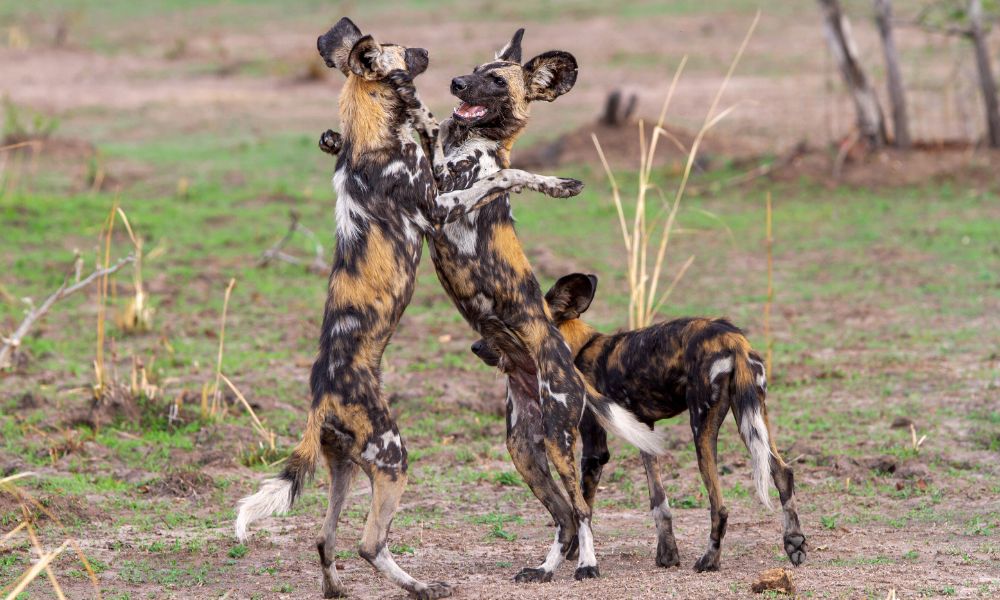
African Wild Dog
Scientific name: Lycaon pictus
Where to spot it in Kruger
Wild dogs roam huge territories, so sightings are never guaranteed. Packs settle at their dens in the cooler winter months, which gives the best chance. Scan open roads at dawn.
African Wild Dog at a glance
- Height: 60–75 cm at the shoulder
- Weight: 18–36 kg
- Lifespan: 10–12 years in the wild
- Diet: Impala, kudu calves, duiker and warthog piglets
- Pack size: Usually 6–20 dogs, led by a breeding pair
- Active: Mostly at dawn and dusk
- Gestation: About 70 days, litters of 2–20 pups
- Conservation status: Endangered (IUCN Red List)
Lesser-known facts
No two wild dogs look alike. Each has its own pattern of black, tan and white patches, and the scientific name Lycaon pictus means "painted wolf".
Wild dogs are among Africa's most successful hunters. They run prey down together over long distances, and more than half their chases end in a kill, far better than lions manage.
Before a hunt, the pack can hold a vote by sneezing. The more dogs that sneeze, the more likely the pack is to set off. They also look after each other, so pups, and sick or injured dogs, are fed first.
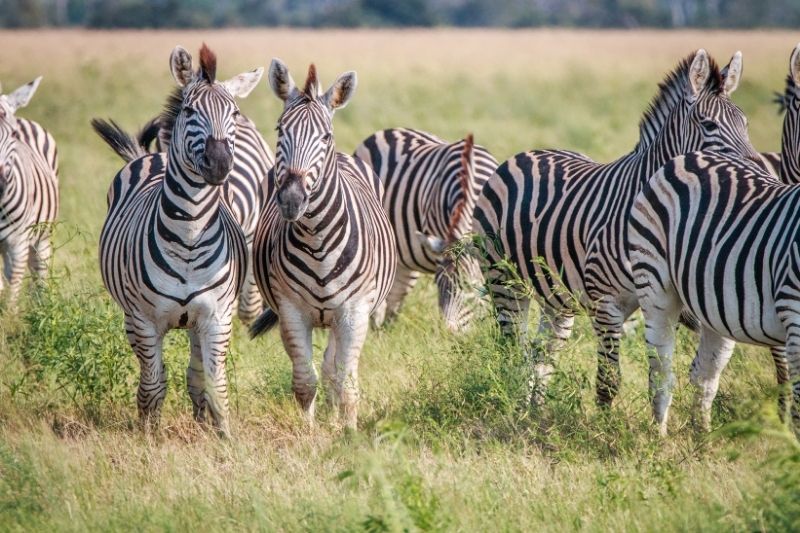
Burchell’s Zebra
Scientific name: Equus quagga burchellii
Where to spot it in Kruger
Scan open grassland and the edges of waterholes, often mixed in with wildebeest and impala. Look in the early morning and late afternoon, when they come down to drink.
Burchell’s Zebra at a glance
- Height: 1.2–1.4 m at the shoulder
- Weight: 220–320 kg
- Lifespan: 20–25 years in the wild
- Diet: Grazer, mostly tall, coarse grass
- Social life: Family groups of one stallion, several mares and their foals
- Active: By day, resting in the shade at midday
- Gestation: About 12–13 months, a single foal
- Conservation status: Near Threatened for the plains zebra (IUCN Red List)
Lesser-known facts
No two zebras have exactly the same stripes, so each one has its own pattern. A foal can stand within about 15 minutes of birth, and its mother keeps other zebras away at first so that the foal learns to recognise her by her stripes, scent and voice.
Zebras often graze alongside wildebeest and other animals. A zebra's strong teeth bite off the tall, tough grass first, which leaves shorter, softer grass for the animals that follow. Together their many eyes, ears and noses are good at spotting danger early.
Burchell's zebra has faint brown "shadow stripes" between its black ones, mostly on the rump. Scientists think the stripes may help keep biting flies away, and the zebra's call is a bark, closer to a dog's than a horse's.
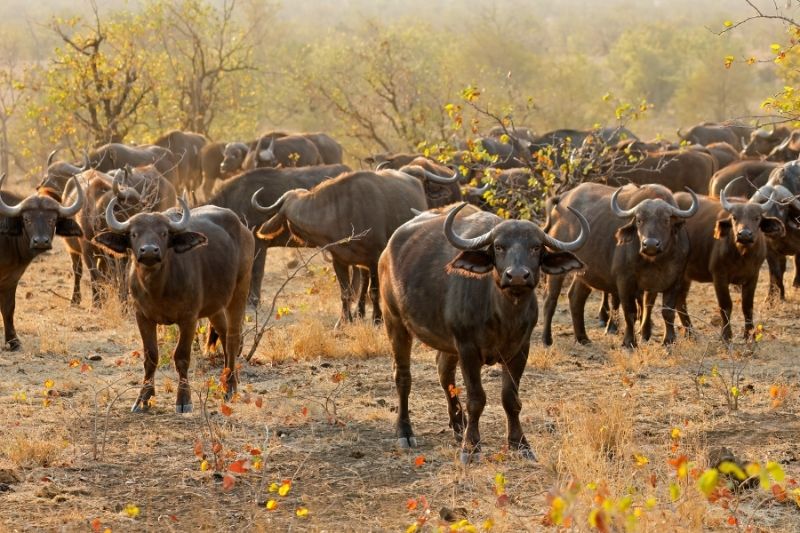
Cape Buffalo
Scientific name: Syncerus caffer
Where to spot it in Kruger
Scan open grassland and the edges of rivers and waterholes, where big dark herds gather to drink. Old bulls often wallow in mud near the water. Early morning and late afternoon give the best sightings.
Cape Buffalo at a glance
- Height: 1.4–1.7 m at the shoulder
- Weight: 600–900 kg (bulls), 400–600 kg (cows)
- Lifespan: 15–20 years in the wild
- Diet: Grazer, mostly grasses
- Herd size: From a few dozen to over 1,000 animals
- Active: Grazes at night and in the morning, rests in shade at midday
- Gestation: About 11 months, a single calf
- Conservation status: Near Threatened (IUCN Red List)
Lesser-known facts
Buffalo are one of the Big Five, and have a reputation as one of Africa's most dangerous animals. A wounded or cornered buffalo is unpredictable, which is why guides treat lone old bulls with great respect.
The horns of a mature bull join at the base into a thick, bony shield called the boss, which protects the forehead. Herds can also stand together against danger, and buffalo have been filmed chasing off lions to rescue a calf.
Old bulls often leave the herd and spend their time in small groups, nicknamed "dagga boys" after the Zulu word for mud. Birds called oxpeckers ride on their backs and feed on ticks.
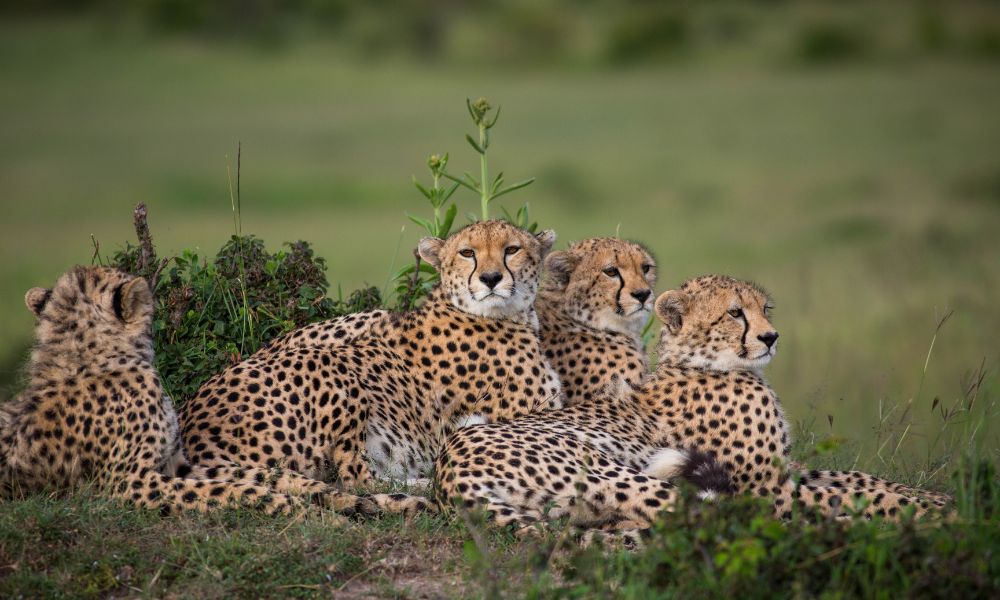
Cheetah
Scientific name: Acinonyx jubatus
Where to spot it in Kruger
Scan open grassy plains, such as the areas around Satara, and look for cheetahs sitting on termite mounds or low rises. Early morning gives the best chances.
Cheetah at a glance
- Height: 70–90 cm at the shoulder
- Weight: 35–65 kg
- Length: 1.1–1.5 m, plus a 65–80 cm tail
- Lifespan: 10–12 years in the wild
- Diet: Impala, steenbok, duiker and springhares
- Top speed: Around 100 km/h in short sprints
- Active: By day, mostly early morning and late afternoon
- Gestation: About 93 days, usually 3–5 cubs
- Conservation status: Vulnerable (IUCN Red List)
Lesser-known facts
The cheetah is the fastest land animal, reaching about 100 km/h within a few seconds. A sprint only lasts around half a minute, so afterwards the cat must rest and catch its breath before it can eat.
Cheetahs cannot roar. They purr, and they make a bird-like chirp to call their cubs. The dark "tear lines" running from the eyes to the mouth cut sun glare, and their claws stay partly out like running spikes for grip.
Cheetahs hunt by day because lions, leopards and hyenas hunt at night, and those rivals often steal their kills. Mothers raise their cubs alone, and the young cubs have a fluffy silver mane along their backs.
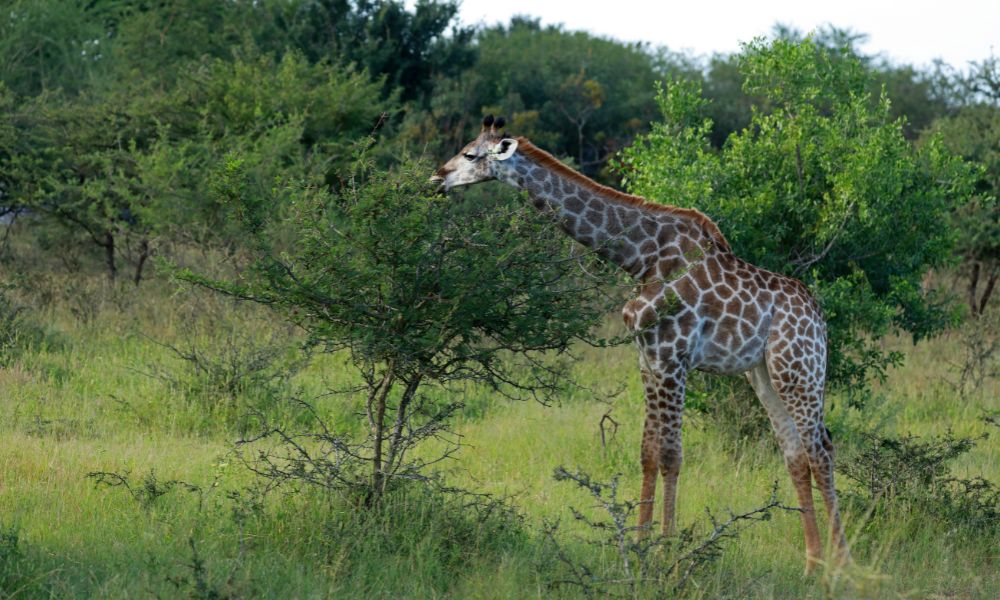
Giraffe
Scientific name: Giraffa giraffa
Where to spot it in Kruger
Scan the tops of acacia and knobthorn trees in open woodland and along rivers. They are widespread across the park, and early morning and late afternoon are the best times.
Giraffe at a glance
- Height: 4.3–5.5 m (bulls are taller than cows)
- Weight: 800–1,400 kg
- Lifespan: 20–25 years in the wild
- Diet: Leaves of acacia and other trees, up to about 30 kg a day
- Tongue: Dark purple and 45–50 cm long
- Social life: Loose herds that change members often
- Active: By day, with only short naps
- Gestation: About 15 months, a single calf
- Conservation status: Least Concern for the southern giraffe (IUCN Red List)
Lesser-known facts
A giraffe has the same number of neck bones as you do, seven. Each one is just enormously long, and the neck alone can be around 2 m.
A calf drops about 2 m to the ground at birth, since the mother gives birth standing up. Within an hour it is on its feet and walking, which helps it escape lions and hyenas.
Giraffes sleep for only a few minutes at a time, often standing. Recent research also recorded them humming softly at night, a sound that was long missed because it is too low for us to notice.
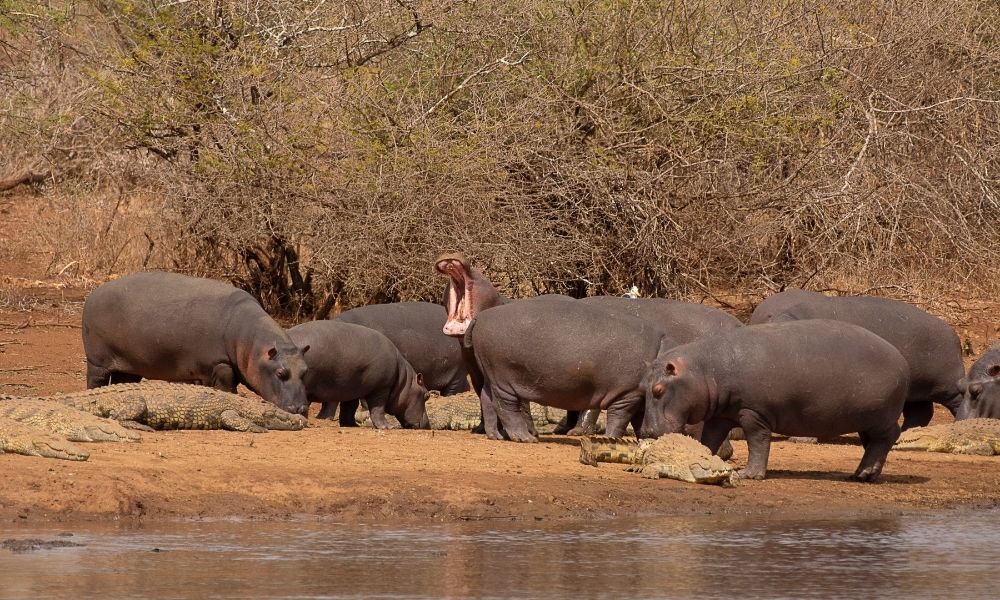
Hippopotamus
Scientific name: Hippopotamus amphibius
Where to spot it in Kruger
Scan deep pools and slow stretches of rivers and dams, such as the Sabie, Olifants and Letaba rivers. By day look for ears and eyes at the surface, and at dusk for them heading out to graze.
Hippopotamus at a glance
- Height: 1.3–1.6 m at the shoulder
- Weight: 1,300–1,800 kg (large bulls are heavier)
- Lifespan: 40–50 years in the wild
- Diet: Grazer, about 35–50 kg of grass each night
- Social life: Pods of 10–30 led by a dominant bull
- Active: Rests in water by day, grazes at night
- Gestation: About 8 months, a single calf
- Conservation status: Vulnerable (IUCN Red List)
Lesser-known facts
Hippos spend the day in water to keep cool, and at dusk they climb out and walk up to several kilometres to graze. They can hold their breath for around five minutes, and they cannot really swim. They walk or bounce along the bottom instead.
Their skin gives off an oily red-orange fluid that people call "blood sweat". It is neither blood nor sweat, and it works as a natural sunscreen and helps protect against germs.
A hippo can open its mouth almost 150 degrees, and its lower canine teeth can grow up to 50 cm long. Despite looking placid, hippos are among the most dangerous animals in Africa, so guides keep well back from the water's edge.
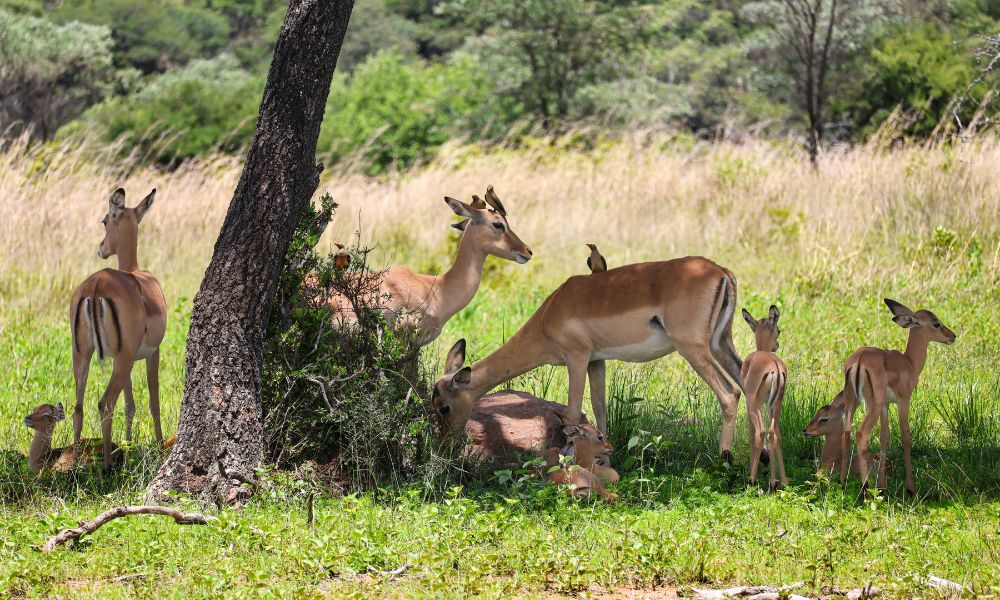
Impala
Scientific name: Aepyceros melampus
Where to spot it in Kruger
Impala are one of the most common antelope in the park. Scan open woodland and the edges of rivers and waterholes, especially in the early morning and late afternoon. Lambs appear in November and December.
Impala at a glance
- Height: 75–95 cm at the shoulder
- Weight: 40–75 kg (rams are heavier than ewes)
- Lifespan: 12–15 years in the wild
- Diet: Grass and leaves, switching with the seasons
- Social life: Female herds with lambs, and separate bachelor herds
- Active: By day, resting in shade at midday
- Gestation: About 6.5 months, a single lamb
- Conservation status: Least Concern (IUCN Red List)
Lesser-known facts
Guides have a nickname for the impala, "the McDonald's of Kruger". They are found almost everywhere, and they are on the menu for nearly every predator in the park, from leopards and lions to wild dogs and hyenas.
An impala can leap up to 3 m high and about 10 m in a single bound. When a predator appears, the herd sometimes scatters in all directions, which confuses the hunter, and the startled animals "explode" into the air.
During the rut, in autumn, the rams make loud, rasping roars and grunts as they fight for females. Many first-time visitors hear it at night and think it is a lion.
Most lambs are born within a few weeks of each other at the start of the summer rains. So many babies at once means predators cannot catch them all.
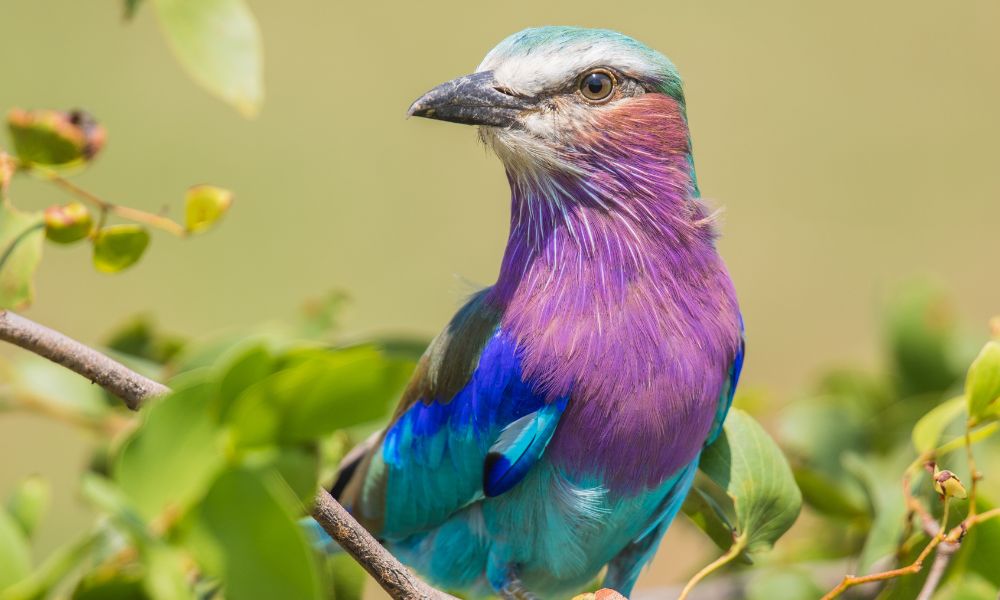
Lilac-breasted Roller
Scientific name: Coracias caudatus
Where to spot it in Kruger
Scan dead branches, fence posts and power lines beside the road, especially in open woodland and savanna. They stay all year, and the morning light shows their colours best.
Lilac-breasted Roller at a glance
- Length: About 36 cm, plus tail streamers
- Wingspan: 50–58 cm
- Weight: About 90–120 g
- Diet: Insects, scorpions, small lizards and snails
- Habitat: Open woodland and savanna
- Nesting: Holes in trees, usually 2–4 eggs
- Active: By day, hunting from a perch
- Conservation status: Least Concern (IUCN Red List)
Lesser-known facts
The roller is named for its courtship display. The male dives and tumbles through the air, rolling from side to side while calling loudly, to impress a mate.
Rollers hunt from a lookout perch, such as a dead branch or a power line. They watch for movement, drop onto prey on the ground, and fly back to beat larger prey against the branch before swallowing it.
Its colours are hard to miss, with a lilac breast, turquoise belly, blue wings and green head. It is so loved that it is the national bird of both Botswana and Kenya.
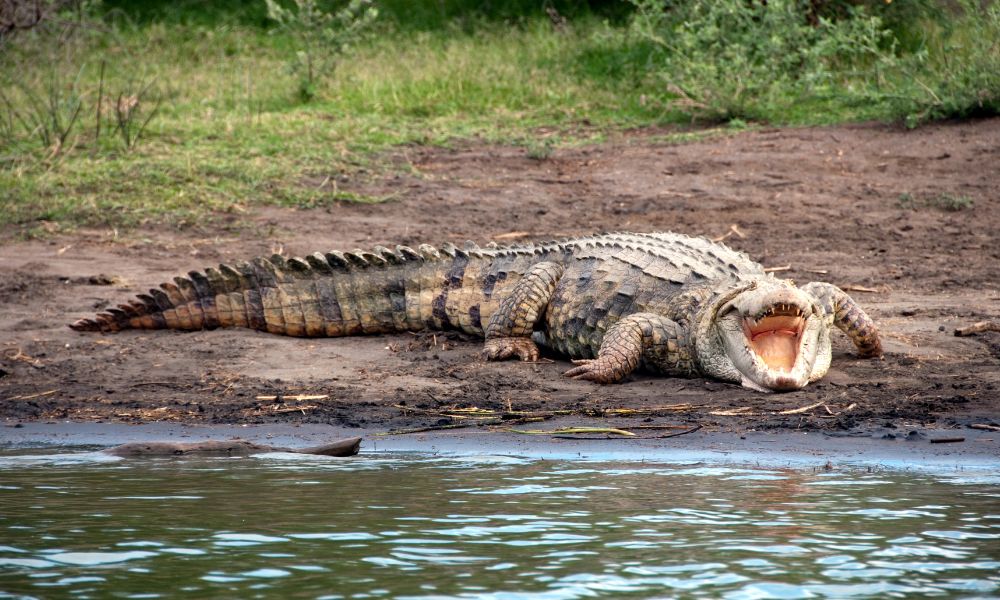
Nile Crocodile
Scientific name: Crocodylus niloticus
Where to spot it in Kruger
Scan sandbanks and rocky shores along the Olifants, Letaba and Sabie rivers, and the edges of dams. Mid-morning, when they bask in the sun with their mouths open, is the best time.
Nile Crocodile at a glance
- Length: 3.5–5 m (large males can exceed 5 m)
- Weight: 225–750 kg
- Lifespan: 50–70 years in the wild
- Diet: Fish, plus zebra, wildebeest, impala and birds
- Nesting: Female lays 25–80 eggs in a sand nest, hatching after about 90 days
- Active: Basks by day and hunts mostly at dusk and night
- Habitat: Rivers, dams and wetlands
- Conservation status: Least Concern (IUCN Red List)
Lesser-known facts
A mother crocodile guards her nest for about three months. When the hatchlings call from inside their eggs, she digs them out and carries them in her mouth, gently, down to the water.
The temperature of the nest decides whether the eggs become males or females. Warm nests produce mostly males, so a single sunny or shady spot can change a whole clutch.
Crocodiles bask with their mouths wide open to cool down, and they swallow stones that may help with balance and digestion. They lie almost motionless for hours, then strike from the water in a split second.
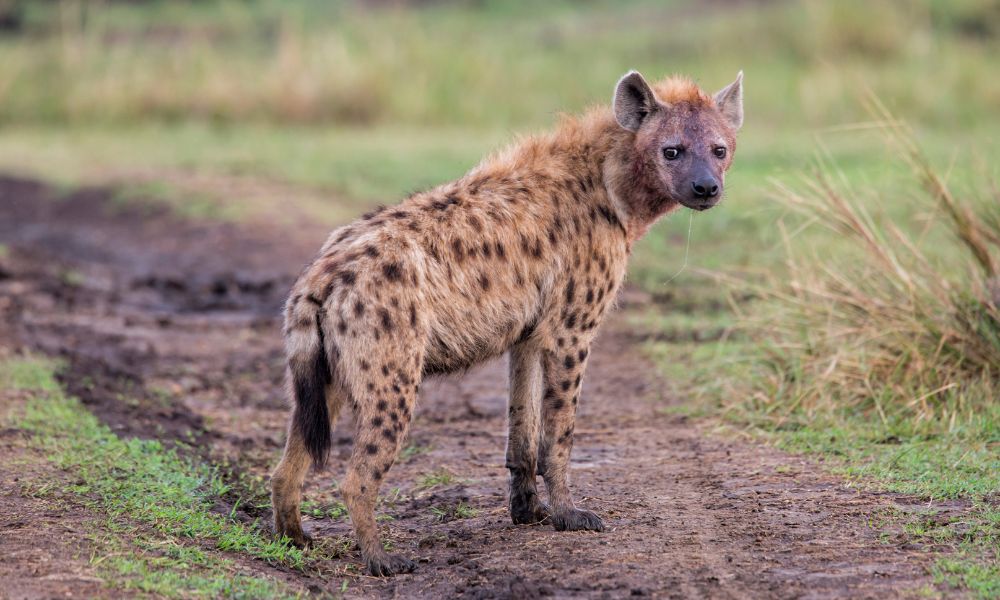
Spotted Hyena
Scientific name: Crocuta crocuta
Where to spot it in Kruger
Look for dens near road culverts and drainage pipes, and for clans gathering at kills at dusk. Night drives and early mornings give the best chances.
Spotted Hyena at a glance
- Height: 70–90 cm at the shoulder
- Weight: 40–65 kg (females are larger than males)
- Lifespan: 12–20 years in the wild
- Diet: Wildebeest, zebra, impala and other antelope, plus carrion
- Clan size: Up to 80 members, led by a dominant female
- Active: Mostly at night, dusk and dawn
- Gestation: About 110 days, usually 1–2 cubs
- Conservation status: Least Concern (IUCN Red List)
Lesser-known facts
Spotted hyenas are far more than scavengers. They hunt and kill most of their own food, and lions often steal from them, not the other way around.
Hyena clans are run by females. The females are larger than the males and hold the top ranks, and a cub inherits its place in the clan from its mother.
The famous "laugh" is really a nervous or excited call. A hyena's jaws crush bone with ease, and its stomach acid digests it, which is why hyena droppings are often chalky white. Their long "whoop" call can carry for several kilometres at night.
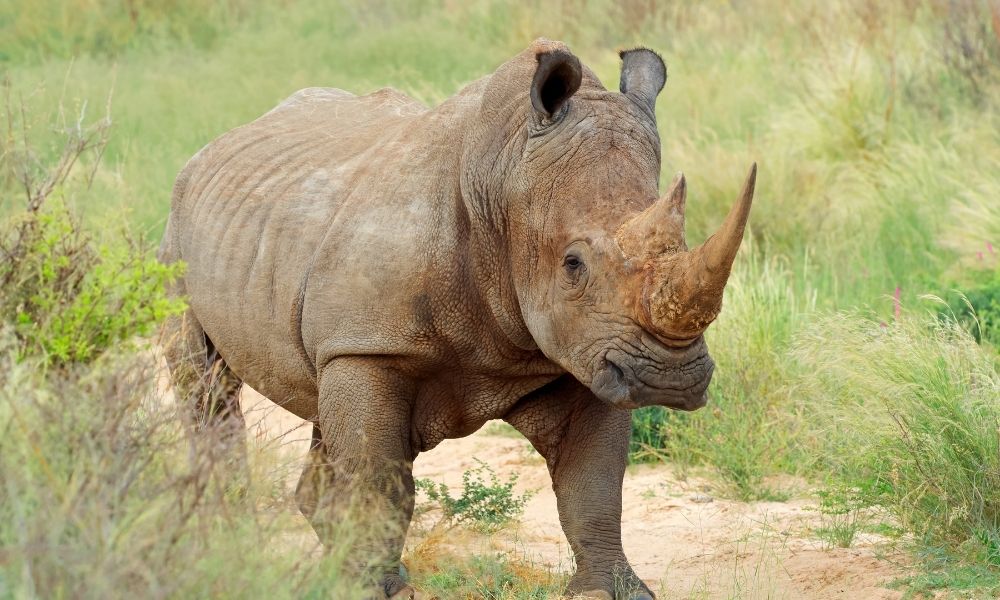
White Rhino
Scientific name: Ceratotherium simum
Where to spot it in Kruger
For their protection, we never share where rhino are seen. On a guided drive your guide reads the signs, such as tracks and dung middens, to find them. Morning and late afternoon drives are best.
White Rhino at a glance
- Height: 1.5–1.8 m at the shoulder
- Weight: 1,800–2,300 kg (bulls), 1,600–1,800 kg (cows)
- Lifespan: 35–50 years in the wild
- Diet: Grazer, mostly short grasses
- Social life: Cows and calves in small groups, bulls hold territories
- Active: Grazes in the morning and evening, rests in shade at midday
- Gestation: About 16 months, a single calf
- Conservation status: Near Threatened (IUCN Red List)
Lesser-known facts
The white rhino is the second-largest land animal after the elephant. Despite the name it is grey. A popular story says "white" comes from the Afrikaans word for wide, describing the broad, square lip it uses to graze.
Its horn is made of keratin, the same material as your fingernails, and it keeps growing throughout the animal's life. Bulls mark their territory by scattering dung in the same spots, called middens, and the rest of the rhinos in the area read these like a message board.
Calves walk in front of their mothers, unlike black rhino calves, which follow behind. Kruger holds one of the largest white rhino populations in the world, but poaching has cut numbers sharply in recent years.