Impala Lily
✓ Reviewed by Nhongo Safaris Field Guide · Updated 4 November 2026
Impala Lily at a glance
- Height1–3 m, a small shrub or tree
- FlowersWhite with pink to crimson edges, on bare branches in winter
- Flowering seasonAbout June to September, before the leaves appear
- TrunkA swollen base that stores water
- SeedsLong twin pods with silky-haired seeds that blow away on the wind
- ToxicityThe sap is highly poisonous
- HabitatDry, rocky slopes and sandy soils
- Conservation statusLeast Concern
Track and paw print
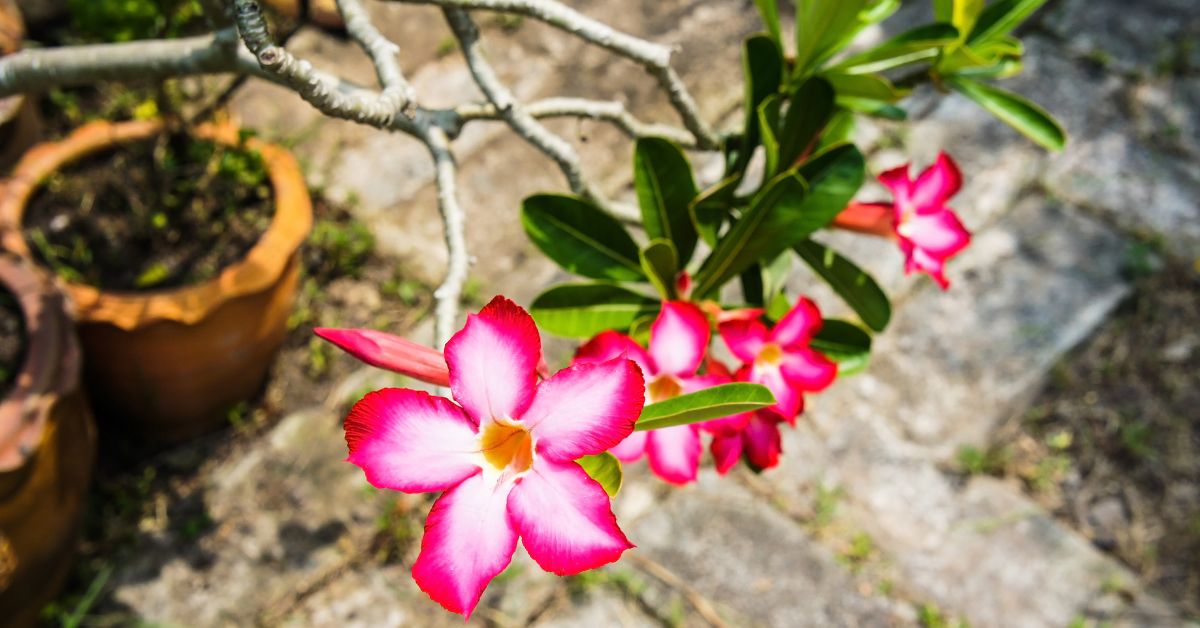
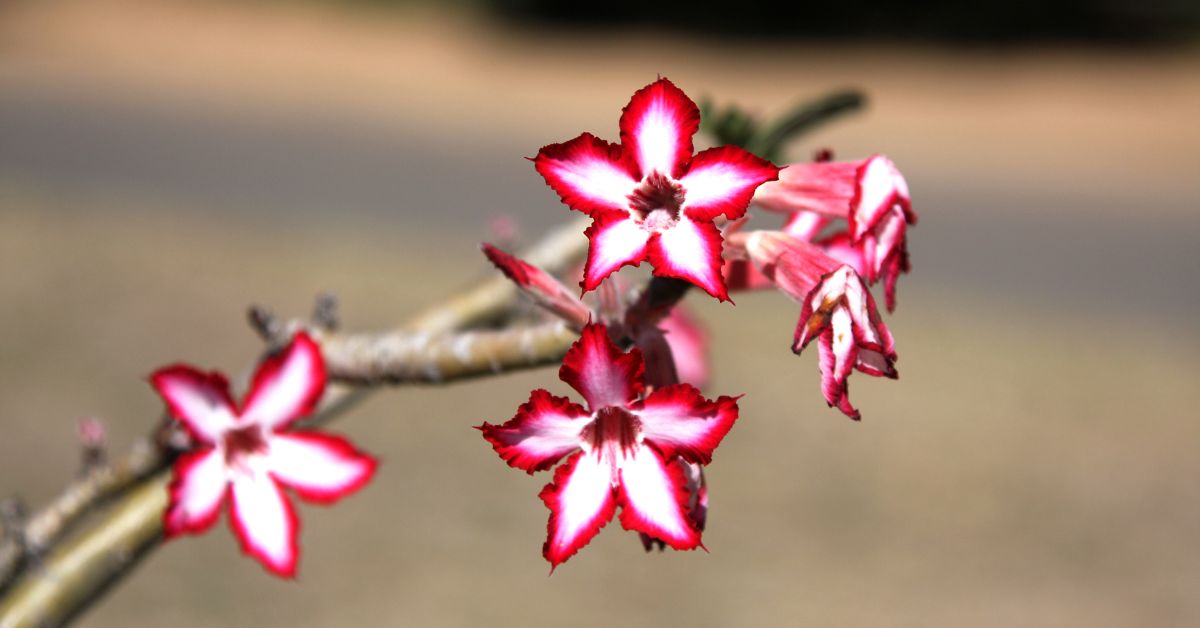
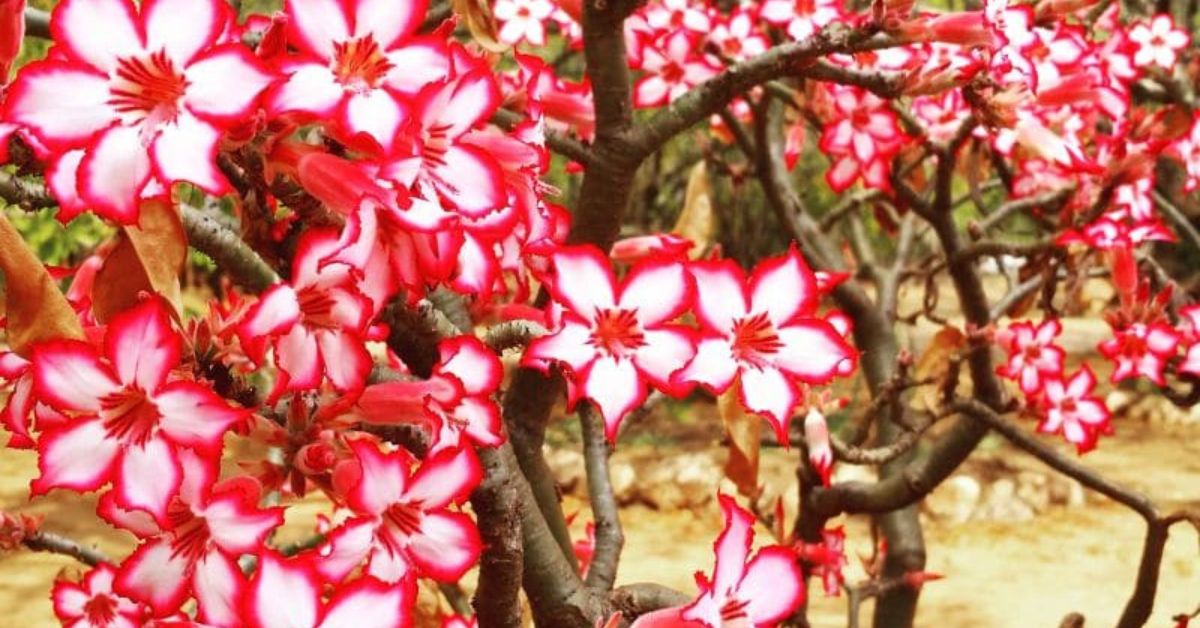
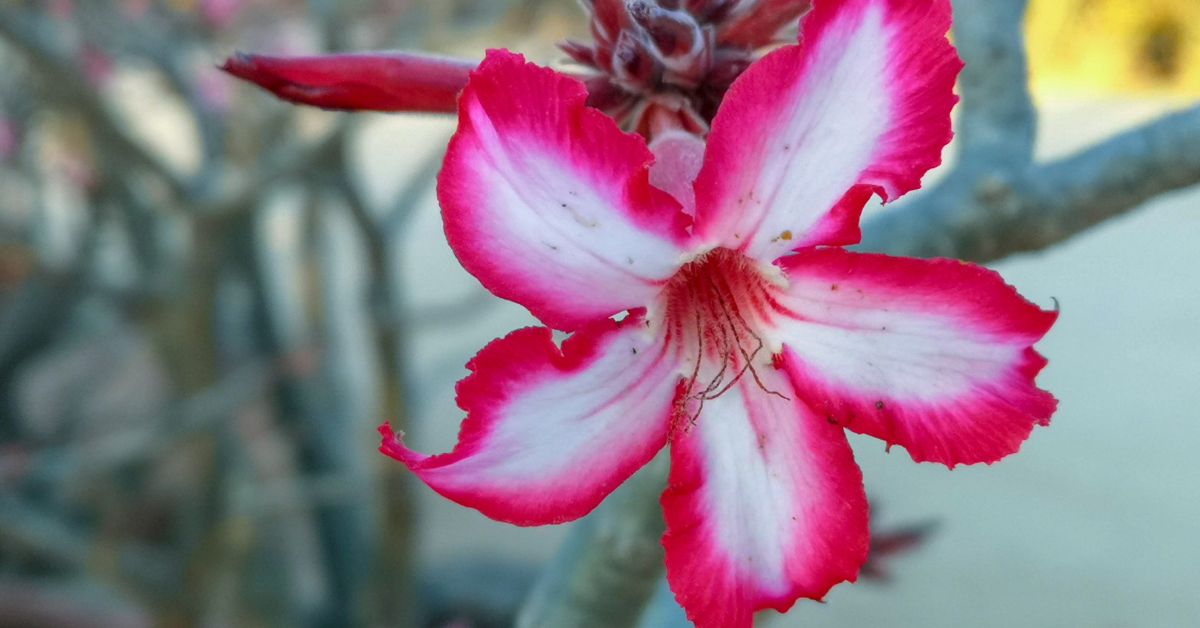
Each flower has five white petals edged in pink or crimson.
Lesser-known facts
Despite its name, the impala lily is not a true lily. It belongs to the oleander family and is a close relative of the desert rose.
The flowers open on bare branches in the dry winter, long before the leaves appear. At a time of year when most of the bush is brown, a flowering impala lily is a splash of pink.
The sap contains powerful heart toxins, which hunters traditionally used on arrow tips. It is a good reason to admire the plant from a distance and never touch it.
Where to spot it in Kruger
Look for splashes of pink on bare, rocky slopes and sandy ground in winter, mostly in the northern half of the park. The flowers appear before the leaves.
Look for pink flowers on bare, twisted branches against the pale winter bush. Admire it from the road and never touch the plant, because the sap is poisonous.
Photo gallery
Questions and answers
Is the impala lily really a lily?
No. Despite its name it is not a true lily. It belongs to the oleander family and is a close relative of the desert rose.
When does the impala lily flower?
In winter, from about June to September. The flowers open on bare branches before the leaves appear, so the plant is covered in pink blooms.
Is the impala lily poisonous?
Yes. The sap is highly poisonous and was traditionally used by hunters on arrow tips. Never touch the plant or break a branch, and keep children and pets away.
Where is the best place to see impala lilies in Kruger?
Look on dry, rocky slopes and sandy ground, mostly in the northern half of the park. Winter is the best time, because the flowers appear on bare branches and are easy to see.
Why does the impala lily have a swollen trunk?
The swollen base stores water, which helps the plant survive the long dry season in the park's rocky, sandy soils.
Best time to see the Impala Lily
- Jan
- Feb
- Mar
- Apr
- May
- Jun
- Jul
- Aug
- Sep
- Oct
- Nov
- Dec
Best months: Jun–Sep
The flowers open on bare branches in winter, from about June to September, and the leaves follow. In summer the plant is green and much harder to notice.
About the Impala Lily
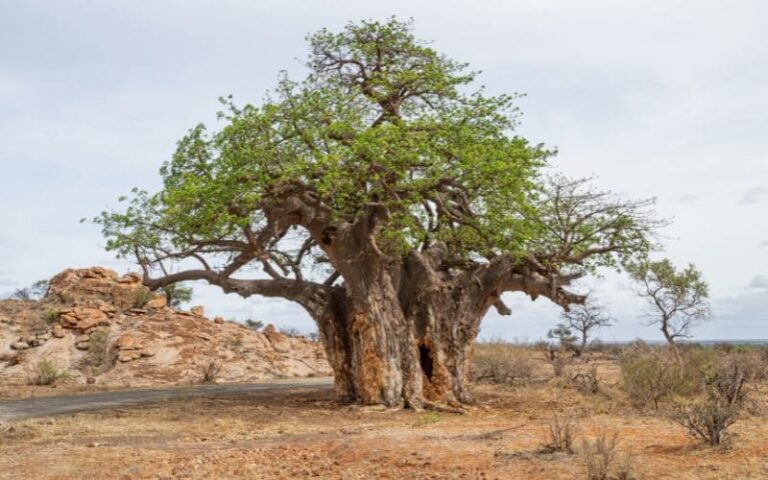
The impala lily is one of the most eye-catching plants in the Kruger National Park. In the dry winter, when most of the bush is brown and bare, this small succulent tree bursts into flower, covering its twisted branches with white blooms edged in pink and crimson. It is not a true lily, but a relative of the desert rose and the oleander.
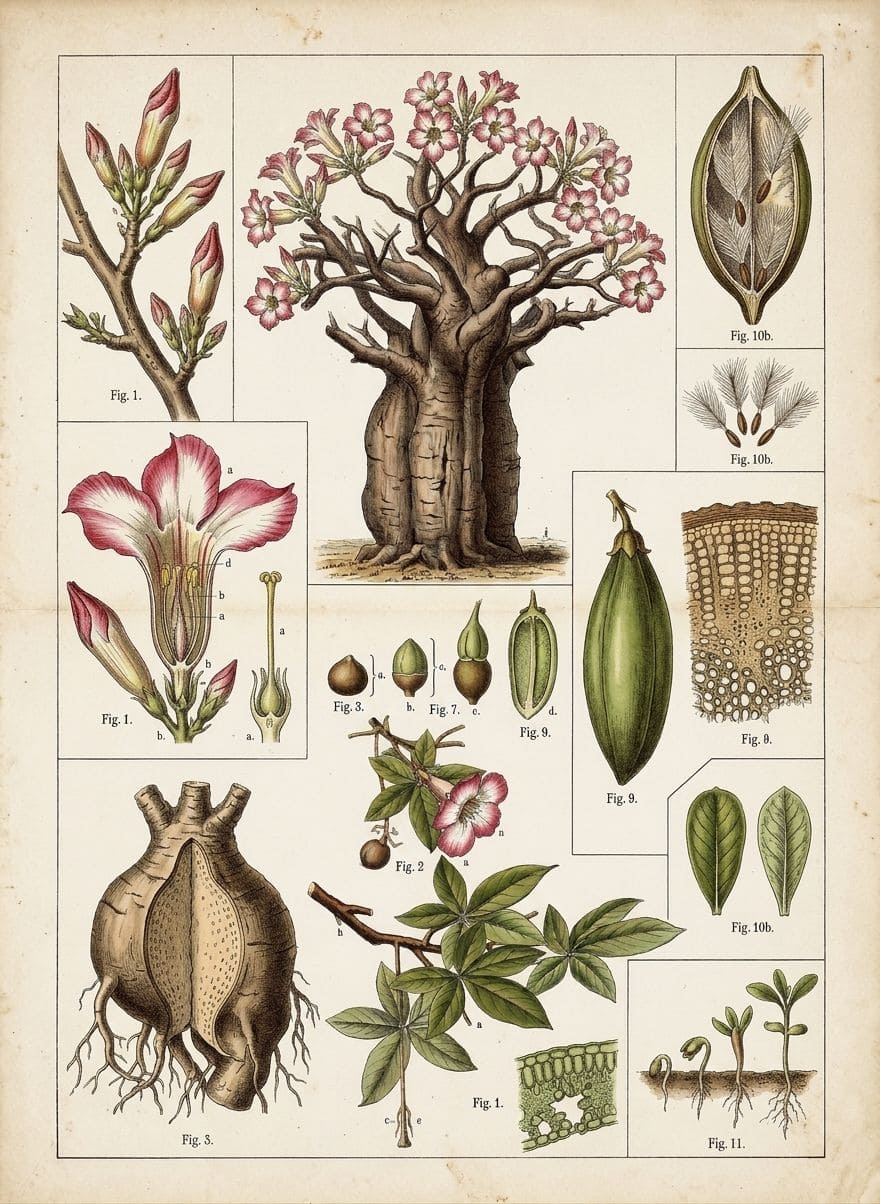
The impala lily grows on dry, rocky slopes and sandy soils, with a swollen base that stores water through the long dry season. The flowers open before the leaves appear, and long twin seed pods later release silky-haired seeds that drift away on the wind. The sap is highly poisonous, and hunters once used it on arrow tips.
On a guided drive, your field guide knows where to find the best flowering plants in winter and explains why this bright, delicate-looking tree is such a tough survivor of the Lowveld.
See the Impala Lily for real
Join one of our guided Kruger safaris and let our field guides find it for you.
Explore Kruger safari packagesRead the full story →Meet the Impala Lily in our 3D Wildlife World
Explore our interactive map of the Kruger National Park, with the animals and the safari jeep.