
Baobab Tree
✓ Reviewed by Nhongo Safaris Field Guide · Updated 4 November 2026
Baobab Tree at a glance
- Height5–25 m, with a trunk that can be 10 m or more across
- LifespanOften over 1,000 years, and some are far older
- LeavesDropped in winter, so the bare tree looks upside down
- FlowersLarge white blooms that open at night, from about October to December
- FruitA velvety pod with a tangy, vitamin C-rich pulp
- PollinatorsFruit bats and hawkmoths
- Water storageThousands of litres held in the trunk
- Conservation statusLeast Concern (IUCN Red List)
Track and paw print
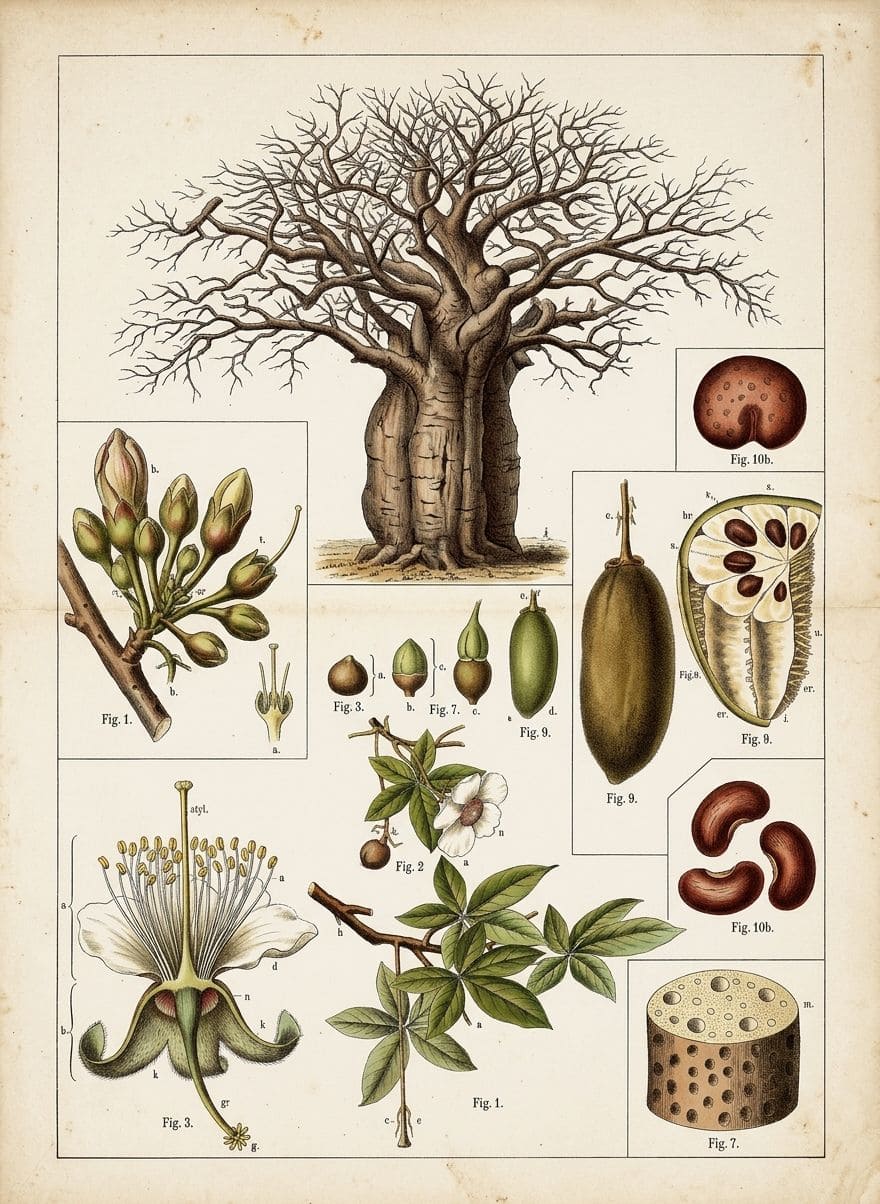
Each leaf has five to seven leaflets, arranged like the fingers of a hand. The fruit is a large, oval pod covered in velvety, greenish-brown hairs. Inside, a dry, tangy white pulp surrounds the seeds and is rich in vitamin C.
Lesser-known facts
Baobabs lose their leaves for much of the year, and the bare, twisting branches look like roots reaching into the sky. That is why the baobab is called the upside-down tree.
The soft, spongy trunk stores huge amounts of water, which lets the tree survive long droughts. Elephants know this, and in dry years they strip the bark and chew the wood for moisture. The trees often heal and keep growing.
The flowers open at night and are gone within a day, pollinated by fruit bats and hawkmoths. A baobab has no reliable growth rings, so scientists have to use radiocarbon dating to work out how old a tree really is.
Where to spot it in Kruger
Scan the hot northern parts of the park, especially rocky outcrops and sandy plains in the far north around Pafuri. The huge swollen trunk stands out for kilometres, and bare winter trees are easiest to find.
Look at the base and the hollows of a big baobab for signs of life. Bats, owls and bushbabies often shelter inside, and the bark feels soft and fibrous to the touch.
Photo gallery


Questions and answers
How old are baobab trees?
Many baobabs are over 1,000 years old, and some of Africa's biggest are thought to be considerably older. They have no reliable growth rings, so scientists use radiocarbon dating to estimate their age.
Why is the baobab called the upside-down tree?
The baobab drops its leaves for much of the year, and its bare, twisting branches look like roots sticking up into the sky.
Where is the best place to see baobab trees in Kruger?
Look in the hot northern parts of the park, especially on rocky outcrops and sandy plains in the far north. The huge swollen trunk stands out for kilometres, and bare winter trees are the easiest to find.
Can you eat baobab fruit?
Yes. The pulp inside the velvety pod is tangy and rich in vitamin C, and it is dried and sold as baobab powder in many countries.
How does a baobab survive droughts?
The soft, spongy trunk stores thousands of litres of water, which the tree draws on in dry years. Elephants sometimes strip the bark to reach that moisture.
Best time to see the Baobab Tree
- Jan
- Feb
- Mar
- Apr
- May
- Jun
- Jul
- Aug
- Sep
- Oct
- Nov
- Dec
Best months: Oct–Dec
Baobabs can be seen all year round. The big white flowers open at night from about October to December, and in winter the bare branches look like roots.
About the Baobab Tree
The baobab is the most recognisable tree in the Kruger National Park and one of the oldest living things in Africa. Its huge, swollen trunk can be 10 m or more across, and when the tree loses its leaves in winter, its bare, twisting branches look like roots, which is why it is called the upside-down tree.
Baobabs are survivors. The soft, spongy trunk stores thousands of litres of water, and the tree lives for centuries, with many individuals over a thousand years old. The large white flowers open at night and are pollinated by fruit bats and hawkmoths, and the velvety fruit pods hold a tangy pulp rich in vitamin C. Bats, owls and bushbabies shelter in the hollows, and elephants strip the bark for moisture in dry years.
On a guided drive, your field guide stops at the best specimens, explains how to read the age and the scars on the trunk, and points out the wildlife that depends on the tree.
See the Baobab Tree for real
Join one of our guided Kruger safaris and let our field guides find it for you.
Explore Kruger safari packagesRead the full story →Meet the Baobab Tree in our 3D Wildlife World
Explore our interactive map of the Kruger National Park, with the animals and the safari jeep.