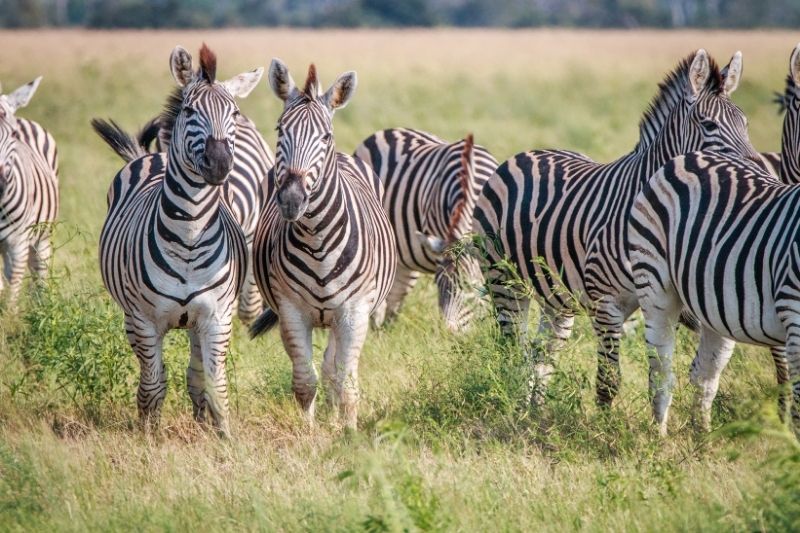
Burchell’s Zebra
✓ Reviewed by Nhongo Safaris Field Guide - Gift · Updated 4 November 2026
Burchell’s Zebra at a glance
- Height1.2–1.4 m at the shoulder
- Weight220–320 kg
- Lifespan20–25 years in the wild
- DietGrazer, mostly tall, coarse grass
- Social lifeFamily groups of one stallion, several mares and their foals
- ActiveBy day, resting in the shade at midday
- GestationAbout 12–13 months, a single foal
- Conservation statusNear Threatened for the plains zebra (IUCN Red List)
Track and paw print
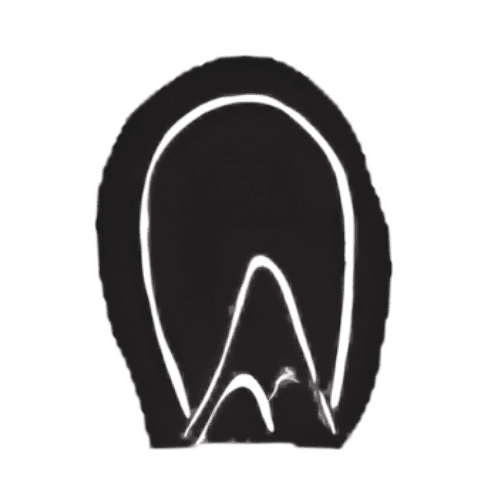
Roughly 10 cm across. A zebra leaves a rounded single-hoof print like a horse's, not split in two like an antelope's.
Lesser-known facts
No two zebras have exactly the same stripes, so each one has its own pattern. A foal can stand within about 15 minutes of birth, and its mother keeps other zebras away at first so that the foal learns to recognise her by her stripes, scent and voice.
Zebras often graze alongside wildebeest and other animals. A zebra's strong teeth bite off the tall, tough grass first, which leaves shorter, softer grass for the animals that follow. Together their many eyes, ears and noses are good at spotting danger early.
Burchell's zebra has faint brown "shadow stripes" between its black ones, mostly on the rump. Scientists think the stripes may help keep biting flies away, and the zebra's call is a bark, closer to a dog's than a horse's.
Where to spot it in Kruger
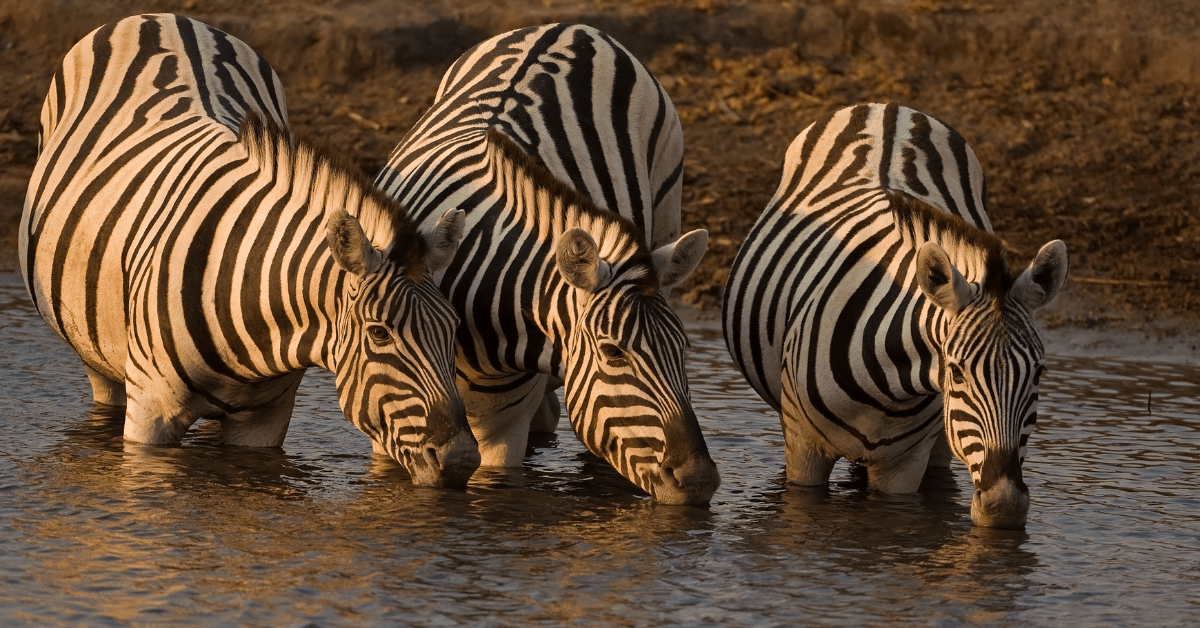
Scan open grassland and the edges of waterholes, often mixed in with wildebeest and impala. Look in the early morning and late afternoon, when they come down to drink.
Check zebra herds for wildebeest and impala mixed in with them. If the zebras stand alert and stare in one direction, a predator may be close.
Photo gallery


Questions and answers
Why do zebras have stripes?
Scientists are still studying this. The leading explanation is that the stripes keep biting flies away. They may also confuse predators when a herd moves together, and help zebras recognise one another.
Where is the best place to see zebras in Kruger?
Look on open grassland and near waterholes, often mixed in with wildebeest and impala. The open plains of the central region are especially good, and early morning and late afternoon give the best sightings.
Is Burchell's zebra a different species from the plains zebra?
Burchell's zebra is a subspecies of the plains zebra. It's the zebra you will see in Kruger, and it can be told apart by the faint brown "shadow stripes" between its black stripes.
Do zebras live in herds?
Yes. The basic unit is a family group of one stallion, several mares and their foals. Several family groups often graze together in larger herds, which gives more eyes to watch for danger.
What eats zebras in Kruger?
Lions are the main predator of zebras. Spotted hyenas and wild dogs target foals and weaker animals, and crocodiles can catch zebras drinking at the water's edge.
Best time to see the Burchell’s Zebra
- Jan
- Feb
- Mar
- Apr
- May
- Jun
- Jul
- Aug
- Sep
- Oct
- Nov
- Dec
Best months: May–Sep
In the dry winter months zebras gather near water and the short grass makes the herds easy to see. Foals arrive during the summer rains, from about November to March.
About the Burchell’s Zebra
Burchell’s zebra is the zebra of the Kruger National Park, a stocky, striped grazer you’ll meet on open grassland across the park. Each zebra’s stripes are unique, a bit like a fingerprint, and the faint brown shadow stripes between the black ones are the feature that sets Burchell’s zebra apart from other kinds.
Zebras live in close family groups led by a stallion, and several groups often join together to graze and drink. They are tough, coarse-grass eaters, which makes them important to other animals. Their strong teeth crop the tall, dry grass first and leave shorter, softer grass behind for the antelope that follow.
On a guided drive, your field guide looks for zebra near waterholes and on open plains, often mixed in with wildebeest and impala. Zebras stand together and watch for danger, so their behaviour is also a good clue that a predator may be nearby.
See the Burchell’s Zebra for real
Join one of our guided Kruger safaris and let our field guides find it for you.
Explore Kruger safari packagesRead the full story →Meet the Burchell’s Zebra in our 3D Wildlife World
Explore our interactive map of the Kruger National Park, with the animals and the safari jeep.