Impala
✓ Reviewed by Nhongo Safaris Field Guide - Gift · Updated 4 November 2026
Impala at a glance
- Height75–95 cm at the shoulder
- Weight40–75 kg (rams are heavier than ewes)
- Lifespan12–15 years in the wild
- DietGrass and leaves, switching with the seasons
- Social lifeFemale herds with lambs, and separate bachelor herds
- ActiveBy day, resting in shade at midday
- GestationAbout 6.5 months, a single lamb
- Conservation statusLeast Concern (IUCN Red List)
Track and paw print
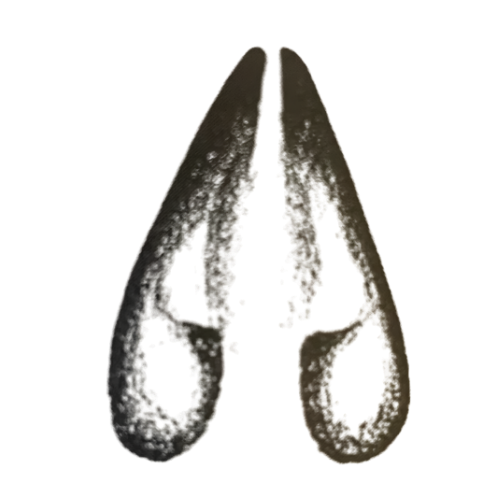
Roughly 5–6 cm long. A small, neat, two-toed hoof print, shaped like a narrow heart.
Lesser-known facts
Guides have a nickname for the impala, "the McDonald's of Kruger". They are found almost everywhere, and they are on the menu for nearly every predator in the park, from leopards and lions to wild dogs and hyenas.
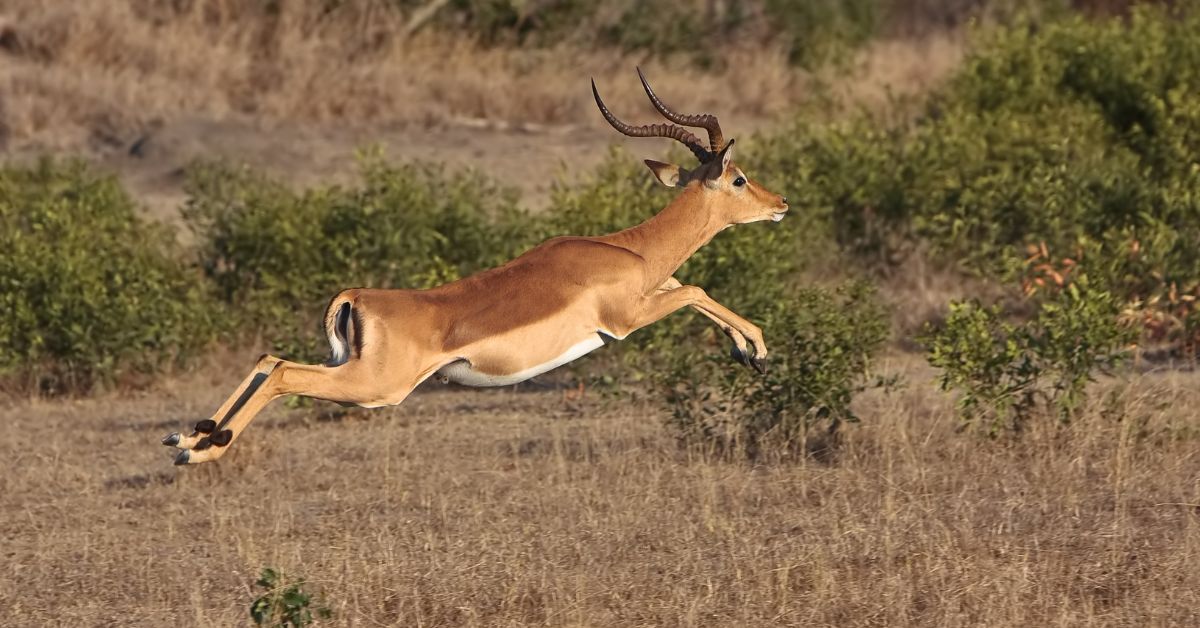
An impala can leap up to 3 m high and about 10 m in a single bound. When a predator appears, the herd sometimes scatters in all directions, which confuses the hunter, and the startled animals "explode" into the air.
During the rut, in autumn, the rams make loud, rasping roars and grunts as they fight for females. Many first-time visitors hear it at night and think it is a lion.
Most lambs are born within a few weeks of each other at the start of the summer rains. So many babies at once means predators cannot catch them all.
Where to spot it in Kruger
Impala are one of the most common antelope in the park. Scan open woodland and the edges of rivers and waterholes, especially in the early morning and late afternoon. Lambs appear in November and December.
Look at the rump of an impala: the black stripes form a distinctive "M" shape. If a whole herd freezes and stares in one direction, a predator may be close.
Photo gallery
Questions and answers
Why are impala called the McDonald's of Kruger?
It's a joke among guides. Impala are found almost everywhere in the park, and they are on the menu for nearly every predator.
How high can an impala jump?
An impala can leap about 3 m high and cover around 10 m in a single bound. When a herd is chased, the animals often jump in all directions at once, which confuses the predator.
Do both male and female impala have horns?
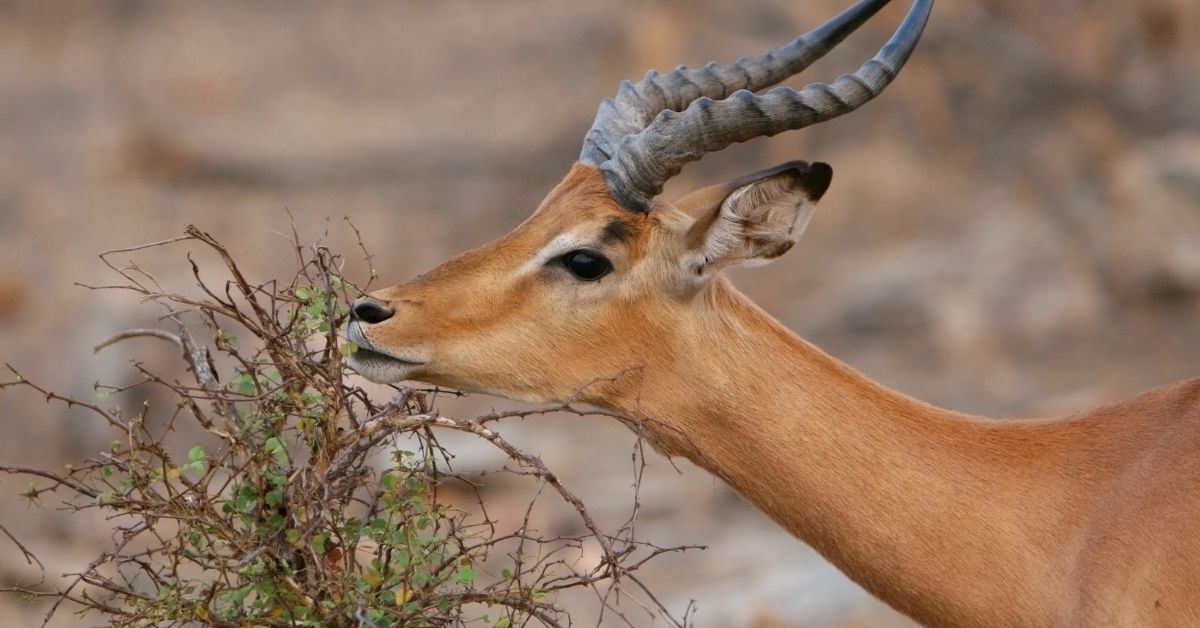
No, only the males, called rams, have horns. They are long, ridged and lyre-shaped, and can reach about 90 cm.
Where is the best place to see impala in Kruger?
Almost anywhere. Look in open woodland and near rivers and waterholes, especially in the early morning and late afternoon. They are one of the easiest animals to find in the park.
What eats impala?
Wild dogs, leopards, cheetahs, lions and hyenas all hunt impala. Crocodiles catch them at the water's edge, and pythons and eagles take the lambs.
Best time to see the Impala
- Jan
- Feb
- Mar
- Apr
- May
- Jun
- Jul
- Aug
- Sep
- Oct
- Nov
- Dec
Best months: Nov–Dec, Apr–May
Impala can be seen all year round. November and December bring the lambs, and the autumn rut in April and May is when the rams roar and chase each other.
About the Impala
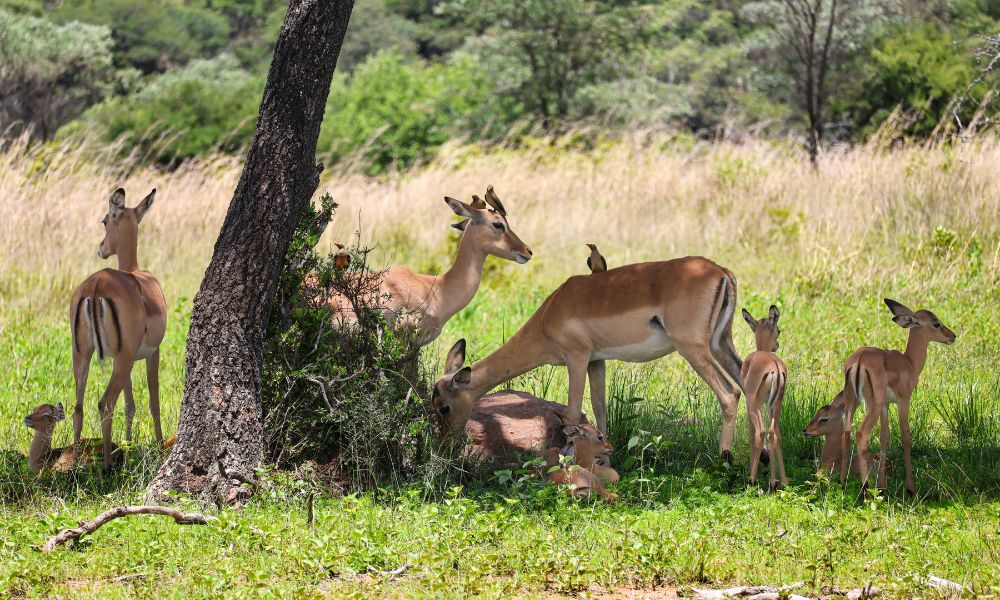
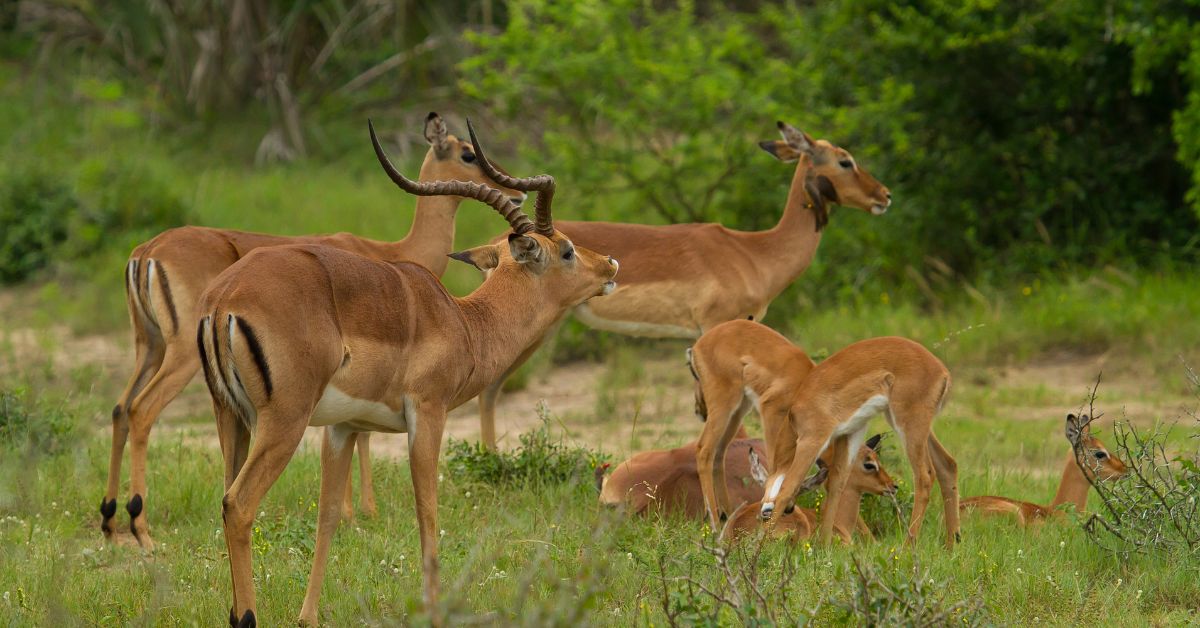
The impala is the most common antelope in the Kruger National Park, and probably the first animal many visitors ever see. It is a graceful, reddish-brown antelope with a white belly and the distinctive black “M” on its rump. Only the rams carry horns, long and lyre-shaped.
Impala live in herds. Ewes and lambs gather in breeding herds, while young males form bachelor herds until they are strong enough to hold a territory. During the autumn rut the rams grunt and roar as they fight to keep their females, and many first-time visitors mistake the noise for a lion.
Because so many predators depend on them, impala are always alert. They snort an alarm call and can leap and bound away in all directions, which is why guides call them the McDonald’s of Kruger. On a guided drive, watching how impala behave is one of the best ways to tell whether a predator is nearby.
See the Impala for real
Join one of our guided Kruger safaris and let our field guides find it for you.
Explore Kruger safari packagesRead the full story →Meet the Impala in our 3D Wildlife World
Explore our interactive map of the Kruger National Park, with the animals and the safari jeep.