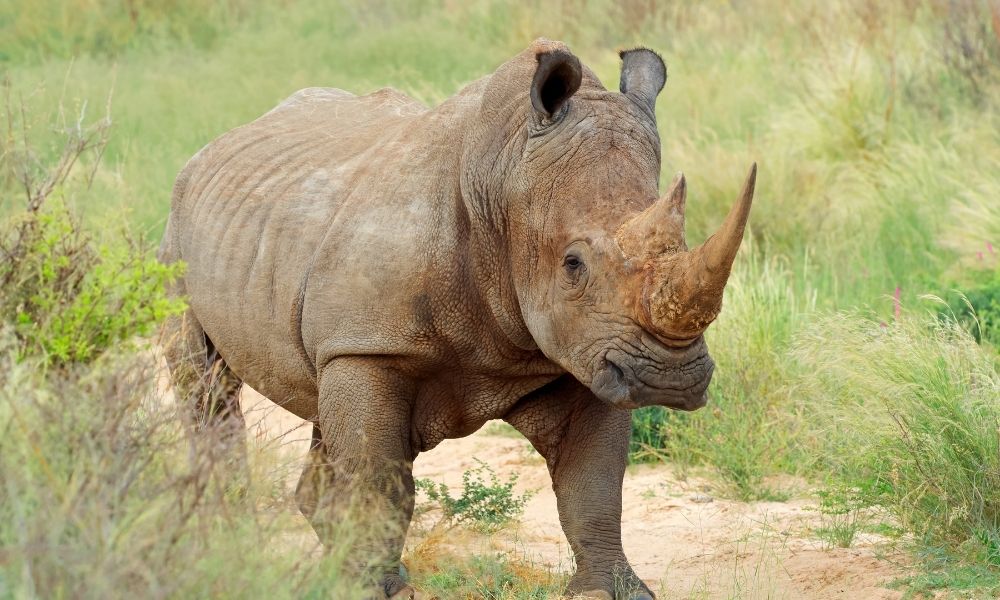
White Rhino
✓ Reviewed by Nhongo Safaris Field Guide - Gift · Updated 4 November 2026
White Rhino at a glance
- Height1.5–1.8 m at the shoulder
- Weight1,800–2,300 kg (bulls), 1,600–1,800 kg (cows)
- Lifespan35–50 years in the wild
- DietGrazer, mostly short grasses
- Social lifeCows and calves in small groups, bulls hold territories
- ActiveGrazes in the morning and evening, rests in shade at midday
- GestationAbout 16 months, a single calf
- Conservation statusNear Threatened (IUCN Red List)
Track and paw print
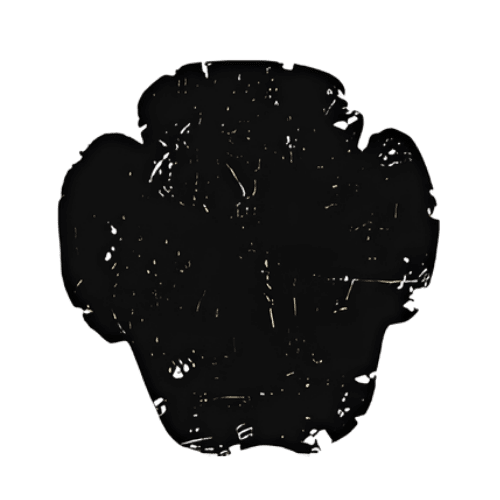
Roughly 20–25 cm across, with three broad toes and a rounded, three-lobed outline.
Lesser-known facts
The white rhino is the second-largest land animal after the elephant. Despite the name it is grey. A popular story says "white" comes from the Afrikaans word for wide, describing the broad, square lip it uses to graze.
Its horn is made of keratin, the same material as your fingernails, and it keeps growing throughout the animal's life. Bulls mark their territory by scattering dung in the same spots, called middens, and the rest of the rhinos in the area read these like a message board.
Calves walk in front of their mothers, unlike black rhino calves, which follow behind. Kruger holds one of the largest white rhino populations in the world, but poaching has cut numbers sharply in recent years.
Where to spot it in Kruger
For their protection, we never share where rhino are seen. On a guided drive your guide reads the signs, such as tracks and dung middens, to find them. Morning and late afternoon drives are best.
Rhino have poor eyesight but an excellent sense of smell and hearing. Your guide reads their signs, such as wide three-toed tracks and the dung middens rhino use as a message board.
Photo gallery


Questions and answers
Where can I see white rhino in Kruger?
For their protection, we never share where rhino are seen. On a guided safari your field guide reads the signs and finds them for you, so the safest way to see a white rhino is with an experienced guide.
What is the difference between a white rhino and a black rhino?
White rhino are larger, with a wide, square lip for grazing and a prominent hump on the shoulders. Black rhino are smaller, with a pointed, hooked lip for browsing leaves. Both are grey, so the names have nothing to do with colour.
Why are rhino poached?
Rhino are killed for their horns, which are sold illegally. Rhino horn is made of keratin, the same material as your fingernails, and has no proven medical value. Poaching has cut rhino numbers sharply, and rangers work hard to protect the survivors.
How big is a white rhino?
The white rhino is the second-largest land animal after the elephant. A bull can weigh 1,800 to 2,300 kg and stands about 1.5 to 1.8 m at the shoulder.
Are rhino dangerous?
Yes. The white rhino is one of the Big Five, a name hunters gave to the five animals most dangerous to hunt on foot. Rhino have poor eyesight, but they can charge very fast over short distances if they feel threatened. Always stay inside your vehicle, keep your distance and follow your guide's instructions.
Best time to see the White Rhino
- Jan
- Feb
- Mar
- Apr
- May
- Jun
- Jul
- Aug
- Sep
- Oct
- Nov
- Dec
Best months: May–Sep
Rhino live here all year round. In the dry winter months the bush is thinner, which makes any sighting easier, but your field guide does the finding.
About the White Rhino
The white rhino is the second-largest land animal on Earth and one of the Big Five, the name hunters gave to the five animals most dangerous to hunt on foot. A massive grey grazer with a broad, square lip, a humped shoulder and two horns, it spends its days feeding on short grass, resting in the shade and wallowing in mud.
White rhino are quiet and fairly shy. Cows live with their calves in small groups, and bulls hold territories that they mark with dung middens, which the other rhinos in the area read like a message board. A calf walks in front of its mother, which is one way to tell a white rhino from a black rhino.
Kruger has been home to one of the largest white rhino populations in the world, but poaching for their horns has reduced numbers sharply in recent years. For their protection, we never share where rhino are seen. On a guided safari, your field guide reads the signs and finds them for you, and every safari helps support the people and parks that protect them.
See the White Rhino for real
Join one of our guided Kruger safaris and let our field guides find it for you.
Explore Kruger safari packagesRead the full story →Meet the White Rhino in our 3D Wildlife World
Explore our interactive map of the Kruger National Park, with the animals and the safari jeep.