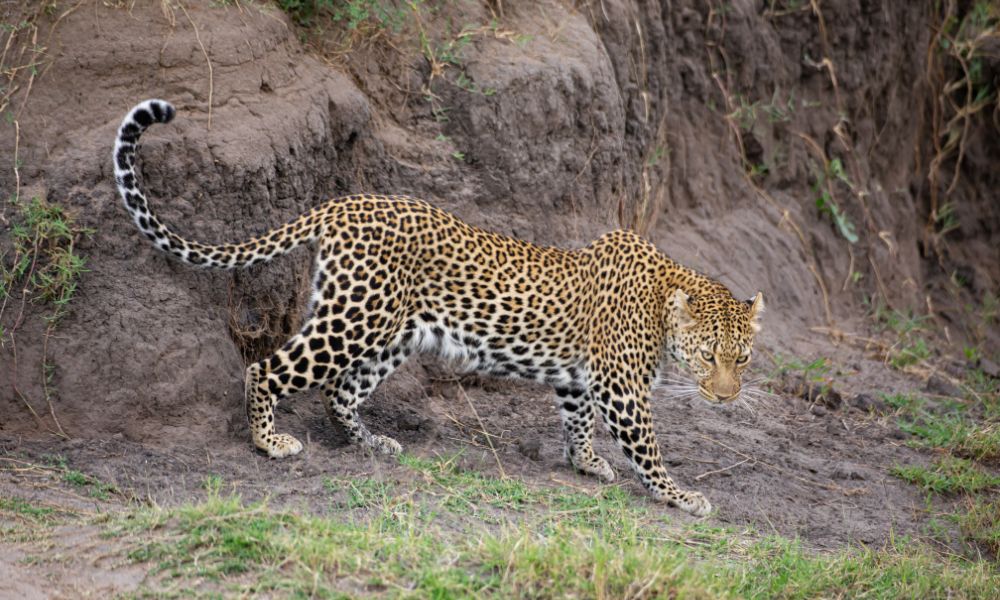
African Leopard
Scientific name: Panthera pardus
✓ Reviewed by Nhongo Safaris Field Guide · Updated 4 November 2026
African Leopard at a glance
- Height60–70 cm at the shoulder
- Weight60–90 kg (males), 30–60 kg (females)
- Length1.6–2.3 m including the tail
- Lifespan12–15 years in the wild
- DietImpala, bushbuck, duiker, warthog and birds
- ActiveMostly at night, dawn and dusk
- GestationAbout 100 days, usually 2–3 cubs
- Conservation statusVulnerable (IUCN Red List)
Track and paw print

Roughly 7–9 cm across, with no claw marks because the claws are retracted.
Lesser-known facts
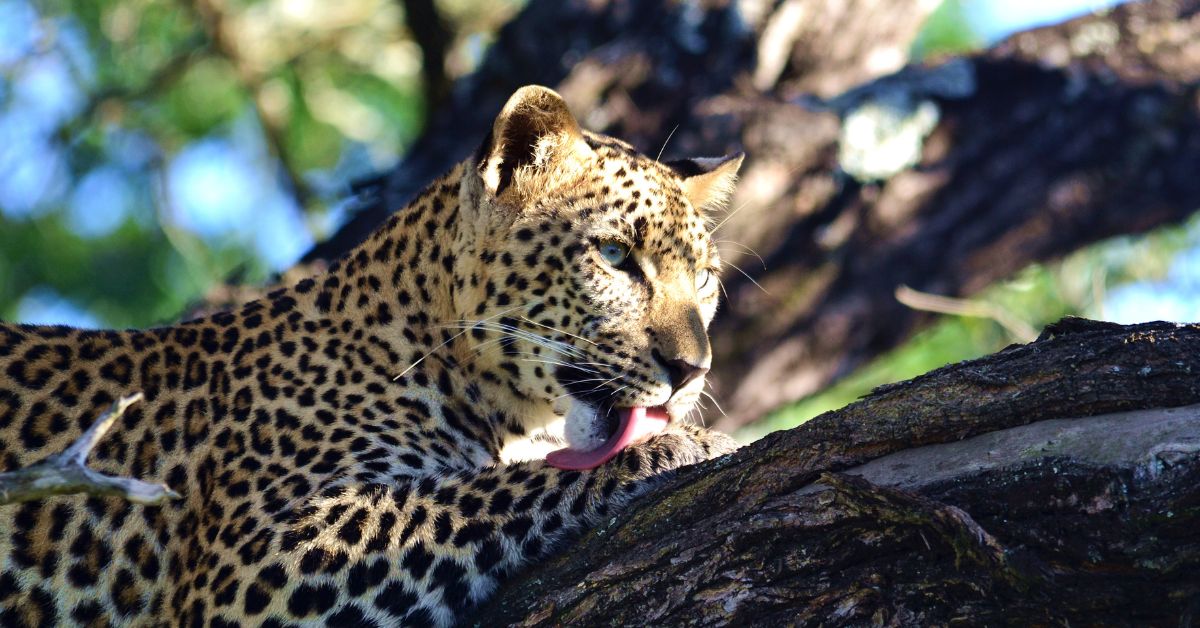
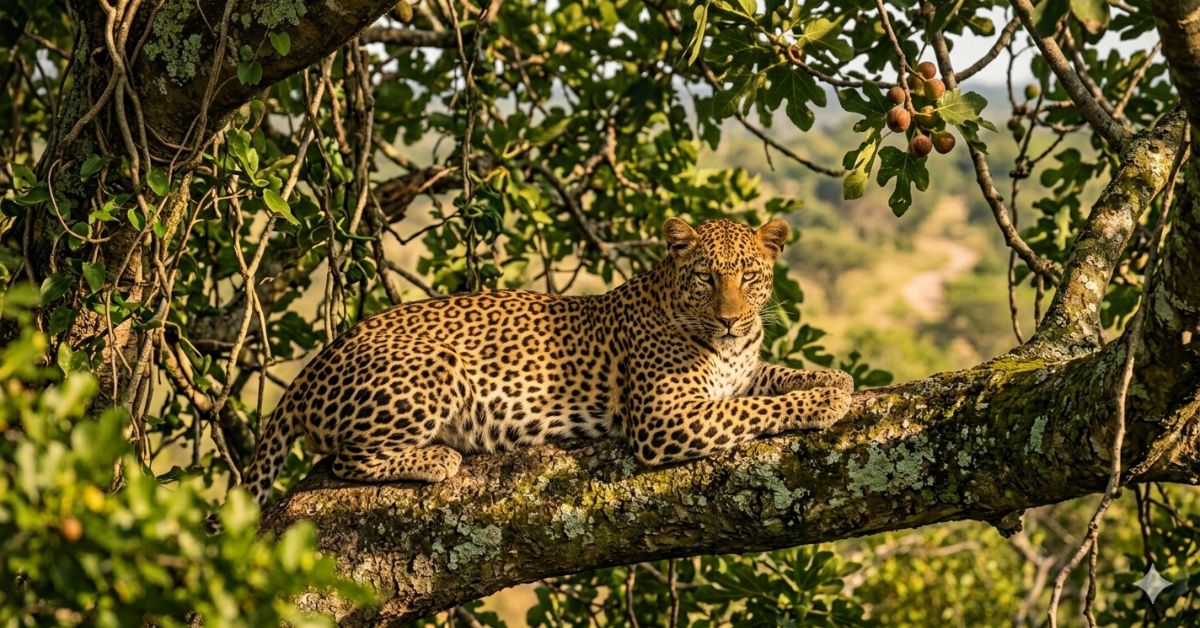
Leopards are astonishingly strong climbers and often drag kills weighing more than themselves high into tree branches to keep them away from hyenas.
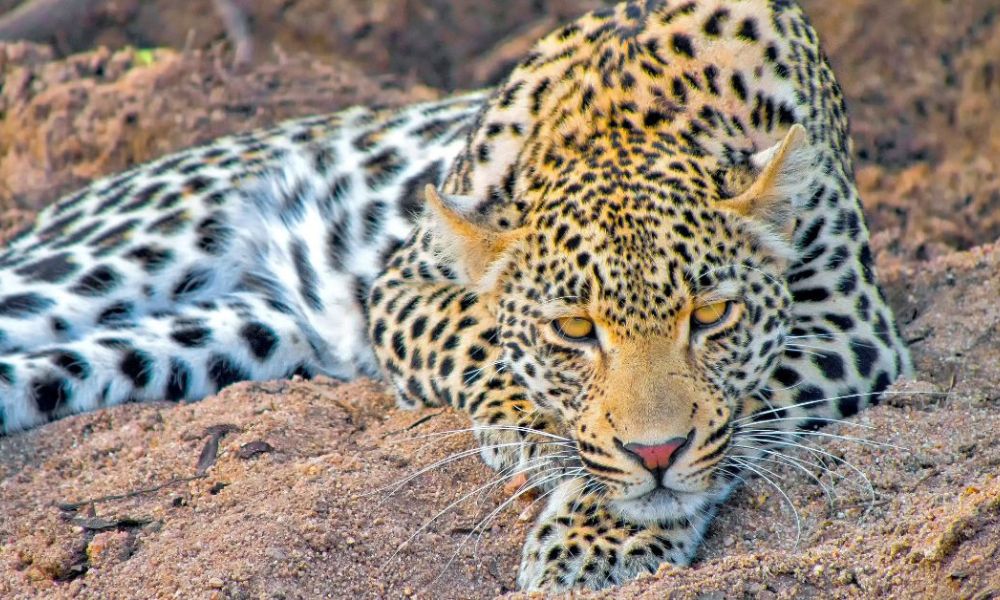
No two leopards have the same spots. Guides identify individual cats by the pattern of spots on the whiskers' base, and many Kruger leopards are known by name.
A leopard's call sounds like someone sawing wood, and it carries a long way at night.
Where to spot it in Kruger
Scan large trees along riverbeds such as the Sabie and Sand rivers, and rocky outcrops. Dawn, dusk and night drives give the best chances.
Listen for the alarm calls of impala, baboons and francolins. They often give away a leopard moving nearby.
Photo gallery
Questions and answers
What do leopards eat in Kruger?
Leopards are opportunistic hunters. In Kruger they eat mainly impala, bushbuck and duiker, as well as warthog, birds and smaller animals when the chance comes.
Where is the best place to see a leopard in Kruger?
Scan large trees along riverbeds and rocky outcrops, and drive slowly at dawn and dusk. A guided night drive gives the best chance, because leopards are mostly active after dark.
Can leopards climb trees?
The African leopard is the most elusive of Kruger's Big Five, and spotting one is the highlight of many a safari. It is a solitary, mostly nocturnal cat that spends the day resting in a tree, in thick riverside bush or among rocks, perfectly hidden by its spotted coat.Each leopard holds its own territory, which it marks with scent, scratch marks and a rasping, sawing call. A male's territory often overlaps those of several females. Mothers raise their cubs alone, hiding them in dens among rocks or thickets for the first weeks of life.On a guided drive, your field guide watches for signs such as tracks, alarm calls from impala and baboons, and drag marks, which show where a leopard has been. With patience, and sometimes a little luck, a sighting lasts long enough to watch the cat walk, hunt or settle in a tree.
When is the best time to see leopards in Kruger?
The dry winter months, from May to September, are best because the vegetation is thinner and animals gather near water. Drive at dawn and dusk, or book a guided night drive.
Are leopards dangerous?
Leopards are wild predators and deserve respect, but they almost always avoid people. Stay inside your vehicle on a self-drive, and follow your guide's instructions on a guided safari.
Best time to see the African Leopard
- Jan
- Feb
- Mar
- Apr
- May
- Jun
- Jul
- Aug
- Sep
- Oct
- Nov
- Dec
Best months: May–Sep
In the dry winter months the bush is thinner and animals gather near water, so leopards are easier to find. Early mornings and late afternoons are best.
Watch the African Leopard
About the African Leopard
The African leopard is the most elusive of Kruger’s Big Five, and spotting one is the highlight of many a safari. It is a solitary, mostly nocturnal cat that spends the day resting in a tree, in thick riverside bush or among rocks, perfectly hidden by its spotted coat.
Each leopard holds its own territory, which it marks with scent, scratch marks and a rasping, sawing call. A male’s territory often overlaps those of several females. Mothers raise their cubs alone, hiding them in dens among rocks or thickets for the first weeks of life.
On a guided drive, your field guide watches for signs such as tracks, alarm calls from impala and baboons, and drag marks, which show where a leopard has been. With patience, and sometimes a little luck, a sighting lasts long enough to watch the cat walk, hunt or settle in a tree.
See the African Leopard for real
Join one of our guided Kruger safaris and let our field guides find it for you.
Explore Kruger safari packagesRead the full story →Meet the African Leopard in our 3D Wildlife World
Explore our interactive map of the Kruger National Park, with the animals and the safari jeep.