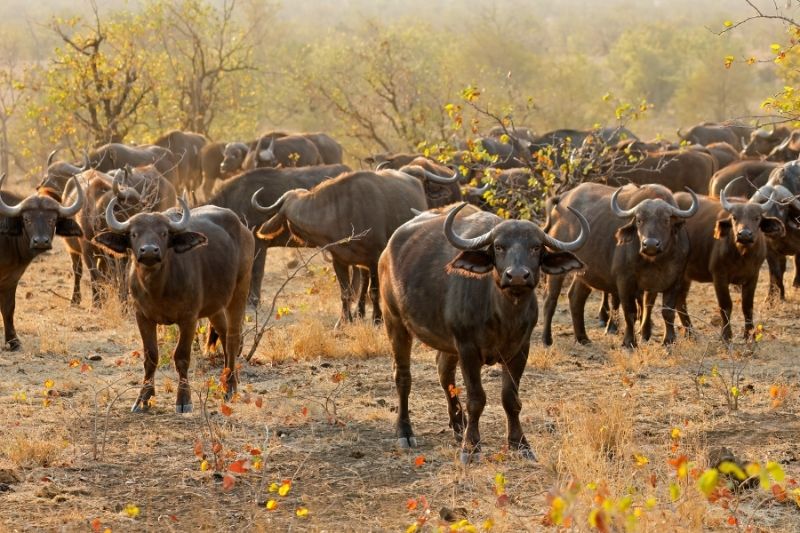
Cape Buffalo
✓ Reviewed by Nhongo Safaris Field Guide - Gift · Updated 4 November 2026
Cape Buffalo at a glance
- Height1.4–1.7 m at the shoulder
- Weight600–900 kg (bulls), 400–600 kg (cows)
- Lifespan15–20 years in the wild
- DietGrazer, mostly grasses
- Herd sizeFrom a few dozen to over 1,000 animals
- ActiveGrazes at night and in the morning, rests in shade at midday
- GestationAbout 11 months, a single calf
- Conservation statusNear Threatened (IUCN Red List)
Track and paw print
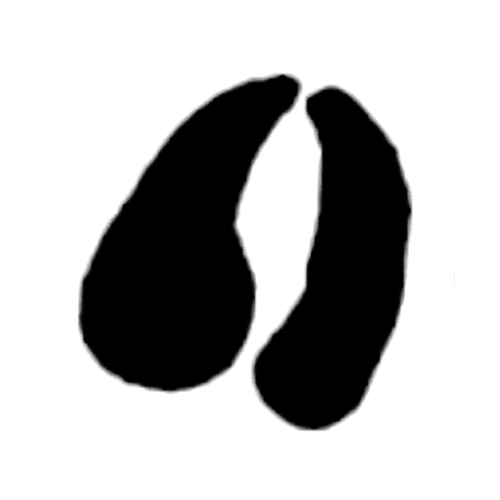
Roughly 12–15 cm long. A broad, rounded, two-toed hoof print, wider and heavier than any antelope's.
Lesser-known facts
Buffalo are one of the Big Five, and have a reputation as one of Africa's most dangerous animals. A wounded or cornered buffalo is unpredictable, which is why guides treat lone old bulls with great respect.
The horns of a mature bull join at the base into a thick, bony shield called the boss, which protects the forehead. Herds can also stand together against danger, and buffalo have been filmed chasing off lions to rescue a calf.
Old bulls often leave the herd and spend their time in small groups, nicknamed "dagga boys" after the Zulu word for mud. Birds called oxpeckers ride on their backs and feed on ticks.
Where to spot it in Kruger
Scan open grassland and the edges of rivers and waterholes, where big dark herds gather to drink. Old bulls often wallow in mud near the water. Early morning and late afternoon give the best sightings.
Look for a cloud of dust and listen for the herd, because big groups are noisy. Lone old bulls, called dagga boys, often rest in mud wallows close to the water.
Photo gallery


Questions and answers
Why is the Cape buffalo one of the Big Five?
The Big Five is the name hunters gave to the five animals most dangerous to hunt on foot, and it has nothing to do with size. A wounded or cornered buffalo is unpredictable, which is why it earned its place on the list.
How big are buffalo herds in Kruger?
Herds range from a few dozen animals to more than 1,000. Large herds are most often seen on open grassland and near water in the dry season.
What are dagga boys?
Dagga boys are old bulls that have left the herd and live alone or in small groups. The name comes from a Zulu word for mud, because they like to wallow. They can be grumpy and unpredictable, so guides keep a safe distance.
Where is the best place to see buffalo in Kruger?
Look on open grassland and along the edges of rivers and waterholes, where the herds come to drink. Early morning and late afternoon give the best sightings.
Do lions hunt buffalo?
Yes, buffalo are a favourite prey of lions, but they are a risky meal. Buffalo herds defend their calves, and herds have been filmed chasing lions away and even rescuing a calf.
Best time to see the Cape Buffalo
- Jan
- Feb
- Mar
- Apr
- May
- Jun
- Jul
- Aug
- Sep
- Oct
- Nov
- Dec
Best months: May–Sep
In the dry winter months the herds gather in large numbers at rivers and waterholes to drink, which makes them easy to find. Early morning and late afternoon are best.
About the Cape Buffalo
The Cape buffalo is one of the Big Five, the name hunters gave to the five animals most dangerous to hunt on foot. It has nothing to do with size, and the buffalo earned its place through a reputation for being tough, unpredictable and dangerous when wounded or cornered.
A big, dark, heavily built grazer, the buffalo is easy to recognise by the thick, curved horns that join across the forehead of a mature bull into a bony shield called the boss. Buffalo live in herds that can number in the hundreds, and they move together across the grassland, drinking in the morning and late afternoon and resting in the shade at midday. Oxpeckers often ride on their backs, feeding on ticks.
Old bulls sometimes leave the herd and spend their time alone or in small groups, wallowing in mud near the water. On a guided drive, your field guide knows how to read the mood of the herd and keep a safe distance, so you can enjoy one of the park’s most impressive animals.
See the Cape Buffalo for real
Join one of our guided Kruger safaris and let our field guides find it for you.
Explore Kruger safari packagesRead the full story →Meet the Cape Buffalo in our 3D Wildlife World
Explore our interactive map of the Kruger National Park, with the animals and the safari jeep.