Hippopotamus
✓ Reviewed by Nhongo Safaris Field Guide - Gift · Updated 4 November 2026
Hippopotamus at a glance
- Height1.3–1.6 m at the shoulder
- Weight1,300–1,800 kg (large bulls are heavier)
- Lifespan40–50 years in the wild
- DietGrazer, about 35–50 kg of grass each night
- Social lifePods of 10–30 led by a dominant bull
- ActiveRests in water by day, grazes at night
- GestationAbout 8 months, a single calf
- Conservation statusVulnerable (IUCN Red List)
Track and paw print

Roughly 25 cm across, with four wide, spread-out toes. Look for the tracks along muddy paths leading from the water to the grazing grounds.
Lesser-known facts
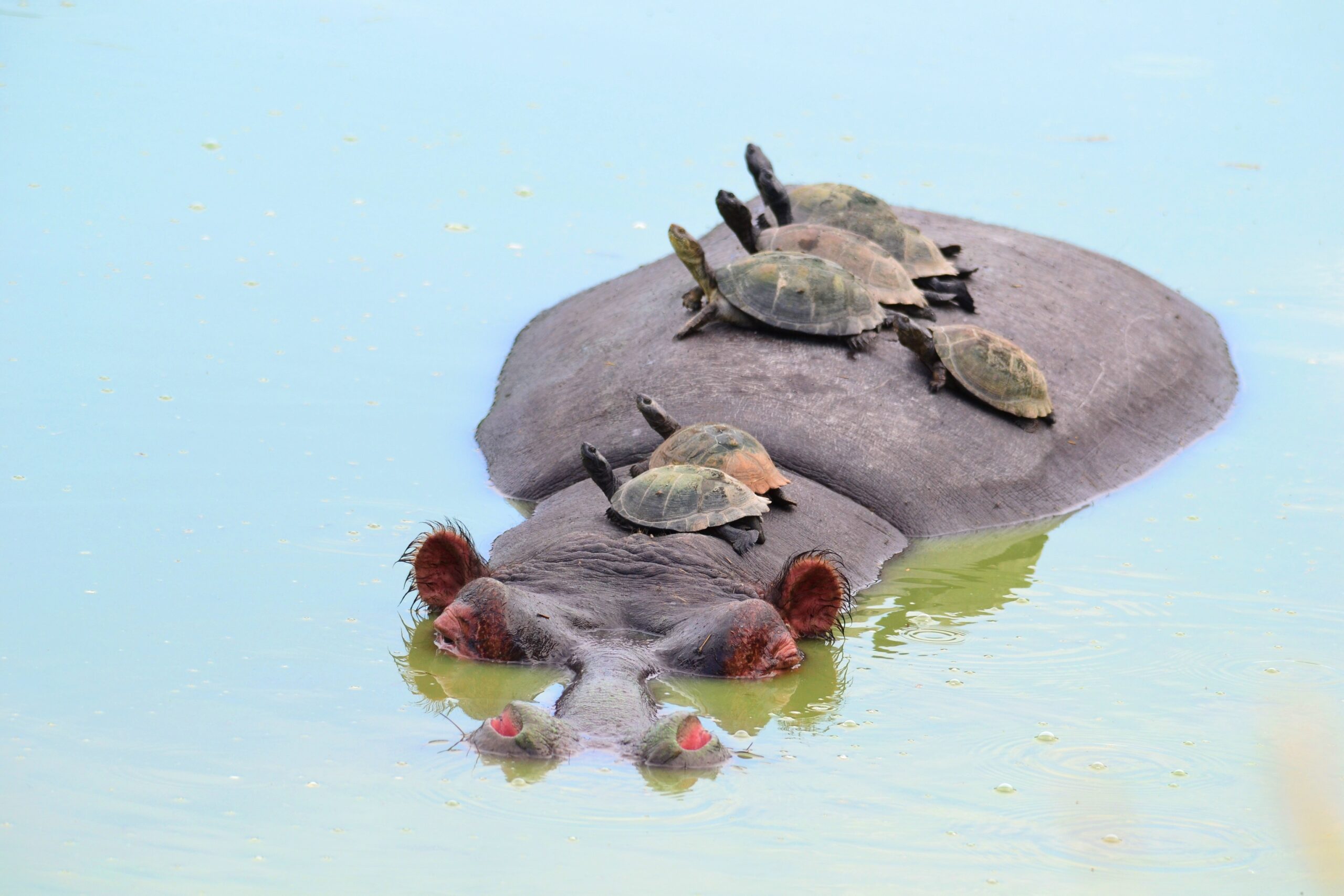
Hippos spend the day in water to keep cool, and at dusk they climb out and walk up to several kilometres to graze. They can hold their breath for around five minutes, and they cannot really swim. They walk or bounce along the bottom instead.
Their skin gives off an oily red-orange fluid that people call "blood sweat". It is neither blood nor sweat, and it works as a natural sunscreen and helps protect against germs.
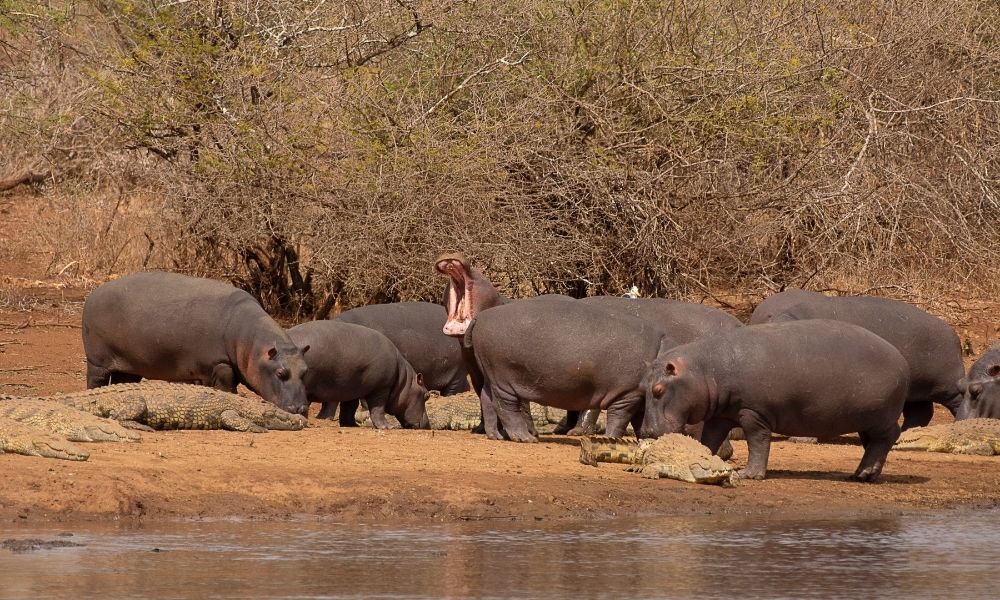
A hippo can open its mouth almost 150 degrees, and its lower canine teeth can grow up to 50 cm long. Despite looking placid, hippos are among the most dangerous animals in Africa, so guides keep well back from the water's edge.
Where to spot it in Kruger
Scan deep pools and slow stretches of rivers and dams, such as the Sabie, Olifants and Letaba rivers. By day look for ears and eyes at the surface, and at dusk for them heading out to graze.
Look for ears, eyes and nostrils just above the surface, and listen for the deep, honking grunts that carry across the water. Hippo paths in the mud show where they come out at night.
Photo gallery


Questions and answers
Is the hippo one of the Big Five?
No. The Big Five is the hunters' list of the animals most dangerous to hunt on foot, and hippos spend most of their time in water, so they were never on it. Even so, hippos are widely seen as one of Africa's most dangerous animals.
Are hippos dangerous?
Yes. Hippos are territorial and unpredictable, and on land they can outrun a person over a short distance. Never go near the water's edge or get between a hippo and the water, and follow your guide's instructions.
Why do hippos stay in the water all day?
It keeps them cool. A hippo's thin skin loses moisture quickly and burns in the sun, so it rests in water by day. At dusk the pod leaves the water and walks up to several kilometres to graze.
Where is the best place to see hippos in Kruger?
Look in deep pools and slow stretches of the Sabie, Olifants and Letaba rivers, and at the edges of dams. By day you will see ears and eyes at the surface, and at dusk you may see them heading out to graze.
What do hippos eat?
Mostly grass. A hippo eats about 35 to 50 kg of grass each night, using its wide, tough lips like a lawnmower. Hippos have occasionally been seen eating meat, such as carcasses, but it is rare and they are not hunters.
Best time to see the Hippopotamus
- Jan
- Feb
- Mar
- Apr
- May
- Jun
- Jul
- Aug
- Sep
- Oct
- Nov
- Dec
Best months: May–Sep
In the dry winter months the rivers shrink and hippos crowd into the deepest pools, which makes them much easier to find. Dusk is the best time, as the pods climb out to graze.
Watch the Hippopotamus
About the Hippopotamus
The hippopotamus is one of the largest land animals in Africa, and the name means “river horse”. It spends its days submerged in rivers and dams, with only its eyes, ears and nostrils above the water, and comes out at dusk to graze on grass, sometimes walking several kilometres from the water.
Hippos live in pods of 10 to 30, led by a dominant bull who defends the stretch of river as his territory. A hippo can open its mouth almost 150 degrees to show its huge teeth, which is a warning rather than a yawn. Its skin gives off an oily red-orange fluid that works as a natural sunscreen.
The hippo is not one of the Big Five, but it is widely seen as one of the most dangerous animals in Africa. On a guided drive, your field guide knows which viewpoints let you watch a hippo pod in safety, and you can learn to read the grunts, yawns and ripples that tell you how the pod is feeling.
See the Hippopotamus for real
Join one of our guided Kruger safaris and let our field guides find it for you.
Explore Kruger safari packagesRead the full story →Meet the Hippopotamus in our 3D Wildlife World
Explore our interactive map of the Kruger National Park, with the animals and the safari jeep.