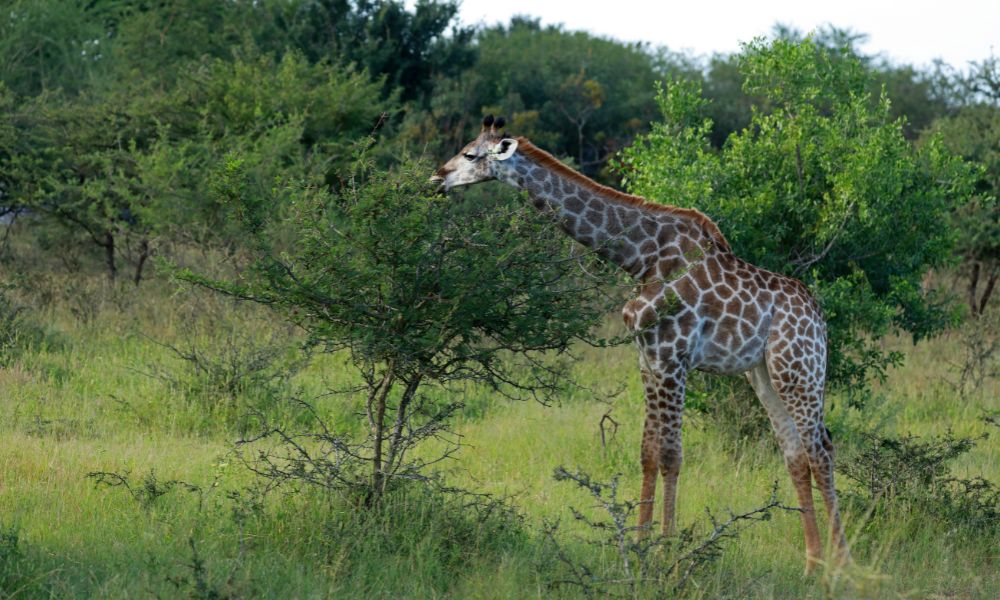
Giraffe
✓ Reviewed by Nhongo Safaris Field Guide · Updated 4 November 2026
Giraffe at a glance
- Height4.3–5.5 m (bulls are taller than cows)
- Weight800–1,400 kg
- Lifespan20–25 years in the wild
- DietLeaves of acacia and other trees, up to about 30 kg a day
- TongueDark purple and 45–50 cm long
- Social lifeLoose herds that change members often
- ActiveBy day, with only short naps
- GestationAbout 15 months, a single calf
- Conservation statusLeast Concern for the southern giraffe (IUCN Red List)
Track and paw print
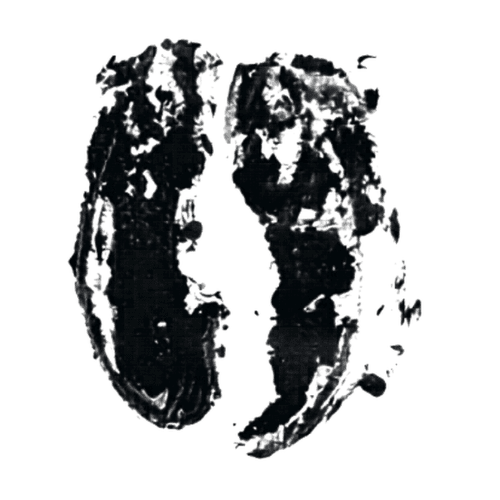
Roughly 15–25 cm long. A large, two-toed hoof print, with the front prints bigger than the hind ones.
Lesser-known facts
A giraffe has the same number of neck bones as you do, seven. Each one is just enormously long, and the neck alone can be around 2 m. A calf drops about 2 m to the ground at birth, since the mother gives birth standing up, and within an hour it is on its feet and walking.
Giraffes chew bones. It looks strange, but old bones are a source of calcium and phosphorus that leaves alone can't always supply. Guides sometimes see a giraffe working a bone for minutes, like a dog with a toy.
Giraffes sleep for only a few minutes at a time, often standing. Recent research also recorded them humming softly at night, a sound that was long missed because it is too low for us to notice.
Where to spot it in Kruger
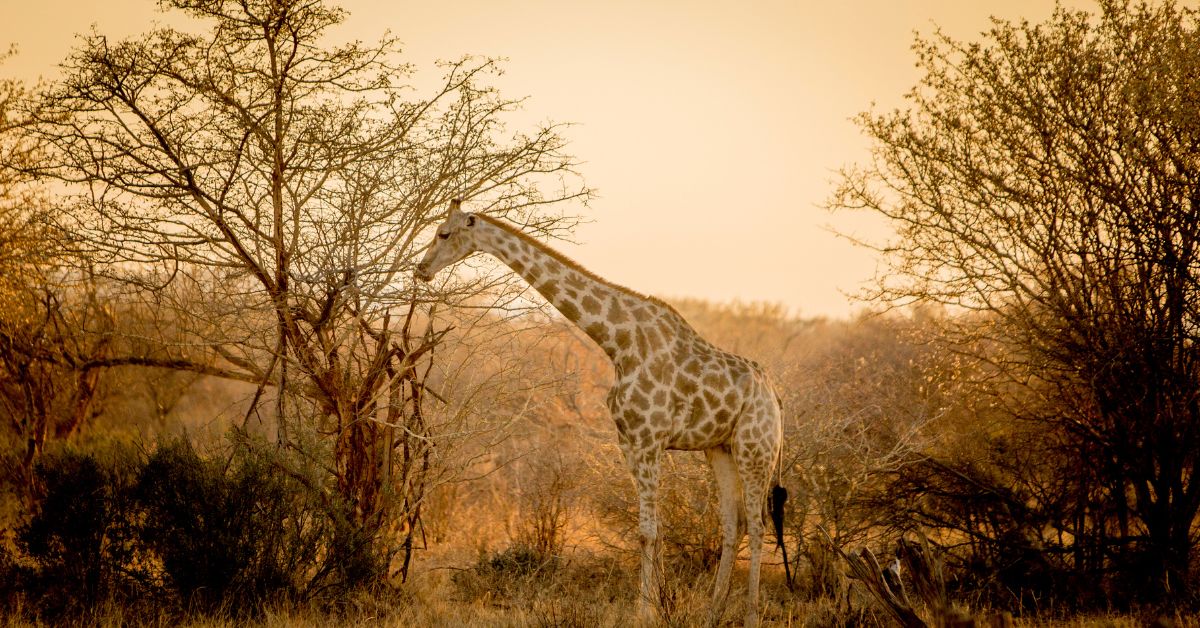
Scan the tops of acacia and knobthorn trees in open woodland and along rivers. They are widespread across the park, and early morning and late afternoon are the best times.
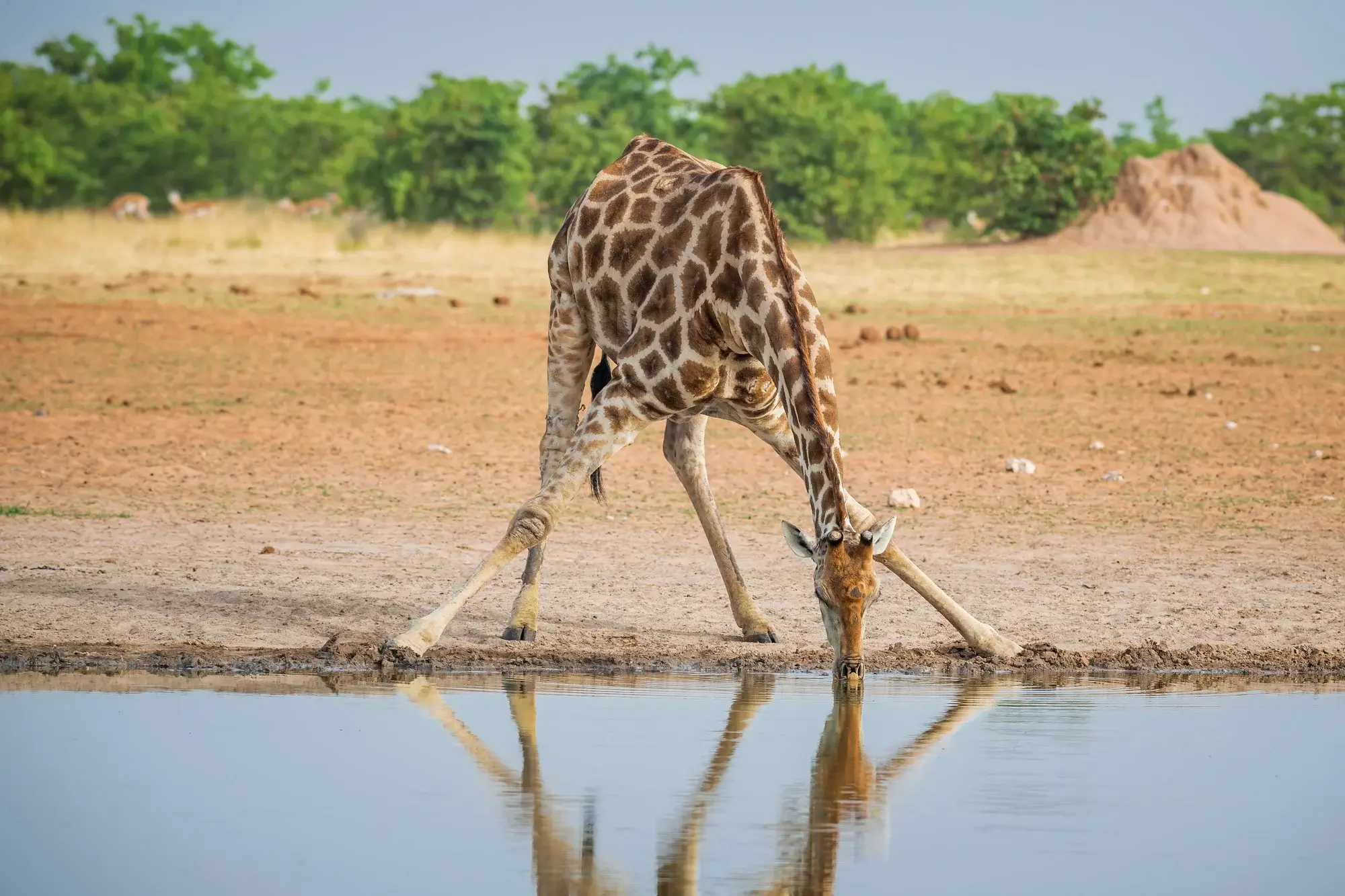
Scan above the tree line for a slowly moving neck. When a giraffe spreads its front legs to drink, it is at its most vulnerable, and other giraffes nearby often keep watch.
Photo gallery

Questions and answers
Why do giraffes have such long necks?
The long neck helps a giraffe reach leaves that other animals can't, high in the trees. Bulls also use their necks in fights, swinging their heads like clubs. Scientists still debate which of these mattered most.
Do giraffes really chew bones?
Yes. Giraffes chew old bones to get calcium and phosphorus, minerals that leaves alone don't always provide. It is rare to see, but guides in Kruger have watched it happen.
How do giraffes drink?
A giraffe spreads its front legs wide or bends its knees to reach the water. It is a risky position, so giraffes drink quickly and carefully. They also get a lot of moisture from leaves and can go for days without drinking.
Where is the best place to see giraffes in Kruger?
Giraffes are widespread across the park. Scan the tops of acacia and knobthorn trees in open woodland and along rivers, especially in the early morning and late afternoon.
Are giraffes dangerous?
Giraffes are gentle and shy, but a kick from a giraffe is powerful enough to injure or even kill a lion. Keep your distance, stay in your vehicle, and follow your guide's instructions.
Best time to see the Giraffe
- Jan
- Feb
- Mar
- Apr
- May
- Jun
- Jul
- Aug
- Sep
- Oct
- Nov
- Dec
Best months: May–Sep
Giraffes are seen all year round. In the dry winter months the trees are bare and the bush is thinner, so their tall shapes are much easier to spot.
Watch the Giraffe
About the Giraffe
The giraffe is the tallest land animal on Earth, with bulls reaching more than 5 m. Its spotted coat and long neck are unmistakable, and from high above the bush it can spot danger from far away. In the Kruger National Park you’ll find giraffe in open woodland and along riverbeds, browsing on the leaves of acacia and other trees.
Giraffes live in loose herds that change members often. They feed mostly in the cooler hours of the day and rest in the shade at midday. A tongue that is around 45 to 50 cm long, dark purple, and tough enough to handle thorns lets them strip leaves from the thorny branches that other animals avoid. Giraffes even chew on old bones, which gives them minerals that leaves can’t supply.
On a guided drive, your field guide watches the tops of the trees to find giraffe, and knows where to stop so you can see them walk, browse and drink. Calves are easy to recognise by their smaller size, and they grow quickly under the watch of the herd.
See the Giraffe for real
Join one of our guided Kruger safaris and let our field guides find it for you.
Explore Kruger safari packagesRead the full story →Meet the Giraffe in our 3D Wildlife World
Explore our interactive map of the Kruger National Park, with the animals and the safari jeep.