Vervet Monkey
✓ Reviewed by Nhongo Safaris Field Guide · Updated 4 November 2026
Vervet Monkey at a glance
- Height40–60 cm in body length, with a tail of 50–75 cm
- Weight4–8 kg (males), 3–5 kg (females)
- Lifespan10–13 years in the wild
- DietFruit, leaves, flowers, seeds, insects, eggs and small animals
- Troop sizeUsually 10–50 monkeys
- Sleeping placesTall trees, often beside rivers
- ActiveBy day
- GestationAbout 5.5 months, a single infant
- Conservation statusLeast Concern (IUCN Red List)
Track and paw print

Roughly 5–8 cm long. A small, hand-like print with five long fingers and a thumb-like big toe, usually found on sandy riverbanks.
Lesser-known facts
Vervet monkeys have different alarm calls for different dangers. One call warns of a leopard, another of an eagle and another of a snake, and each makes the troop react in a different way. Scientists have studied vervets to learn how animals "name" their enemies.
Female vervets run the troop. They keep their rank for life and pass it to their daughters, while young males leave to join other troops when they grow up.
Vervets are curious and resourceful. They eat almost anything, from fruit and flowers to eggs, insects and even small birds, and they are quick to steal food from people who leave it out. In the evening a whole troop climbs into tall riverside trees to sleep.
Where to spot it in Kruger
Scan tall trees along rivers and around rest camps and picnic spots. Troops feed in the early morning and late afternoon, and rest in the shade at midday.
Listen for the troop's alarm calls, which are different for leopards, eagles and snakes. If the monkeys all stare at the ground or up at the sky, stop and look in the same direction.
Photo gallery
Questions and answers
How can I tell a vervet monkey from a baboon?
A vervet is much smaller, with a grey coat, a black face and a long tail. A chacma baboon is far bigger and heavier, with a long, dog-like muzzle and a shorter tail that bends at the base.
Do vervet monkeys have different alarm calls?
Yes. Vervets use different calls for leopards, eagles and snakes, and the troop reacts to each in a different way. It is one of the best-known examples of animal "words".
Where is the best place to see vervet monkeys in Kruger?
Look in tall trees along rivers and around rest camps and picnic spots. Early morning and late afternoon are the best times, when the troop is feeding.
What do vervet monkeys eat?
Almost anything. They eat fruit, leaves, flowers, seeds and insects, and sometimes eggs and small animals. Around camps they steal food, which is why you should never leave any out.
Can I feed vervet monkeys?
No. Feeding wild animals is against the park rules, and it teaches monkeys to steal from people. Keep food locked away and your car windows closed at picnic spots and rest camps.
Best time to see the Vervet Monkey
- Jan
- Feb
- Mar
- Apr
- May
- Jun
- Jul
- Aug
- Sep
- Oct
- Nov
- Dec
Best months: Oct–Dec
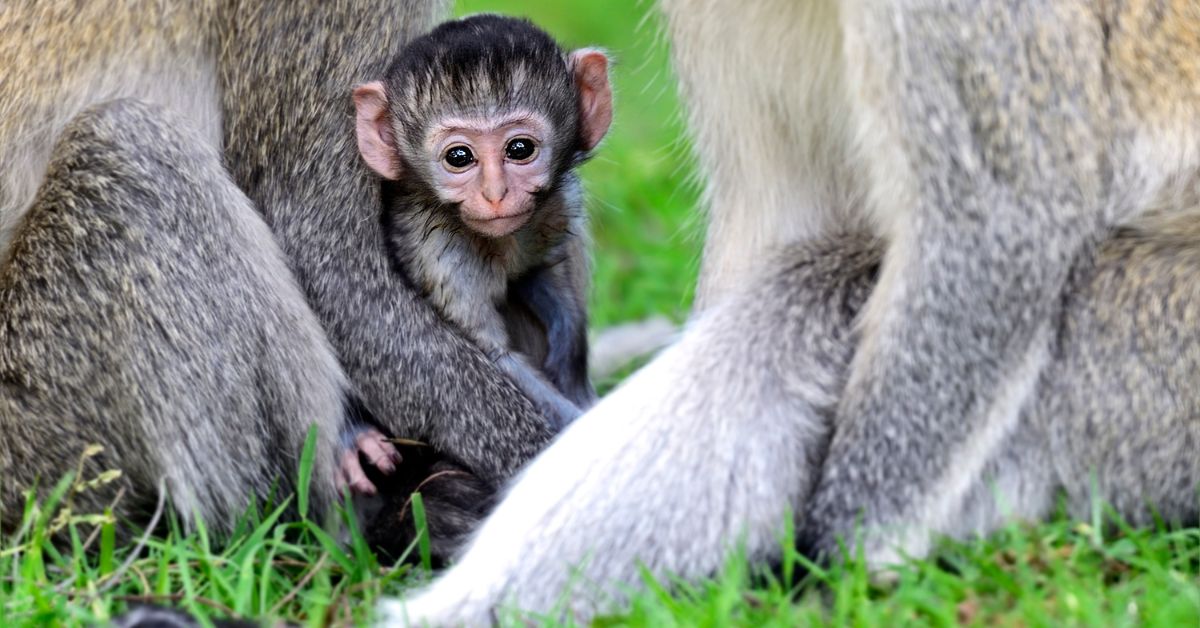
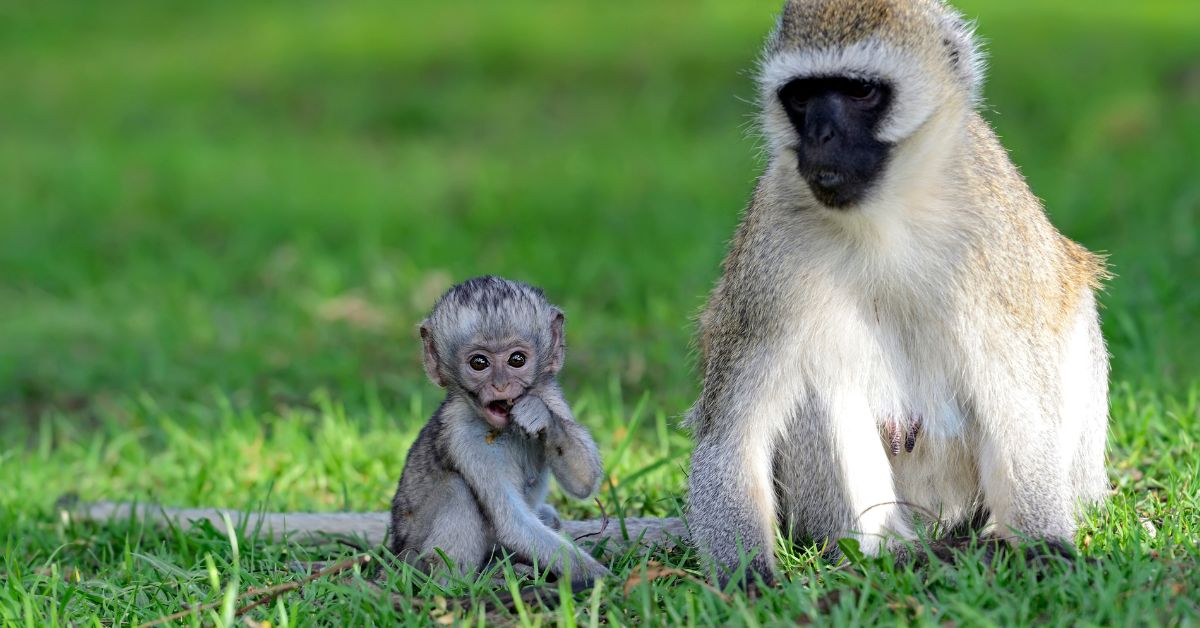
Vervets are seen all year round. From about October to December babies are born, and the tiny, dark-furred infants clinging to their mothers are a favourite sight.
About the Vervet Monkey
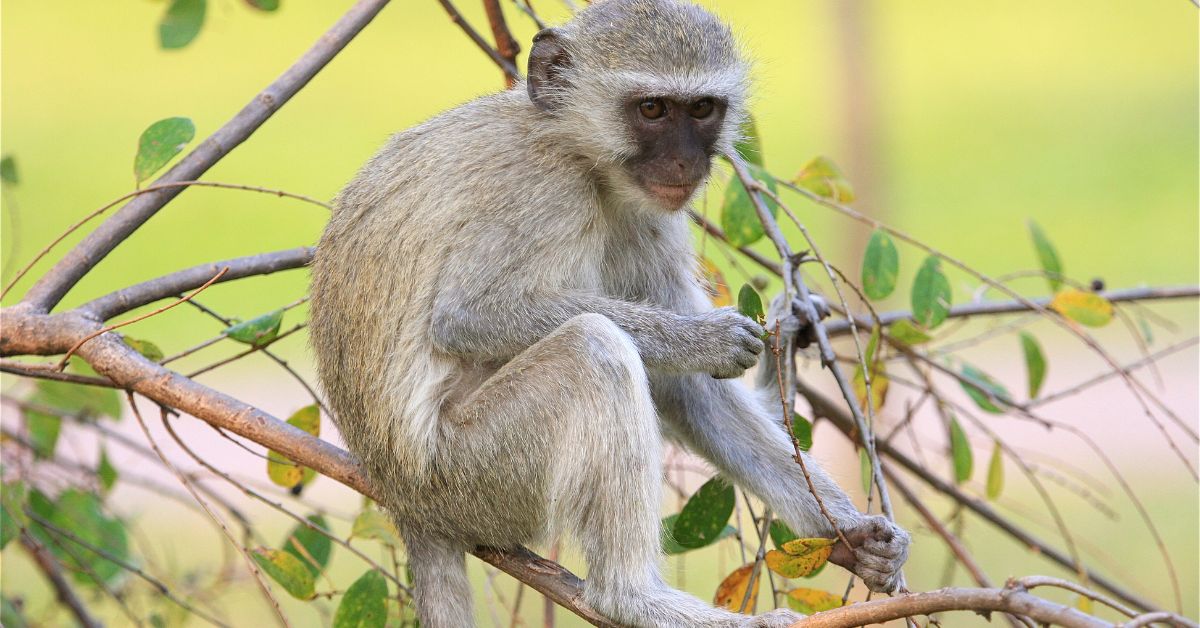
The vervet monkey is one of the most familiar and entertaining animals in the Kruger National Park. Small and agile, with a grey coat, a black face and a long tail, it lives in troops that move through tall riverside trees and open woodland, feeding on fruit, leaves, flowers, insects and eggs.
Vervets are clever and highly social. Females hold the stable ranks in the troop, and young males leave to join other troops when they grow up. A vervet troop has different alarm calls for a leopard, an eagle and a snake, and each call makes the monkeys react in a different way. At the end of the day the troop climbs into tall trees beside the water to sleep, out of reach of most predators.
Vervets are easy to find near rivers, rest camps and picnic spots, but they are wild animals, and visitors should never feed them. On a guided drive, your field guide reads a troop’s calls and behaviour to tell you what is going on.
See the Vervet Monkey for real
Join one of our guided Kruger safaris and let our field guides find it for you.
Explore Kruger safari packagesMeet the Vervet Monkey in our 3D Wildlife World
Explore our interactive map of the Kruger National Park, with the animals and the safari jeep.