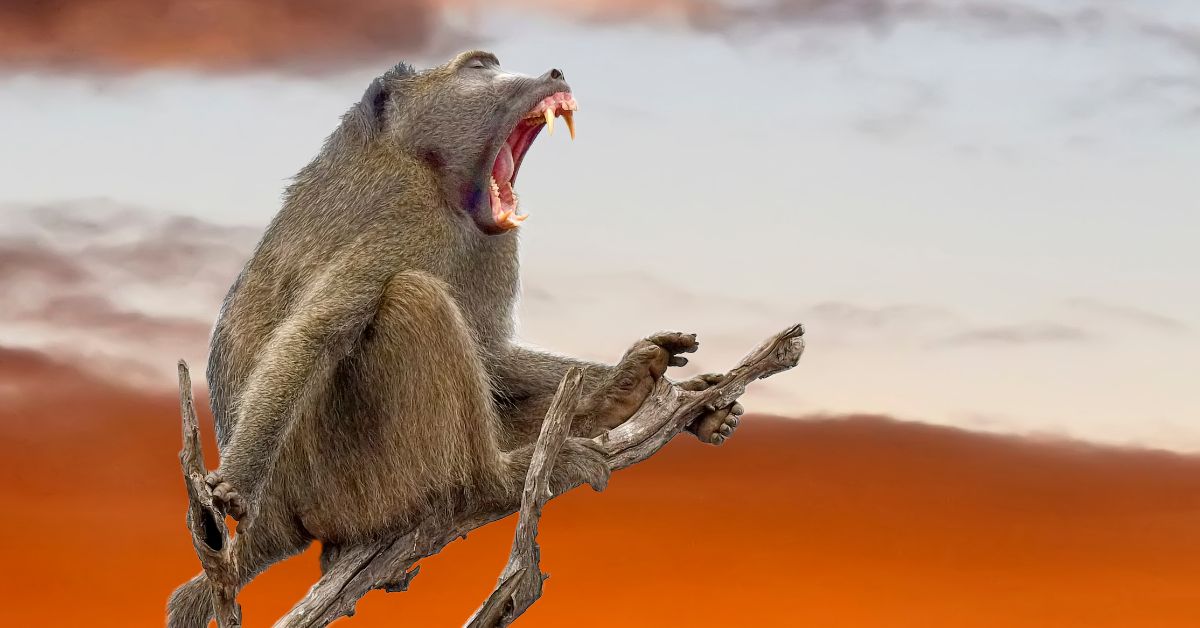
Chacma Baboon
✓ Reviewed by Nhongo Safaris Field Guide · Updated 4 November 2026
Chacma Baboon at a glance
- Height60–75 cm at the shoulder on all fours
- Weight25–40 kg (males), 12–20 kg (females)
- Lifespan20–30 years in the wild
- DietFruit, seeds, grass, roots, insects and occasionally small animals
- Troop sizeUsually 20–100 baboons
- Sleeping placesCliffs, rocky outcrops and tall trees
- ActiveBy day
- GestationAbout 6 months, a single infant
- Conservation statusLeast Concern (IUCN Red List)
Track and paw print
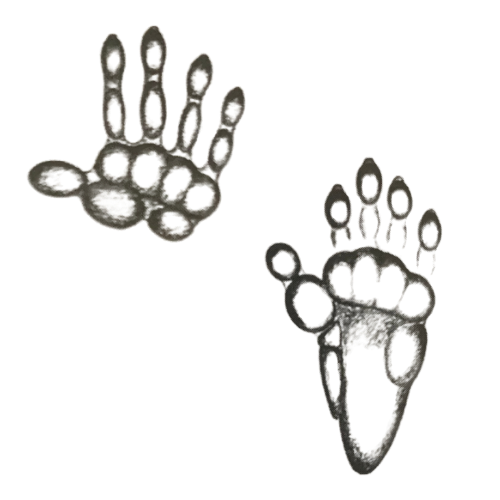
Roughly 10–15 cm long. The print looks like a small, flat human hand, with five toes and a thumb-like big toe on the back foot.
Lesser-known facts
Baboons live in large, tightly organised troops. The females form the stable core, and a young female takes her rank in the troop from her mother. Males compete for dominance, and a big male's canine teeth can be as long as a leopard's.
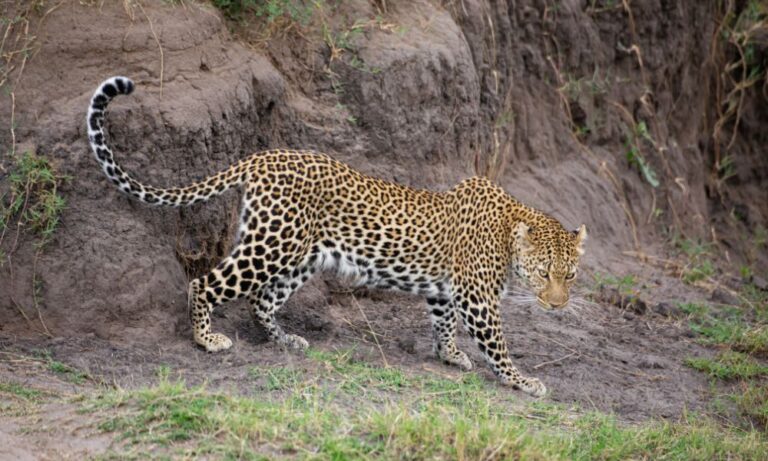
A baboon's sharp, loud alarm bark is one of the best warnings in the bush. Guides often hear it before anyone sees a leopard, and the troop will gather and bark at the predator to show it has been spotted.
Baboons sleep on cliffs and in tall trees to stay out of reach of leopards, and wake at dawn to forage. They are omnivores and very smart, and they will eat almost anything, from fruit and grass to insects, eggs and even small antelope.
Where to spot it in Kruger
Scan rocky outcrops, riverbeds and the edges of roads, especially in the early morning when troops come down from their sleeping places. Listen for their loud barks.
Listen for sharp alarm barks. If a whole troop is looking in one direction and barking, stop and scan, because a leopard may be close.
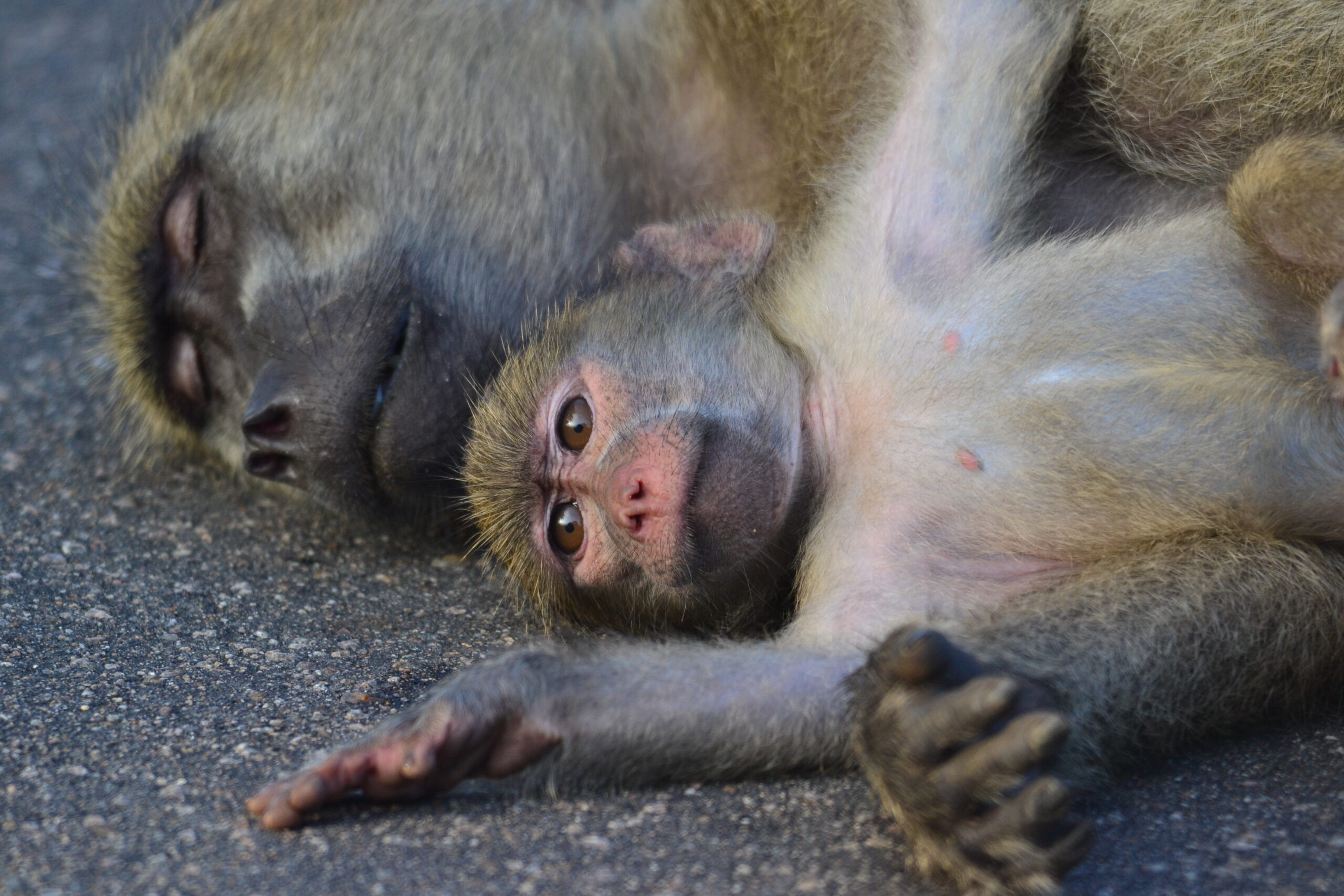
Photo gallery


Questions and answers
Are baboons dangerous?
Baboons are strong, with long, sharp canine teeth, and a big male can be dangerous if provoked. They also steal food from people. Never feed them, keep your car windows closed and food out of sight, and stay at a distance.
Why do baboons bark?
The loud, sharp bark is an alarm call that warns the troop of danger, especially a leopard. Guides listen for it, because it often leads them to a predator.
Where is the best place to see baboons in Kruger?
Look on rocky outcrops, along riverbeds and beside roads, especially in the early morning when troops leave their sleeping places. Keep your windows closed at picnic spots and rest camps.
What do baboons eat?
Almost anything. They eat fruit, seeds, grass, roots and insects, and sometimes eggs and small animals such as young antelope.
How big is a baboon troop and who leads it?
A troop usually has 20 to 100 baboons. The females are the stable core, and a young female takes her rank from her mother. Males compete for dominance and often change troops.
Best time to see the Chacma Baboon
- Jan
- Feb
- Mar
- Apr
- May
- Jun
- Jul
- Aug
- Sep
- Oct
- Nov
- Dec
Best months: Jan–Dec
Baboons are seen all year round. In the dry winter months troops spend more time along the rivers and near water, and in the cooler mornings they are easiest to watch as they wake and feed.
About the Chacma Baboon
The chacma baboon is the largest monkey in Africa and one of the most common animals in the Kruger National Park. With a dog-like face, a long muzzle and a strong, stocky body, it lives in large troops that move across the bush by day, feeding on fruit, grass, roots, insects and sometimes small animals.
Baboons are clever and highly social. A troop is built around its females, which keep their rank for life and pass it to their daughters, while the males compete for dominance. A troop sleeps on cliffs or in tall trees to stay out of the way of leopards, and its loud alarm bark is one of the best warnings in the bush. Their strength, sharp teeth and fearless habits make them animals to respect.
On a guided drive, your field guide reads a troop’s behaviour to show you what is going on, from grooming to warnings of a predator, and tells you why you should never feed them.
See the Chacma Baboon for real
Join one of our guided Kruger safaris and let our field guides find it for you.
Explore Kruger safari packagesMeet the Chacma Baboon in our 3D Wildlife World
Explore our interactive map of the Kruger National Park, with the animals and the safari jeep.