
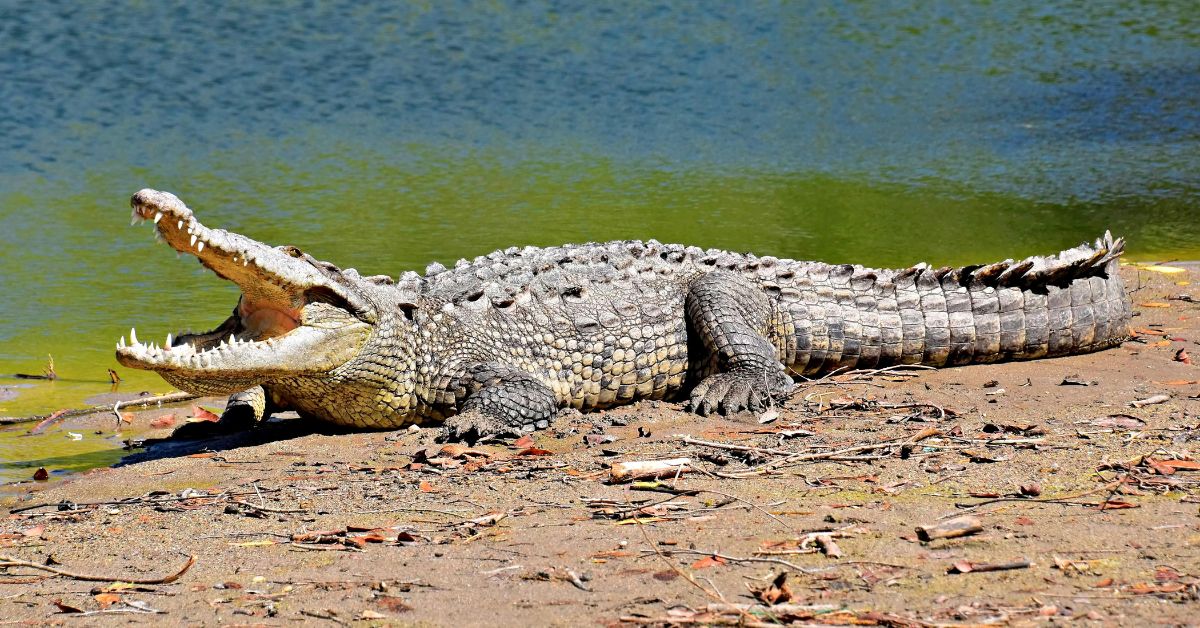
Crocodiles of Africa: The riverbanks of the African continent hold some of the most specialized predators on Earth, but none match the stealth of the ultimate aquatic reptile. Operating as a silent force across major river systems, the execution of nile crocodile hunting tactics proves that these ancient predators are meticulously designed for absolute environmental dominance. Far from being simple, aggressive reptiles, African crocodiles are complex ecosystem engineers that balance the health of river systems, protect aquatic biodiversity, and display highly sophisticated maternal instincts.
When exploring the waterways of southern and eastern Africa, understanding how these apex predators operate can entirely change how you view a river ecosystem on a safari drive.
| The African Crocodilian Profile | |
|---|---|
| Nile Crocodile | The apex river giant. Grows up to 6 meters, weighing over 1,000kg. Utilizes explosive deep-water ambushes. |
| Dwarf Crocodile | The elusive forest variant. Rarely exceeds 2 meters. Navigates dense swamps and marshes using high agility. |
| Slender-Snouted Crocodile | The specialized fisher. Features a narrow, highly sensitive snout designed to capture fast-moving aquatic prey. |
Mastering the Nile Crocodile Hunting Tactics
To survive in competitive wilderness regions, these reptiles have developed physical adaptations that optimize their efficiency. The lethal nature of nile crocodile hunting tactics relies entirely on absolute stealth and low visibility. By positioning their bodies completely submerged beneath the surface, leaving only their eyes, ears, and nostrils exposed, they become entirely invisible to animals approaching the water’s edge.
When an unsuspecting herbivore steps down to drink, the crocodile launches an explosive forward surge propelled by its muscular, compressed tail. With a jaw force capable of reaching up to 5,000 pounds per square inch, the initial strike safely clamps onto the prey. Instead of attempting to chew, the reptile drags the target back into deep water, using a rapid spinning movement known as the death roll to disorient, drown, and break down the prey.
Deep Water Engineers: Shaping the Ecosystem
Beyond their predatory reputation, these reptiles act as vital ecosystem engineers within major river basins and delta systems. During severe dry cycles, the movement of massive Nile crocodiles clears out deep wallows and channels in the riverbeds. These deep pools provide critical water sanctuaries for fish, amphibians, and smaller aquatic organisms that would otherwise perish as the surrounding marshes dry up.
Their presence also heavily regulates the behavior of land mammals. By controlling the access points along the water’s edge, they prevent overgrazing on riverbanks, protecting the shoreline from severe erosion and allowing riparian vegetation to stabilize.
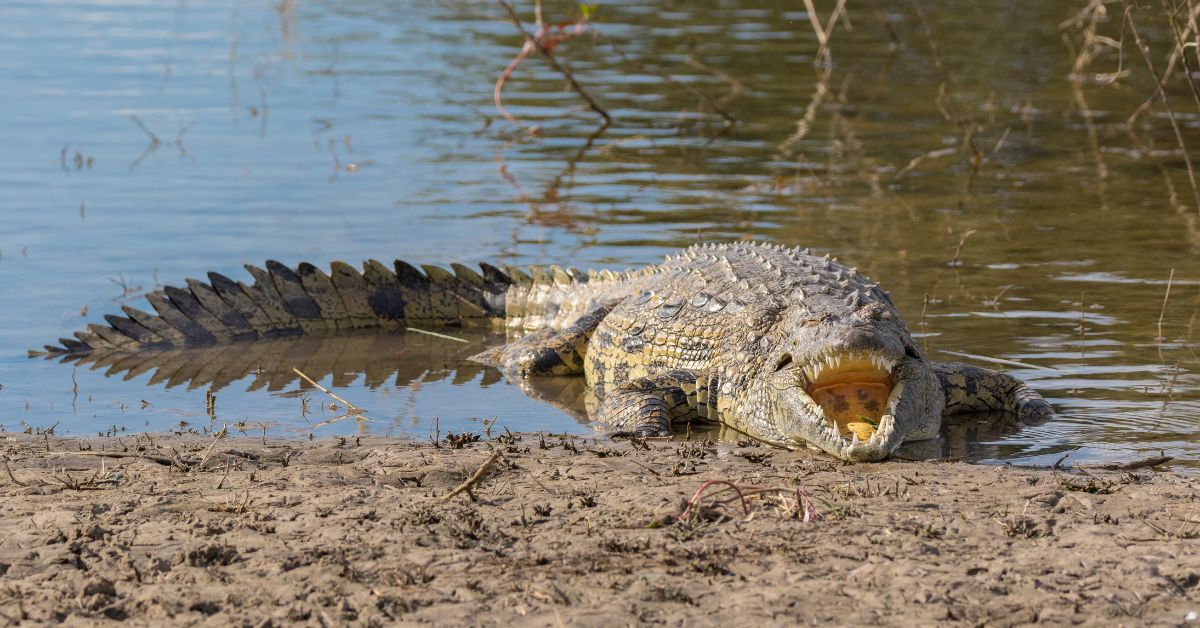
The Riverbank Lifecycle: Subterranean Survival
The reproductive behaviors of these ancient reptiles involve precise environmental calculations and dedicated maternal care. Unlike the smaller dwarf crocodile species that build elevated nests out of rotting swamp vegetation, the female Nile crocodile is a dedicated hole-nester. She selects open, sunny sandy banks well above the high-water line and digs a deep chamber to conceal her clutch of 20 to 80 eggs.
Once buried, the ambient temperature of the sandy nest plays a definitive role in development, directly determining the gender of the entire clutch. Cooler nest temperatures below 31°C produce females, while sustained higher temperatures around 32°C to 33°C result in a higher ratio of male hatchlings. Throughout the three-month incubation phase, the female remains hidden nearby, protecting her buried nest from predatory monitors and hyenas. When the hatchlings begin to emit high-pitched chirping sounds from beneath the sand, she carefully uncovers the chamber and gently transports her young to the safety of the water inside her jaws.
Confronting Modern Pressures on Waterways
Despite their evolutionary resilience, African crocodilians face mounting survival pressures outside strictly protected national parks. Habitat fragmentation caused by agricultural damming projects, expanding urban waterfronts, and industrial resource extraction directly reduces their nesting grounds.
Furthermore, illegal poaching driven by the underground international wildlife trade continues to threaten specific populations. The highly specialized slender-snouted crocodile has suffered massive population drops, pushing it onto the critically endangered species index.
Resolving these pressures requires integrated community-based conservation frameworks. Developing sustainable, strictly monitored crocodile management programs provides economic incentives to rural communities, converting potential human-wildlife conflict areas into secure wildlife sanctuaries. By protecting these ancient apex predators, we ensure the structural survival of the complex, interconnected river systems that support the wealth of Africa’s diverse wildlife populations.
Croc Instincts: Nile Apex Simulator
Master the ancient physics of Africa's ultimate underwater ambush predator.
The Ancient Survivalist
Crocodiles have survived unchanged since the age of the dinosaurs. As ectothermic (cold-blooded) predators, your survival isn't about running down prey—it's about managing your internal body heat, staying perfectly buoyant, and striking with explosive force only when the odds are flawless.