
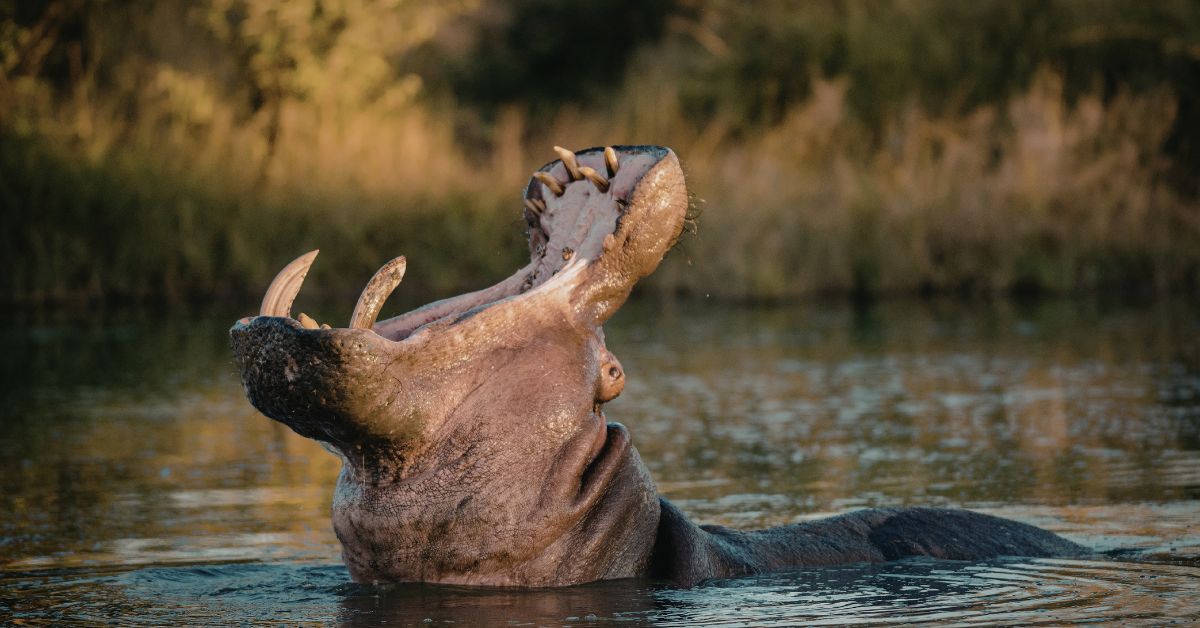
At first glance, a hippopotamus looks like the ultimate couch potato of the African bush. They spend their days submerged up to their nostrils in muddy rivers, yawning lazily and looking entirely too heavy to bother with anything fast-paced.
But don’t let the sluggish waddle fool you.
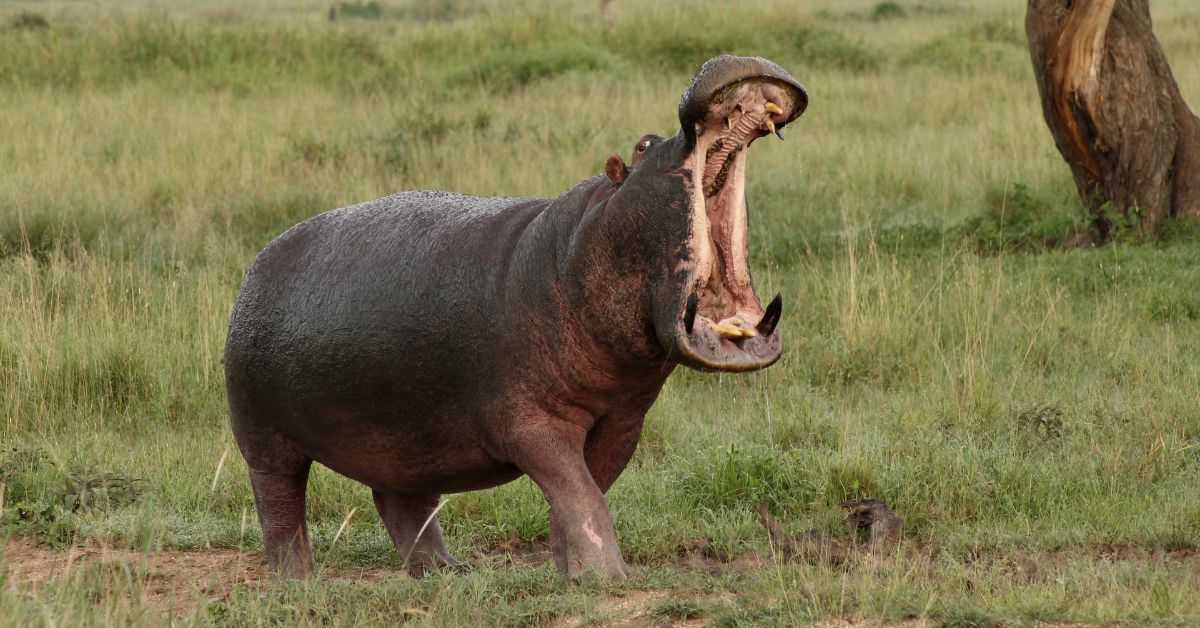
These titans, often tipping the scales between 3,000 and 4,000 pounds, are arguably the most volatile, unpredictable, and dangerous large mammals on the continent. They can explode from a state of total rest into a full-blown charge, hitting land speeds of 20 miles per hour. That is fast enough to comfortably outrun any sprinting human. When a hippo opens its gaping maw, it reveals a weapon designed for absolute destruction: razor-sharp, tusk-like canine teeth that can grow over a foot long. A single defensive bite from a threatened hippo can literally snap an adult crocodile in half.
The Secret to Their Survival: "Blood Sweat" and Buoyancy
Native to sub-Saharan Africa’s sprawling wetlands, rivers, and deltas, hippos are semi-aquatic masterpieces. Because their skin is incredibly sensitive, hairless, and prone to cracking under the blistering African sun, they use water as a permanent shield during the day.
| The Hippo Adaptation Toolkit | |
|---|---|
| Red Secretion | Produces a reddish fluid ("blood sweat") that acts as a natural UV filter and powerful antibiotic. |
| Buoyant Ninjas | They don't actually swim; they walk or bounce along the river bottom, holding their breath for up to 5 minutes. |
| Night Grazers | Lumber ashore under darkness to consume up to 80 pounds of grass in a single night. |
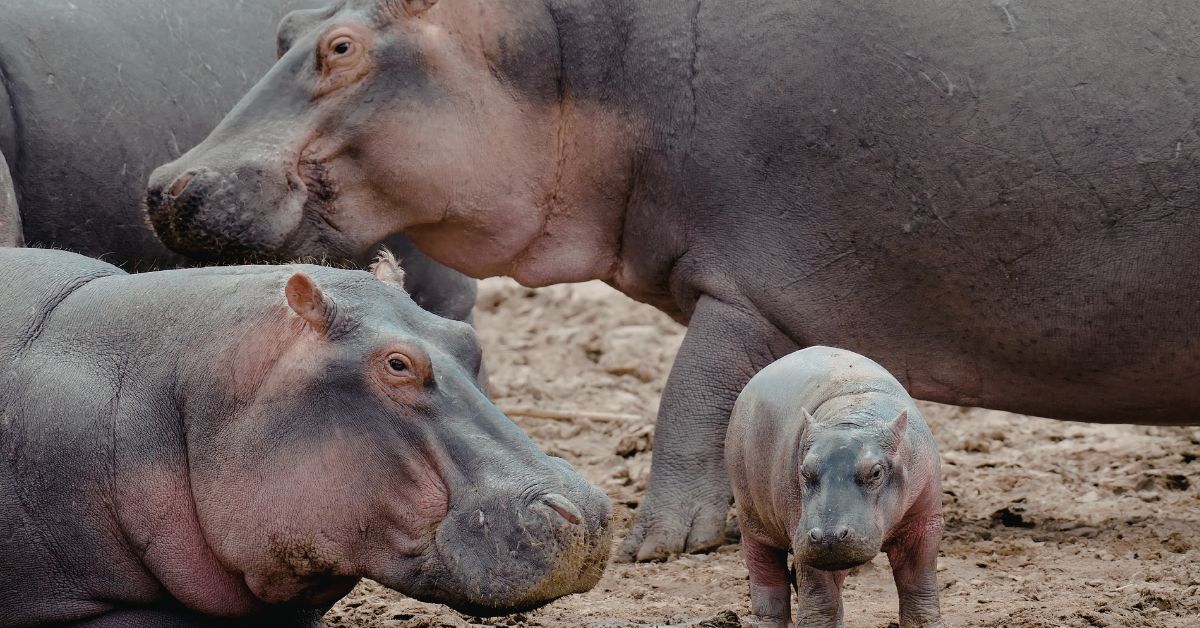
| The Pod Hierarchy | Live in tight pods of 10 to 30, fiercely ruled by a dominant bull who patrols boundaries with lethal intent. |
Africa’s Deadliest Mammal: Dispelling the Predator Myth
Here is a chilling statistic that catches most safari-goers off guard: hippos kill an estimated 500 people every year in Africa. That body count eclipses apex predators like lions and leopards combined.
However, we need to set the record straight on why they attack. Sensationalized internet rumors often claim hippos are man-eating monsters that swallow fishermen whole. In reality, a hippo’s throat is physically too small to swallow a human, and they derive zero nutritional value from meat. They do not hunt us.
Instead, they are driven by extreme, hardwired territorial paranoia.
To a dominant bull hippo, his stretch of the river is a sacred fortress. When a fishing canoe, a tourist boat, or an unsuspecting animal gets between a hippo and deep water, or worse, between a mother and her calf, the hippo views it as an act of war. Capable of executing a terrifying 2,000 pounds of pressure per square inch (PSI), their jaws can crunch through wooden boats and crush bone instantly.
Anatomy of a Juggernaut
Standing roughly five feet tall at the shoulder, their barrel-shaped bodies look almost comical on stubby legs. But those legs are powered by dense blocks of muscle sliding beneath a two-inch-thick hide that acts like living armor plate.
In the water, they are incredibly agile. They can sink to the bottom, tilt their ears back, and lunge forward with shocking precision. Their primary defensive weapons are their massive, self-sharpening incisors and canines. Because these teeth never stop growing and grind against one another, they remain honed like daggers, ready to be deployed the second the hippo’s unpredictable temper flares.
Facing the Beast: Safari Survival Guidelines
Encountering a hippo in the wild requires total respect for their boundaries. Professional safari guides manage these risks daily with strict protocols. If you are exploring African waterways or walking near riverbanks, keep these rules in mind:
Give Them Distance: Maintain a minimum buffer zone of 50 to 100 yards, whether you are on foot or in a boat.
Watch the Body Language: If a hippo stares directly at you, flattens its ears, frantically shakes its head, or lets out a massive “yawn” (which is actually a threat display showcasing its teeth), you are too close.
Listen for the Warning: Guttural, deep-chested honks and water-spraying snorts are a clear message: back away immediately.
Avoid Dawn and Dusk: This is their prime commuting time when they leave the water to graze on land. Getting caught between a hippo and its watery safe haven is the most dangerous position a person can be in.
The Ecological Tightrope
Despite their fearsome reputation, Africa’s ecosystems would collapse without them. By eating massive amounts of land grass and depositing the digested material back into the rivers, hippos act as a massive nutrient conveyer belt. Their dung fertilizes the water, kickstarting the food chain for microorganisms, insects, and fish populations that local human communities rely on.
Currently listed as “Vulnerable” by the IUCN, hippos are facing intense pressure from habitat loss, river diversions, and poaching for their teeth (which serve as a popular alternative to elephant ivory). Conservation today is a delicate balancing act, protecting human communities living along riverbanks while ensuring these prehistoric giants have the space they need to exist.
The Verdict
The hippopotamus is one of nature’s greatest paradoxes: a prehistoric, lumbering herbivore with the defensive capacity of a military tank. They aren’t the friendly characters of children’s storybooks, nor are they malicious monsters. They are raw, uncompromising wilderness personified. The next time you hear their deep, rhythmic honking echoing across the water at twilight, look out at the river with a healthy dose of awe, and a lot of respect.
Kruger Survival: 24 Hours in Hippo Territory
They look calm in the water, but they are Africa's deadliest mammals. Can you survive the day?
The Rules of the Riverbank
Hippos are fiercely territorial mega-herbivores. As you navigate their environment, your goals are simple: keep your **Danger Level** low and make it to sunset without blocking a path to the water.